The Most Famous Celebrity Wedding Dresses
Twenty-five wedding dresses that changed what brides asked for, from Wallis Simpson’s blue crepe to Taylor Swift’s Dior, with the designers who made them and why each one mattered.
Every generation has a handful of wedding dresses that everyone can picture, and a surprising number were made by designers no one outside the fashion industry knew at the time. Ann Lowe was uncredited in 1953. Narciso Rodriguez was a little-known designer when Carolyn Bessette wore his slip in 1996. Sarah Burton’s name was kept secret until Catherine Middleton stepped out of the car at Westminster Abbey. What follows are twenty-five of the most influential dresses of the last ninety years, in chronological order, with what made each matter and, where we have told the full story of the wedding, a link to it.
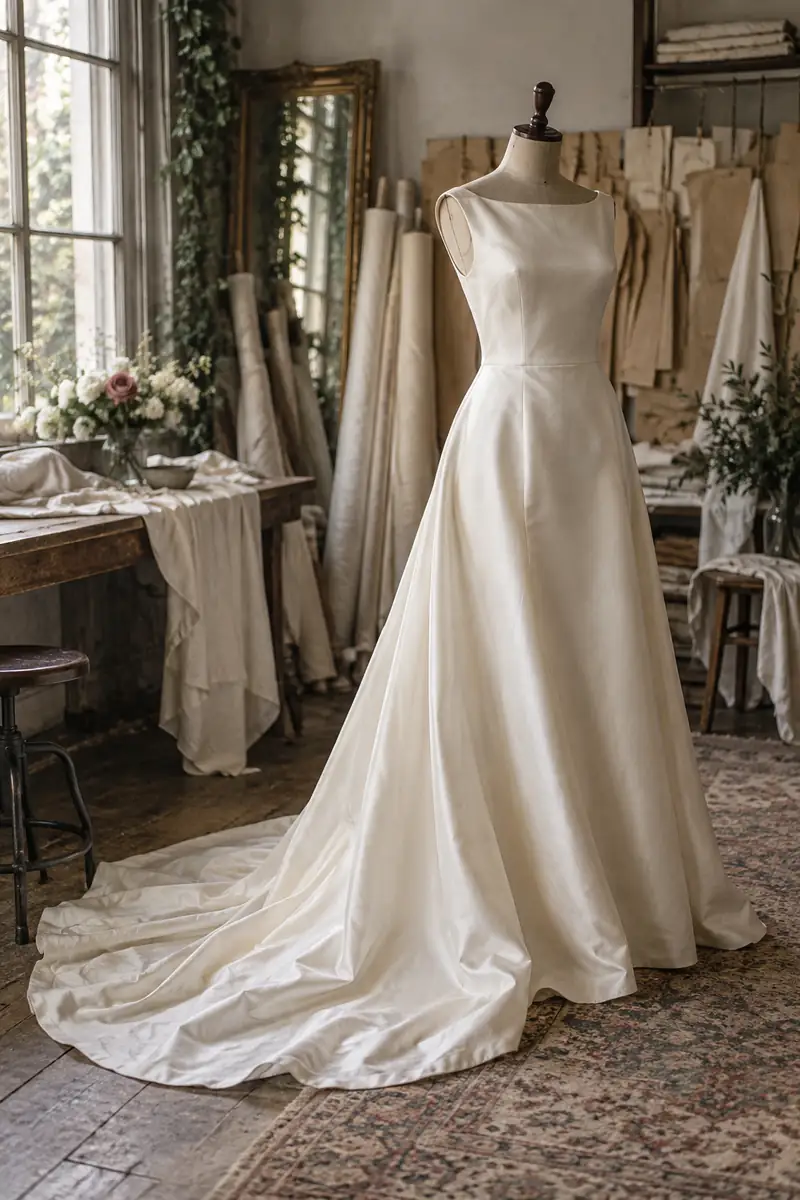
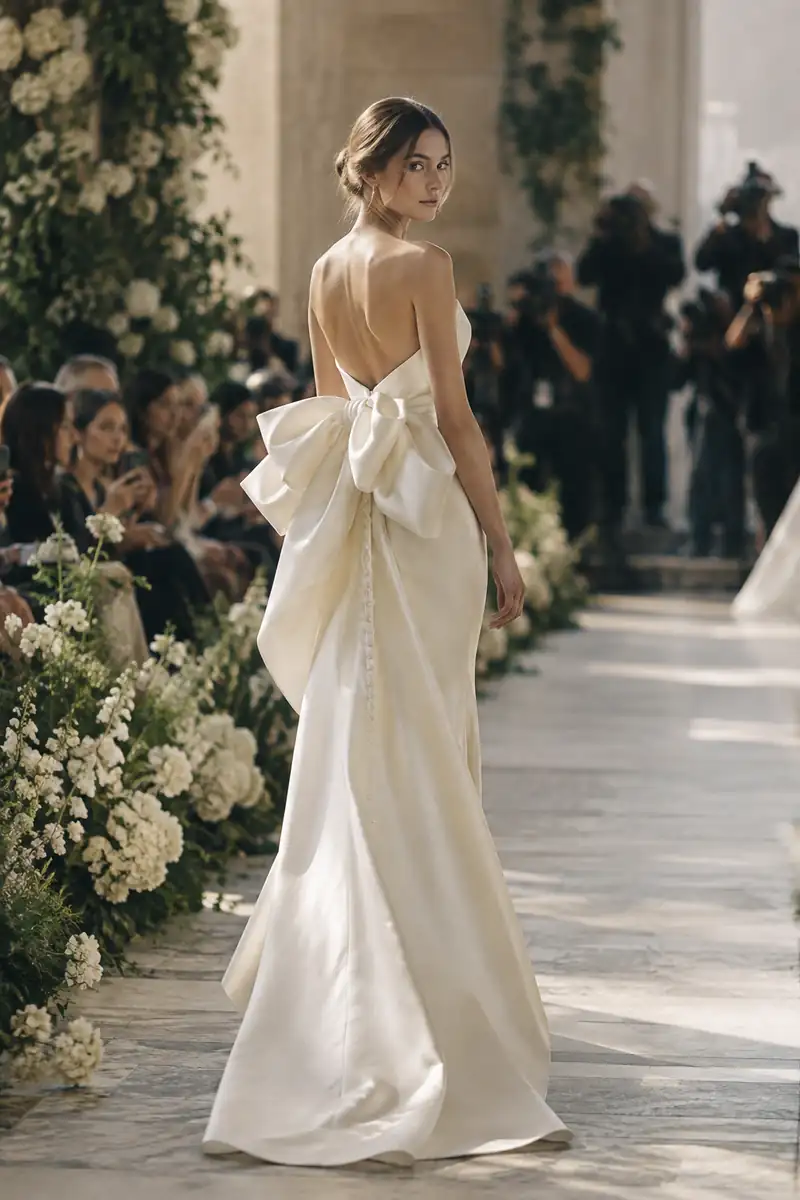
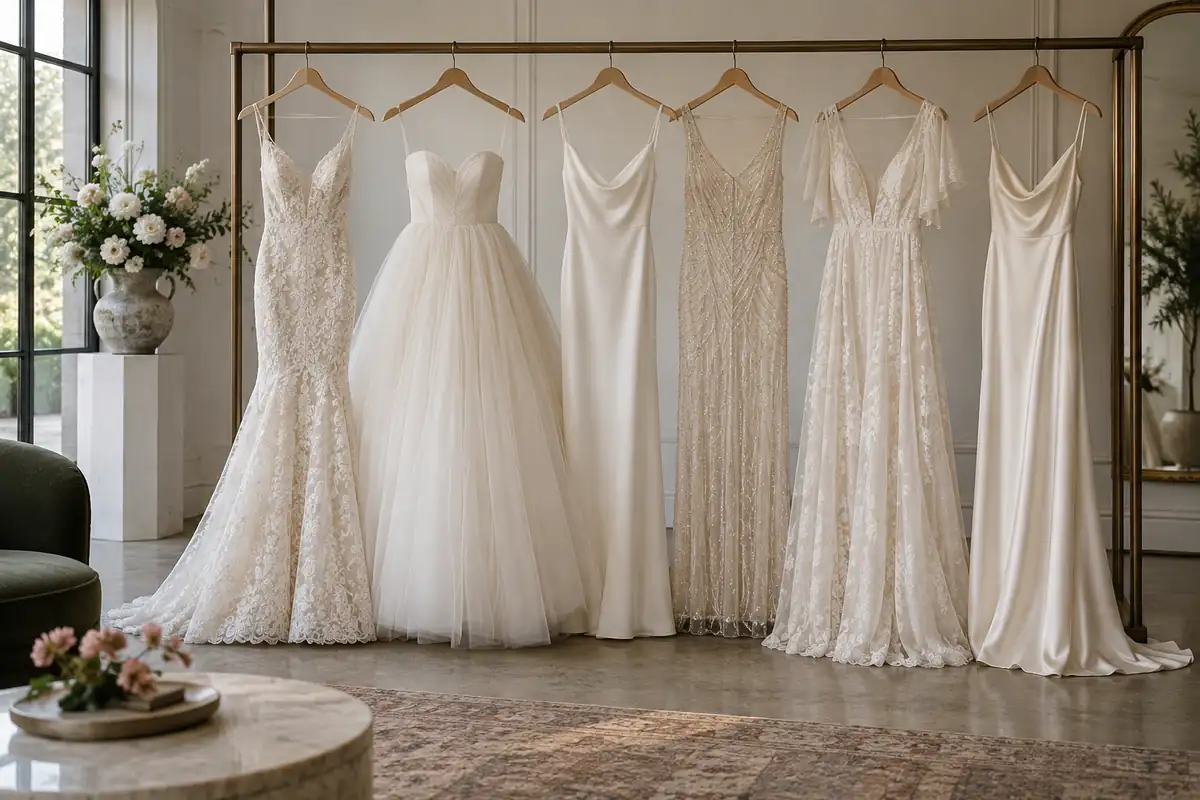
For the royal gowns in more depth, see royal wedding dresses. For the vocabulary used below, see The Wedding Dress, Decoded. For how each era’s dress fit into the fashion of its time, see wedding dresses by decade. The illustrations on this page are our own recreations of each dress from published descriptions, not photographs.
Wallis Simpson, 1937 — Mainbocher
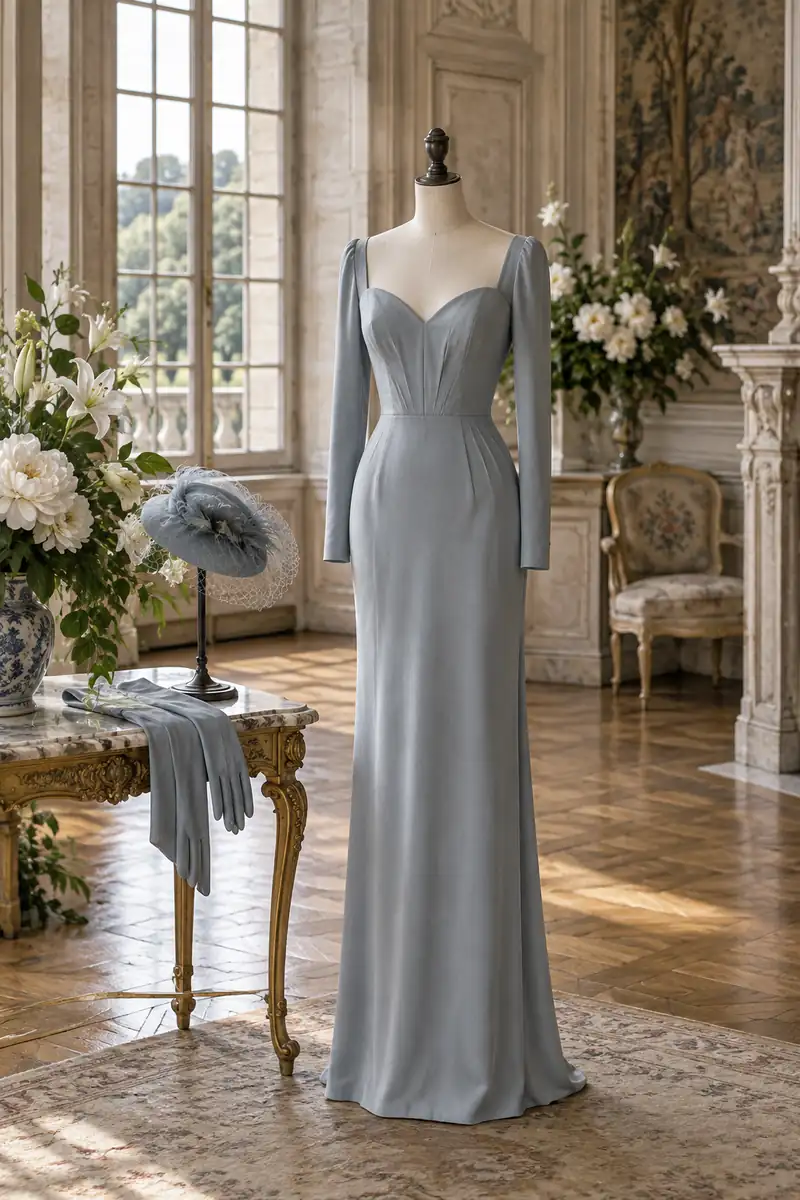
When Wallis Simpson married the former Edward VIII at the Château de Candé in France on June 3, 1937, she wore a slim dress in blue silk crepe with a nipped waist and gloves of the same fabric, by the American couturier Mainbocher. The shade became known as “Wallis blue.” It was the opposite of a royal wedding dress: no train, no lace, no volume. The dress was still described in 1962 as one of the most copied of modern times, and it has been in the collection of the Metropolitan Museum of Art since 1950. It remains the model for the elegant second-wedding and civil-ceremony dress.
Princess Elizabeth, 1947 — Norman Hartnell
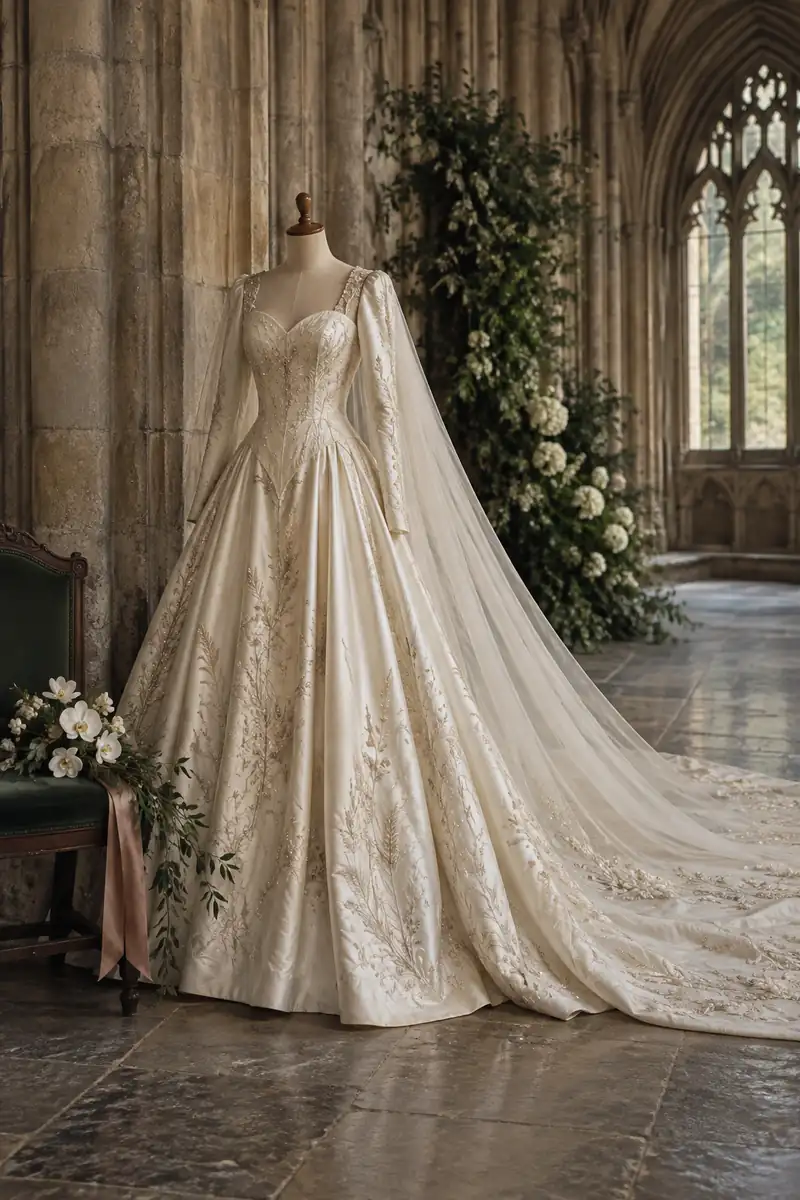
Princess Elizabeth married two years after the Second World War, while clothing was still rationed; she needed coupons for the fabric, and the government granted her 200 extra. Norman Hartnell designed an ivory silk satin gown whose star-patterned train was inspired by Botticelli’s Primavera, embroidered with some 10,000 seed pearls imported from the United States, crystals, and ears of wheat as a symbol of fertility. Worn at Westminster Abbey on November 20, 1947, it was meant as a sign of renewal for a country still in austerity, and its fitted bodice and full skirt shaped royal brides for decades. Read the story of the wedding.
Elizabeth Taylor, 1950 — Helen Rose
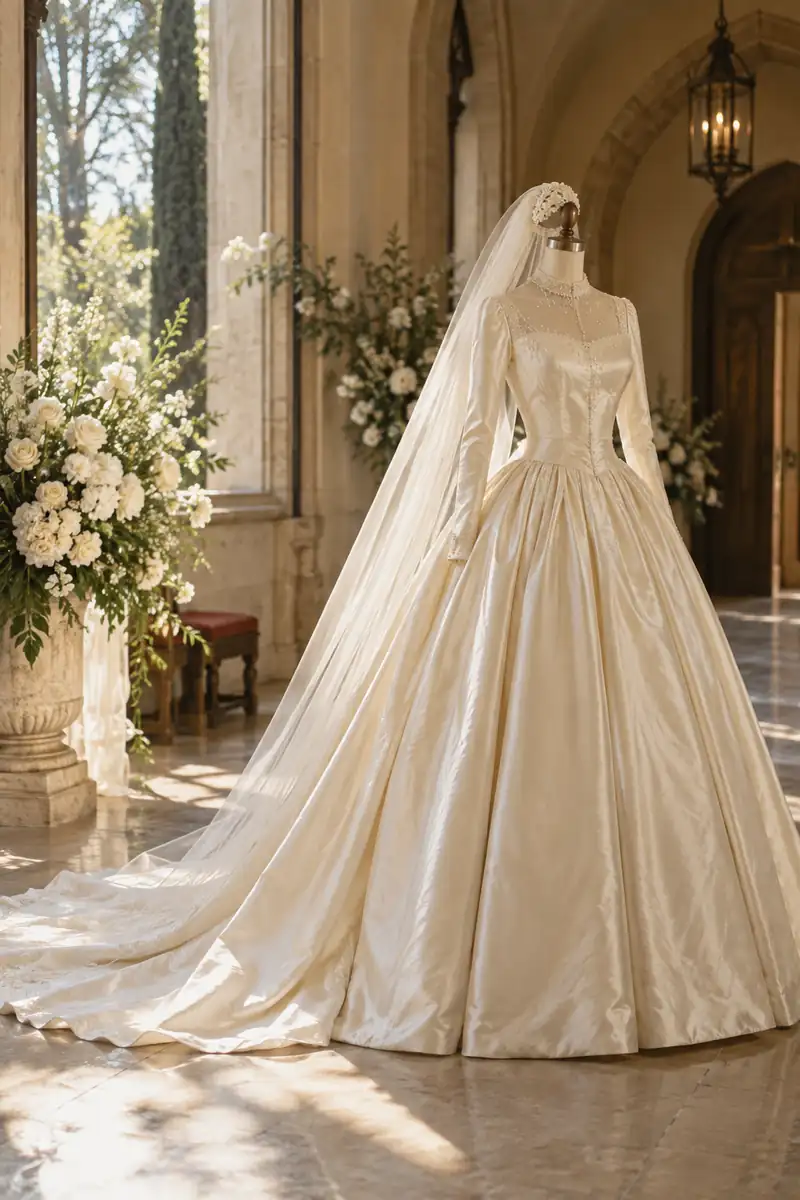
When Elizabeth Taylor, then eighteen, married the hotel heir Conrad “Nicky” Hilton in 1950, her gown was designed by Helen Rose, the MGM costume designer who had also dressed her for the film Father of the Bride that same year. The overlap between screen bride and real bride was the point: the studio system understood that a star’s wedding was a public event, and it dressed her for it. Rose became known above all for her bridal gowns, and six years later she designed Grace Kelly’s.
Jacqueline Bouvier, 1953 — Ann Lowe
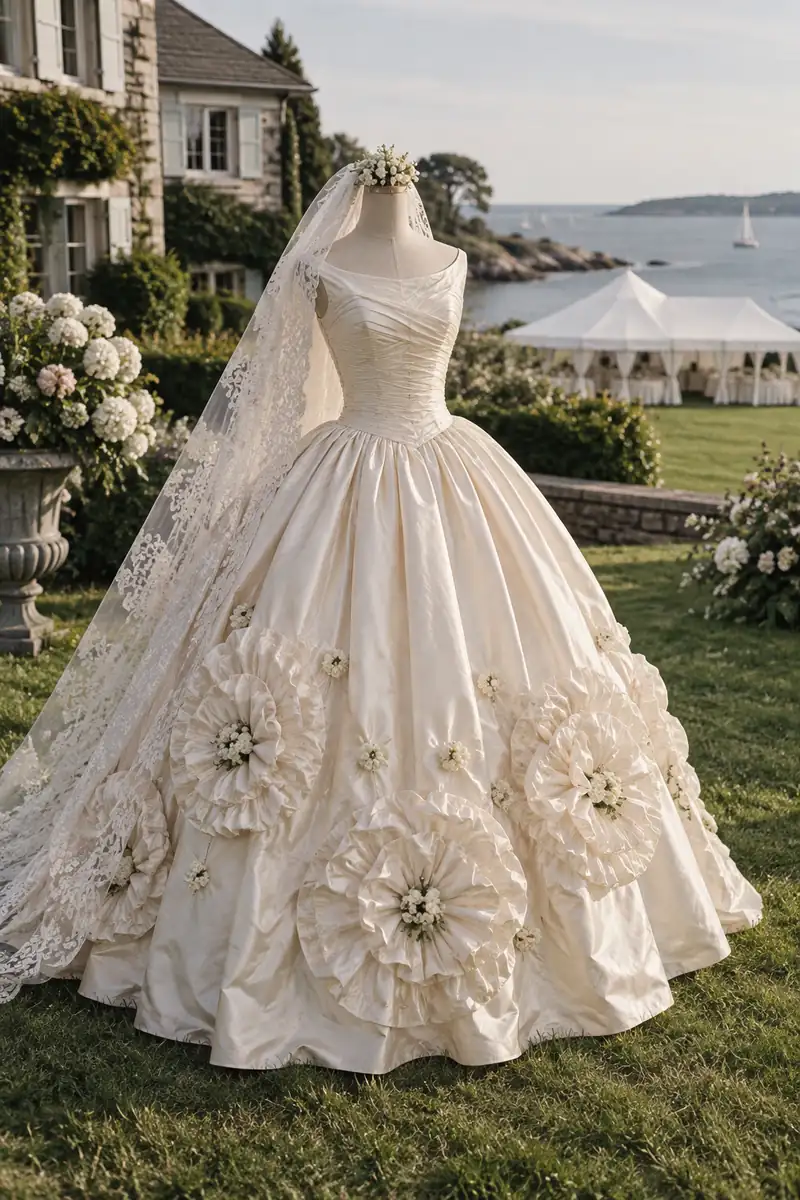
Jacqueline Bouvier married John F. Kennedy in Newport, Rhode Island, in September 1953 in a portrait-necked gown of fifty yards of ivory silk taffeta, its full skirt swirled with bands of tucking, by Ann Lowe. Ten days before the wedding a flood ruined Lowe’s workshop and the dress. She and her team remade it in eight days, at a loss, and never told the family. Lowe, born in Alabama in 1898, the great-granddaughter of an enslaved woman, had been made to study alone at a segregated New York design school. She received no public credit for years. Her work is now in the Metropolitan Museum of Art. Read the story of the wedding.
Audrey Hepburn, 1954 — Pierre Balmain
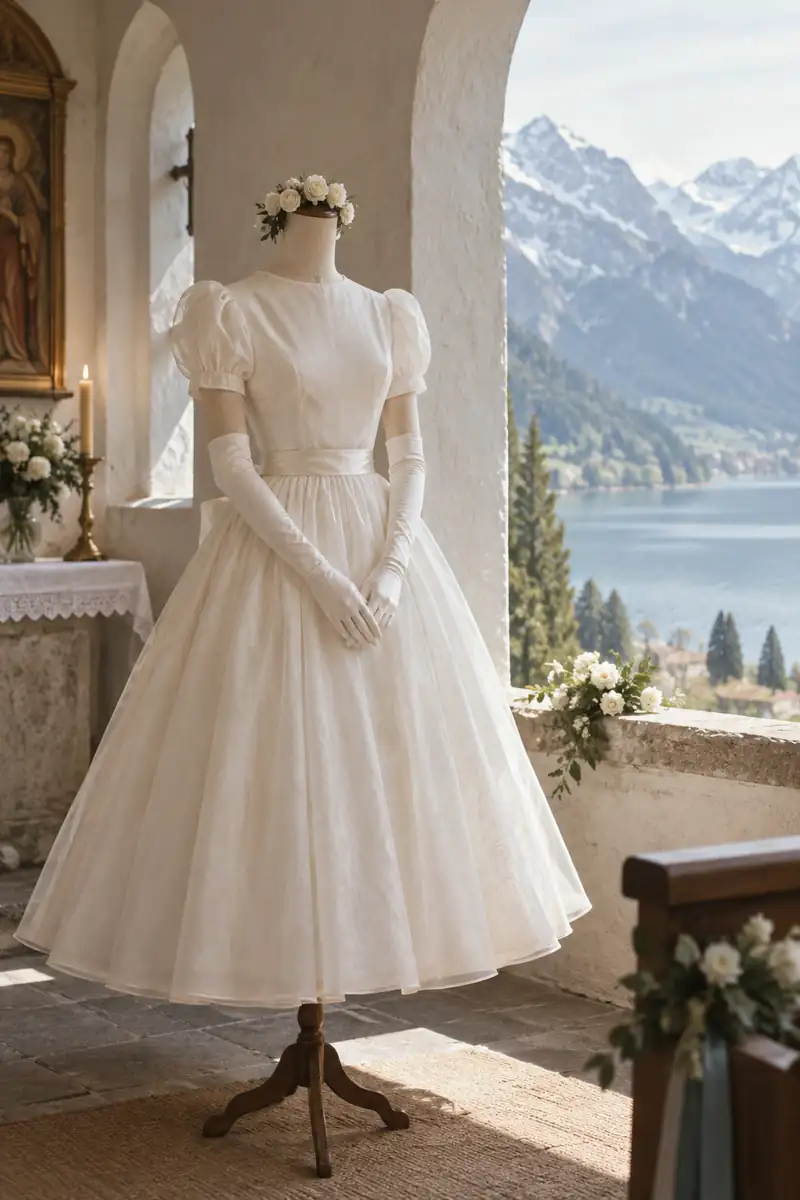
Hepburn married Mel Ferrer in Bürgenstock, Switzerland, on September 25, 1954, in a white Balmain dress with a tea-length flared skirt, puff sleeves, a high collar and a satin sash tied in a bow at the back. She wore a crown of flowers instead of a veil and elbow-length gloves. Her son Sean Ferrer has said the dress was probably bought off the rack, given how quickly the wedding came together. It made the short wedding dress chic, and when Hepburn remarried in 1969 she went shorter still, in a pale pink mini by her friend Hubert de Givenchy.
Grace Kelly, 1956 — Helen Rose
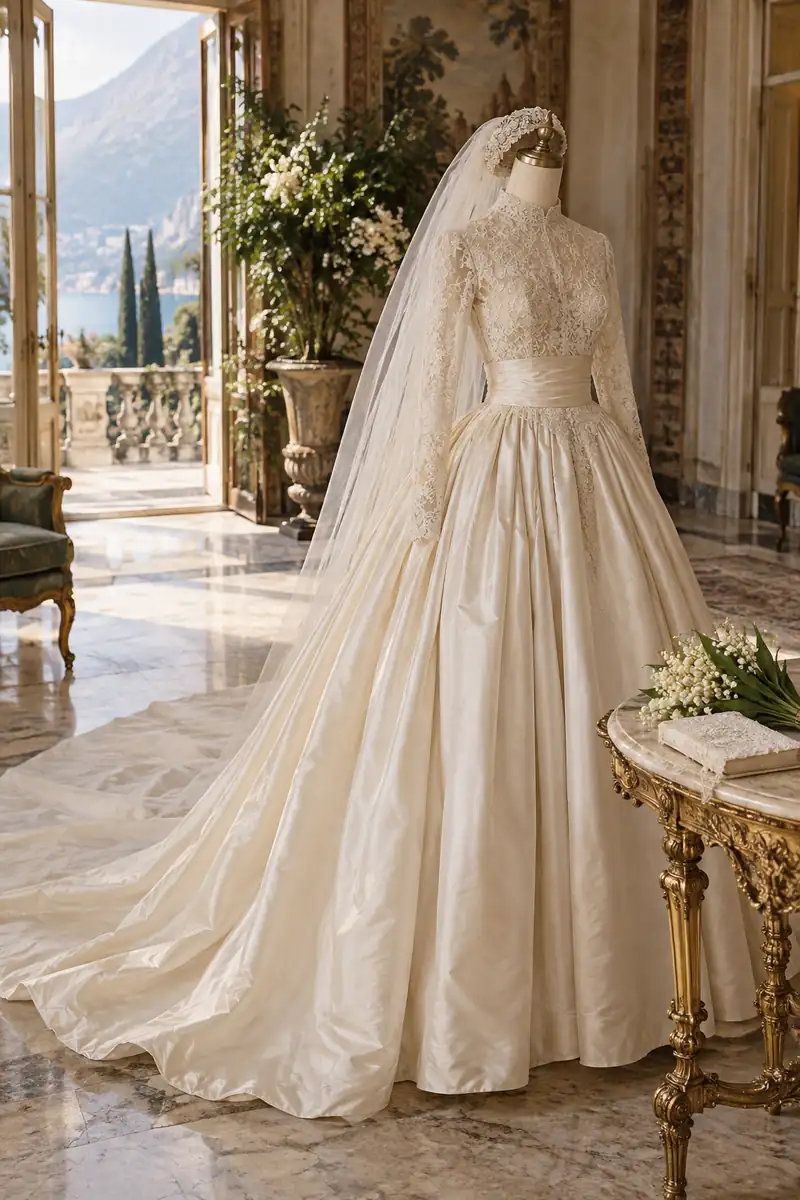
For her religious wedding to Prince Rainier III of Monaco on April 19, 1956, Grace Kelly wore a gown that MGM gave her as a gift, designed by Helen Rose. It used twenty-five yards of silk taffeta, a hundred yards of silk net, peau de soie, and 125-year-old Brussels rose point lace, with seed pearls on the Juliet cap that held her veil. The high lace bodice and long lace sleeves became the template for the modest, regal wedding dress, and Catherine Middleton’s gown was widely compared to it in 2011. The dress belongs to the Philadelphia Museum of Art. Read the story of the wedding.
Princess Margaret, 1960 — Norman Hartnell
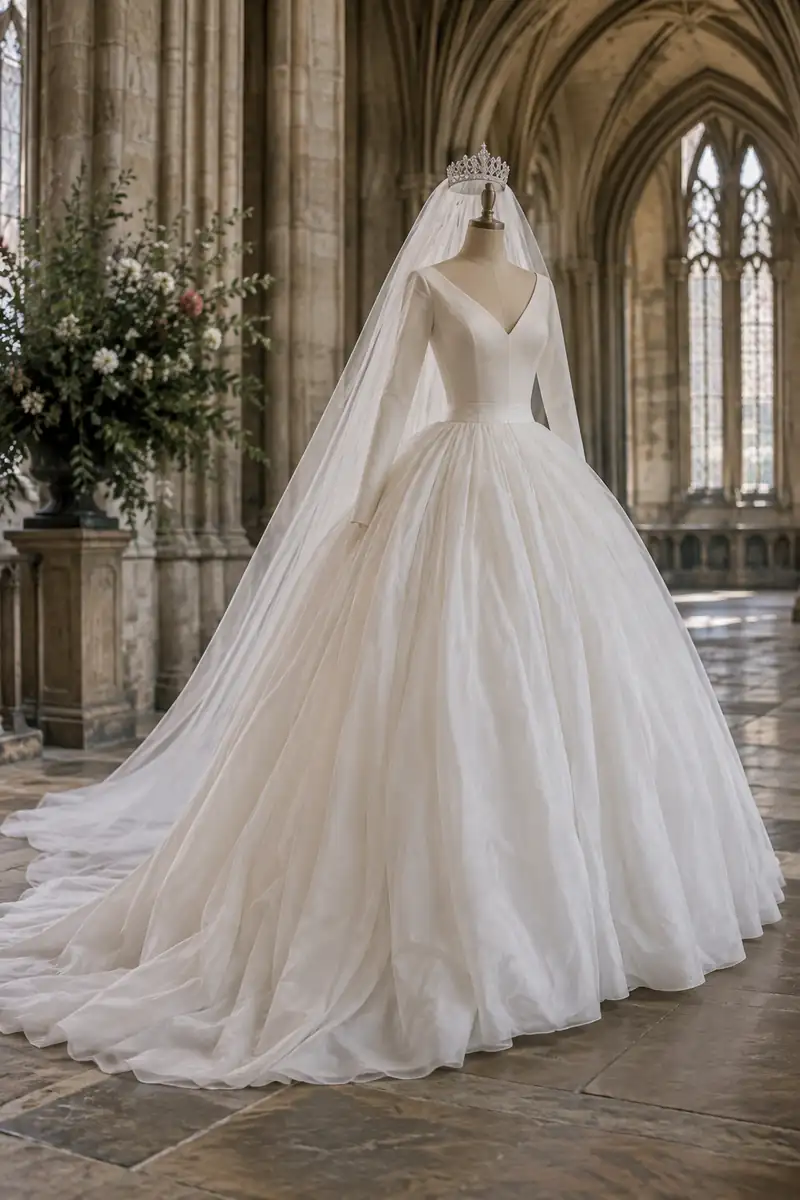
Princess Margaret’s dress for her May 6, 1960, wedding at Westminster Abbey was a lesson in restraint from the designer who had covered her sister’s gown in pearls. Hartnell used silk organza, some thirty meters of it in the skirt, and almost no embellishment, which suited the princess’s petite frame. Life magazine called it “the simplest royal wedding gown in history,” and Vogue praised it as stunningly tailored. Its clean bodice and vast, plain skirt anticipated the modern taste for letting fabric and cut do the work, and it is regularly cited as one of Hartnell’s finest designs.
Priscilla Presley, 1967 — Bought off the rack
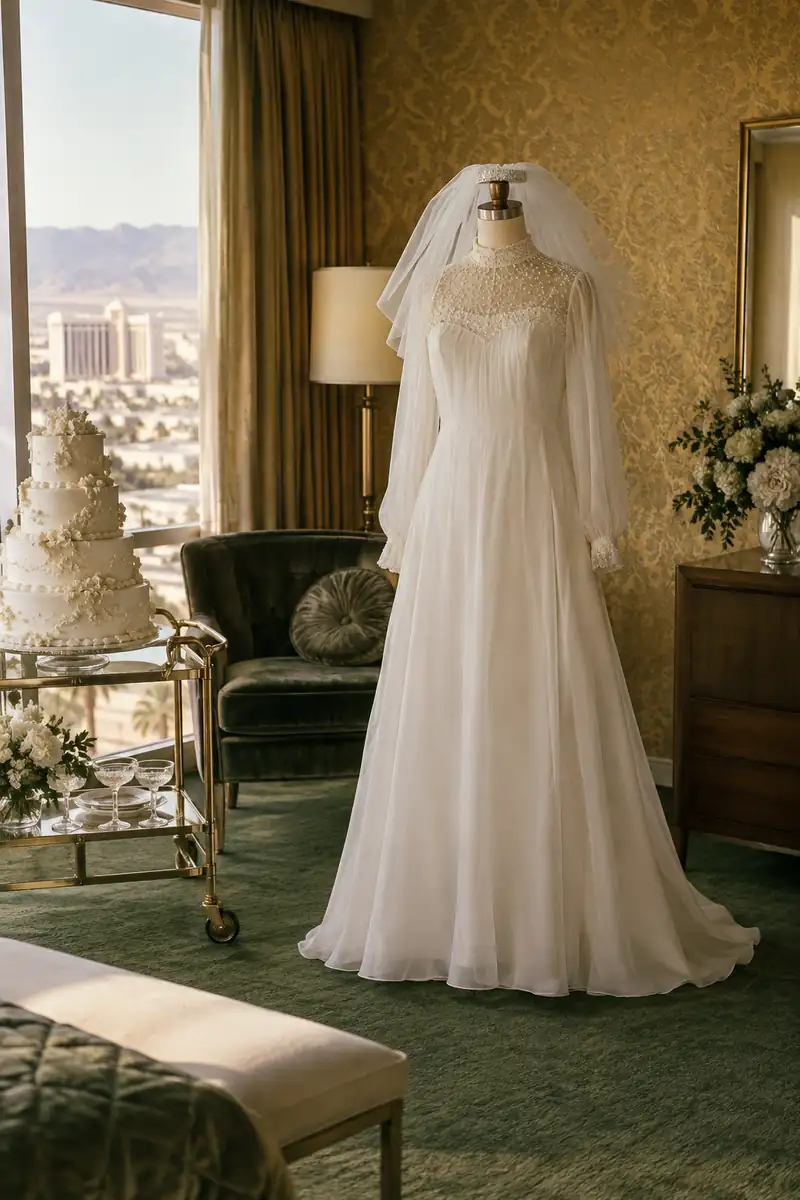
Priscilla Beaulieu married Elvis Presley at the Aladdin Hotel in Las Vegas on May 1, 1967, in a dress she bought off the rack at a Los Angeles boutique, shopping incognito under a false name to avoid attention. It was floor-length white silk chiffon, simple except for a beaded neckline and sleeves scattered with seed pearls, worn with a three-foot tulle veil held by a rhinestone crown, a towering black bouffant and dramatic eyeliner. The dress shows that a famous wedding look does not need a famous designer; the hair and makeup made it unforgettable. Read the story of the wedding.
Jacqueline Kennedy Onassis, 1968 — Valentino
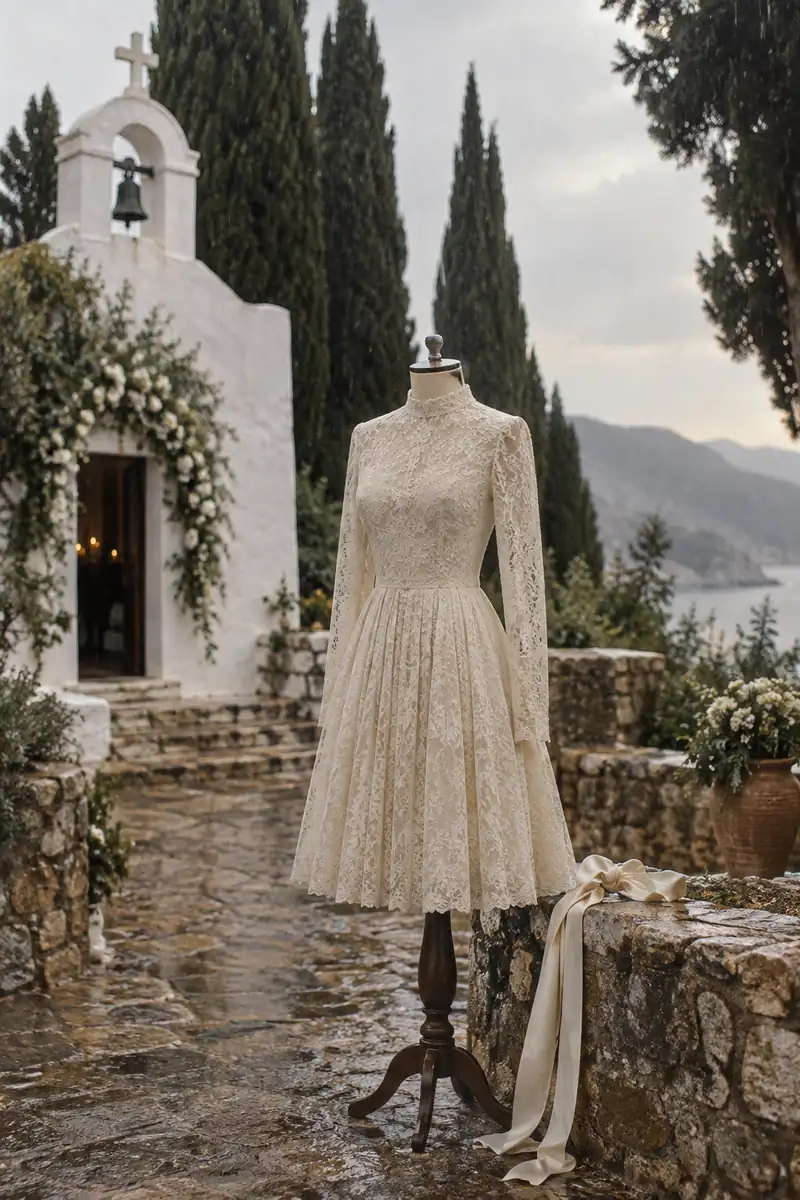
Fifteen years after her Ann Lowe ball gown, the former first lady married Aristotle Onassis in 1968 in a pale lace dress by Valentino. The contrast between her two wedding dresses sums up a revolution in bridal taste during the 1960s: from the full-skirted formality of the 1950s to something personal, understated and wearable. Valentino has since dressed brides from Queen Máxima of the Netherlands to Anne Hathaway. For a second wedding, it remains a model of what to wear.
Lady Diana Spencer, 1981 — David and Elizabeth Emanuel
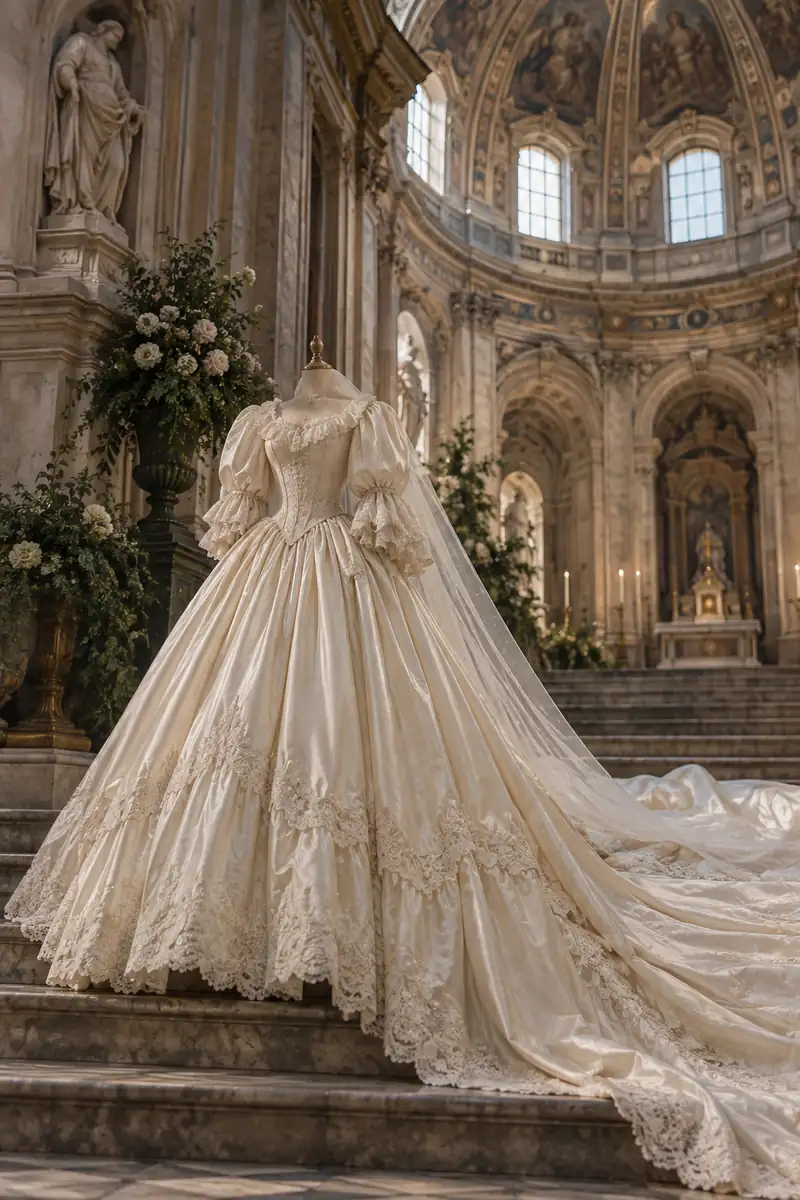
The most famous wedding dress of the twentieth century was made by a young husband-and-wife team. For her July 29, 1981, wedding at St Paul’s Cathedral, the Emanuels made Diana an ivory silk taffeta gown, woven in Suffolk, with antique lace, huge puffed sleeves, some 10,000 pearls, a 25-foot train and a veil of 153 yards of tulle; a small gold horseshoe was stitched inside for luck. Copies were on sale within hours, and for a decade puffed sleeves and full skirts dominated bridal. Read the story of the wedding.
Sarah Ferguson, 1986 — Lindka Cierach
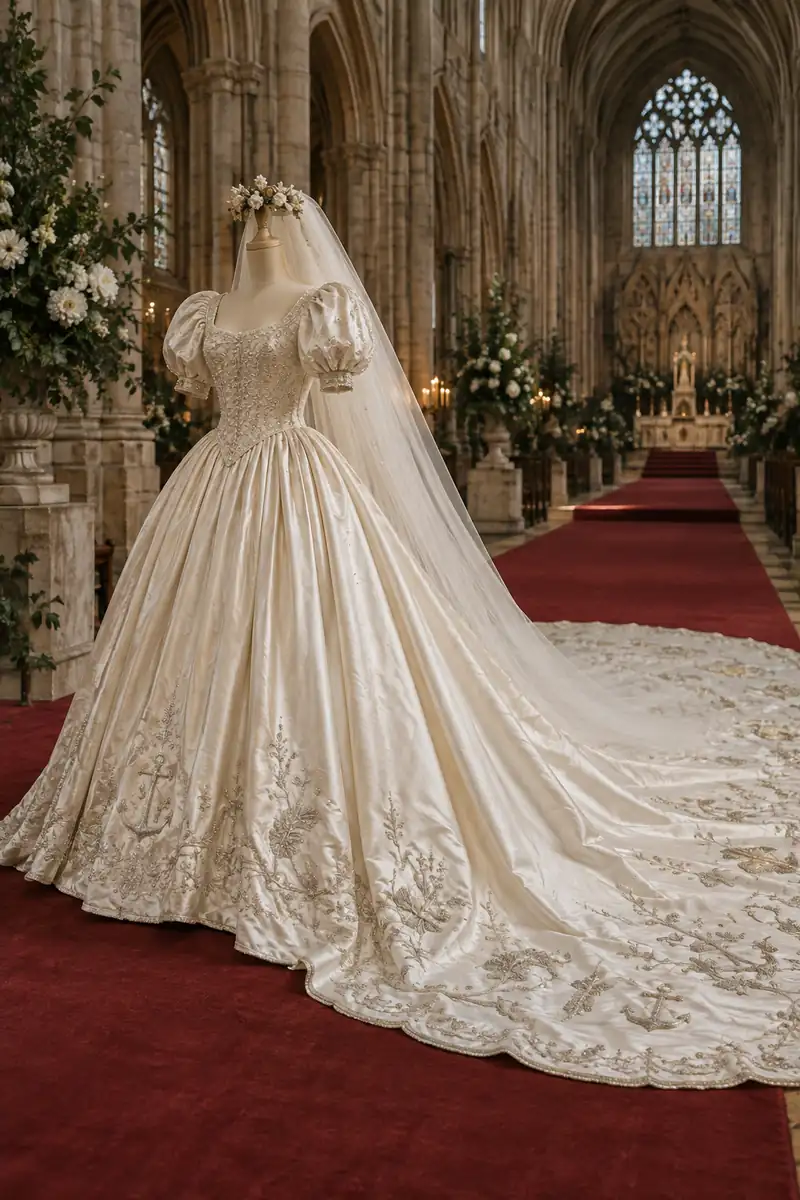
For her July 23, 1986, wedding to Prince Andrew at Westminster Abbey, Sarah Ferguson wore ivory duchesse satin by Lindka Cierach, heavily beaded and boned like a corset. Its 17-foot train was beaded with the couple’s intertwined initials, and the beadwork told a story: anchors and waves for the groom’s naval career, and bees and thistles from the bride’s family coat of arms. The dress became the most sought-after style of the season, with copies in stores within hours, and it showed how much private meaning a gown could carry in plain sight.
Carolyn Bessette, 1996 — Narciso Rodriguez
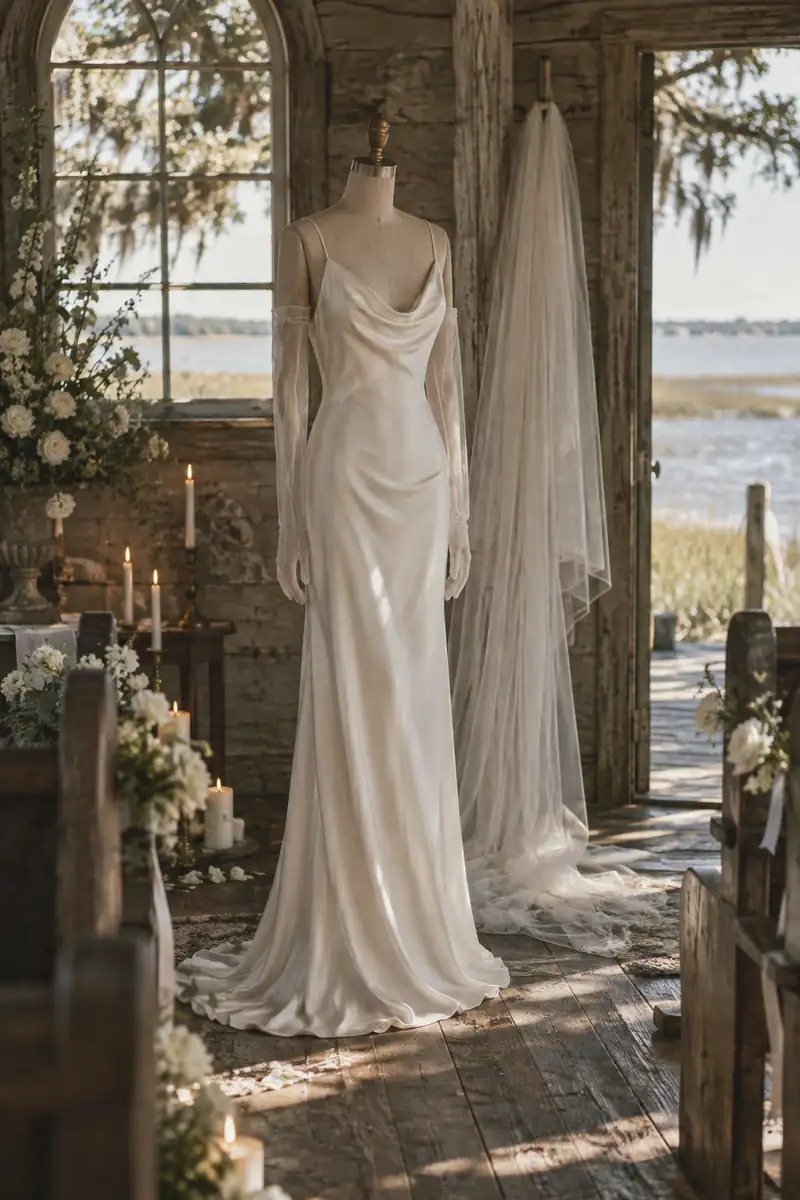
Bessette married John F. Kennedy Jr. on September 21, 1996, in a tiny church on Cumberland Island, Georgia, with about forty guests, in a pearl-white bias-cut silk crepe slip made for her by her friend Narciso Rodriguez. After a decade of puffed sleeves, its simplicity was a shock. Rodriguez went from little-known designer to star, launching his own label the next year. Thirty years later, the FX series Love Story recreated the dress, and in April 2026 designers showed a wave of minimalist slips in response (see 2026 trends). Read the story of the wedding.
Beyoncé, 2008 — Tina Knowles
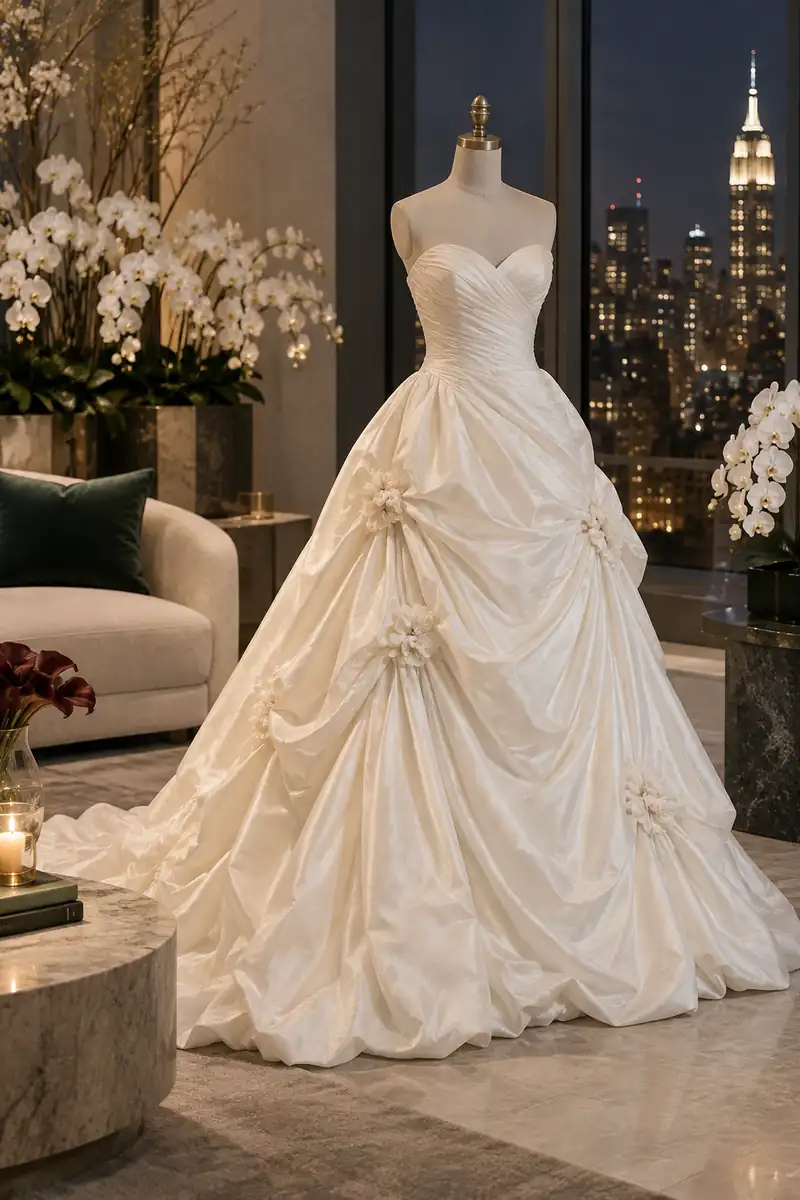
Beyoncé married Jay-Z on April 4, 2008, in a small, private ceremony, and her wedding dress was designed by her mother, Tina Knowles. At a time when celebrity weddings were increasingly staged for magazine covers, the couple kept theirs almost entirely out of view, and the dress came from family rather than from a fashion house. It is a reminder that the most meaningful dress may come from family: a gown made or remade by a parent is one of the most personal commissions a bride can make. Read the story of the wedding.
Catherine Middleton, 2011 — Sarah Burton for Alexander McQueen
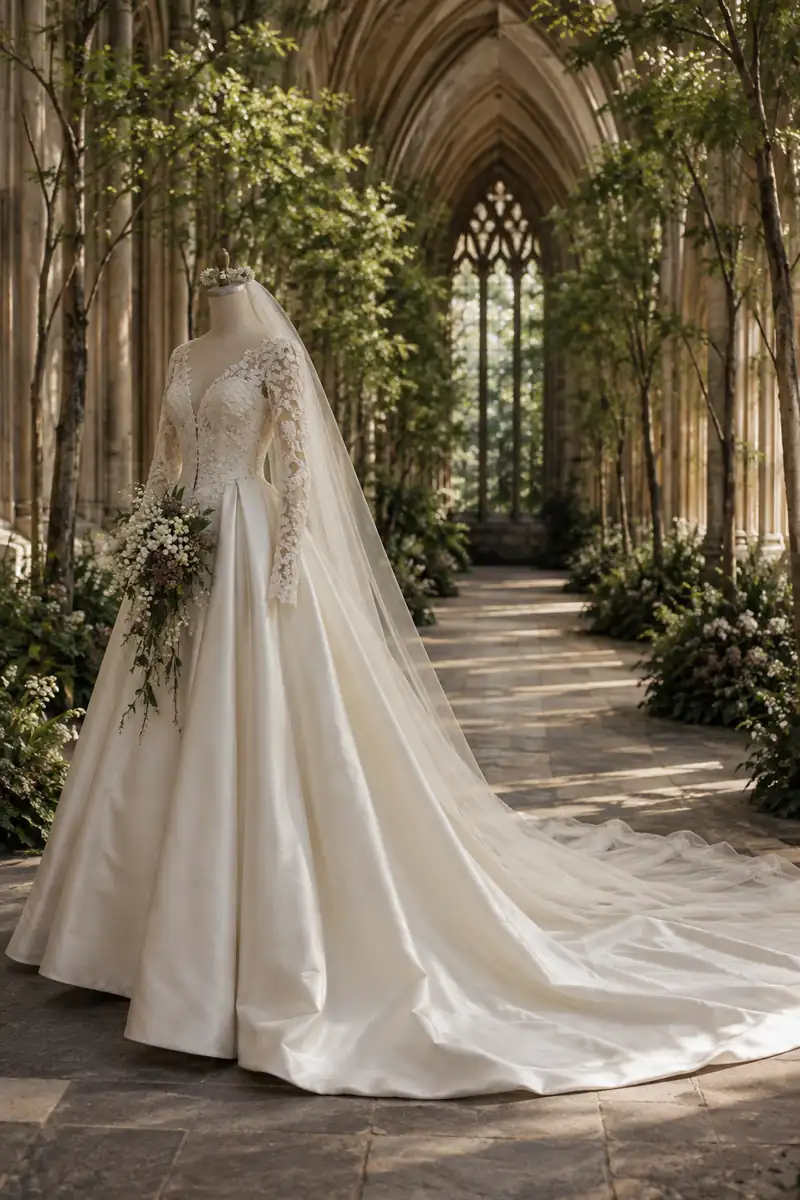
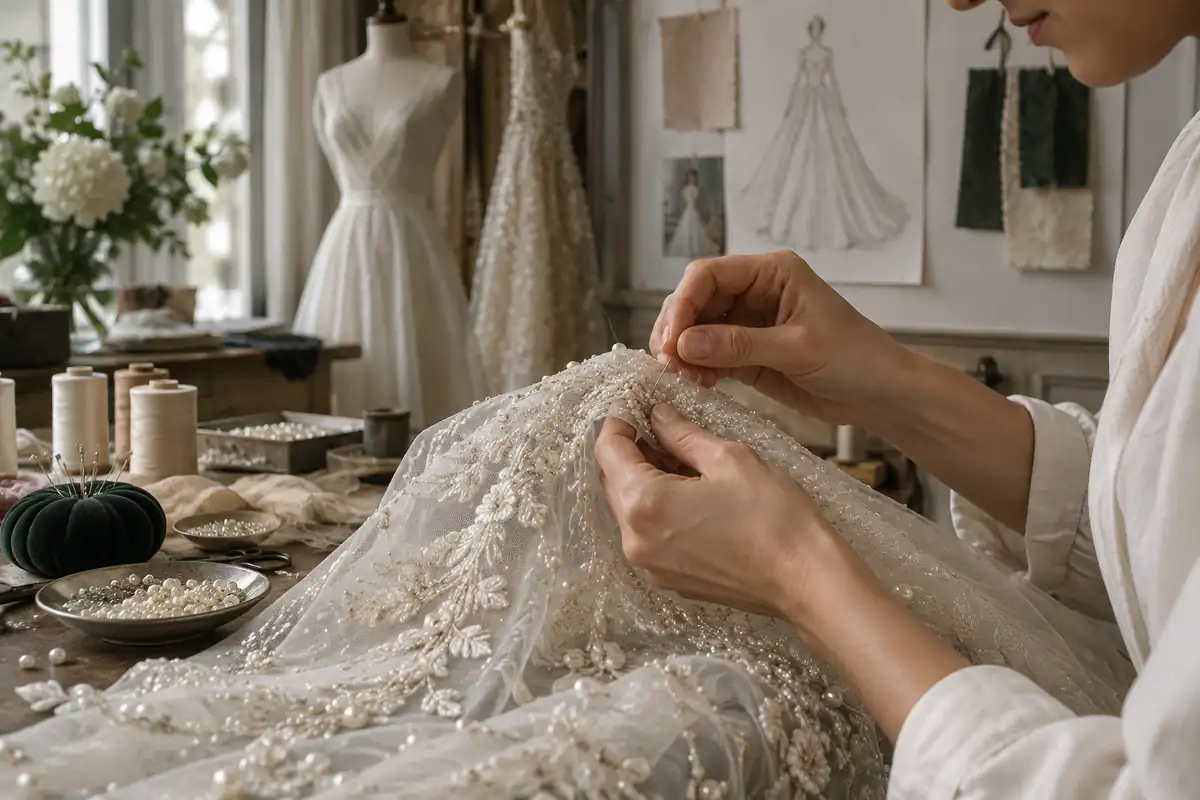
The designer’s name was kept secret until the bride arrived at Westminster Abbey on April 29, 2011. Sarah Burton, creative director of Alexander McQueen, made an ivory satin gown with a lace bodice and long lace sleeves, its floral motifs hand-appliquéd by the Royal School of Needlework at Hampton Court Palace. The embroiderers washed their hands every thirty minutes and changed needles every three hours. The dress brought long lace sleeves back into fashion, and its exhibition at Buckingham Palace that summer helped draw record visitor numbers. Read the story of the wedding.
Kim Kardashian, 2014 — Riccardo Tisci for Givenchy
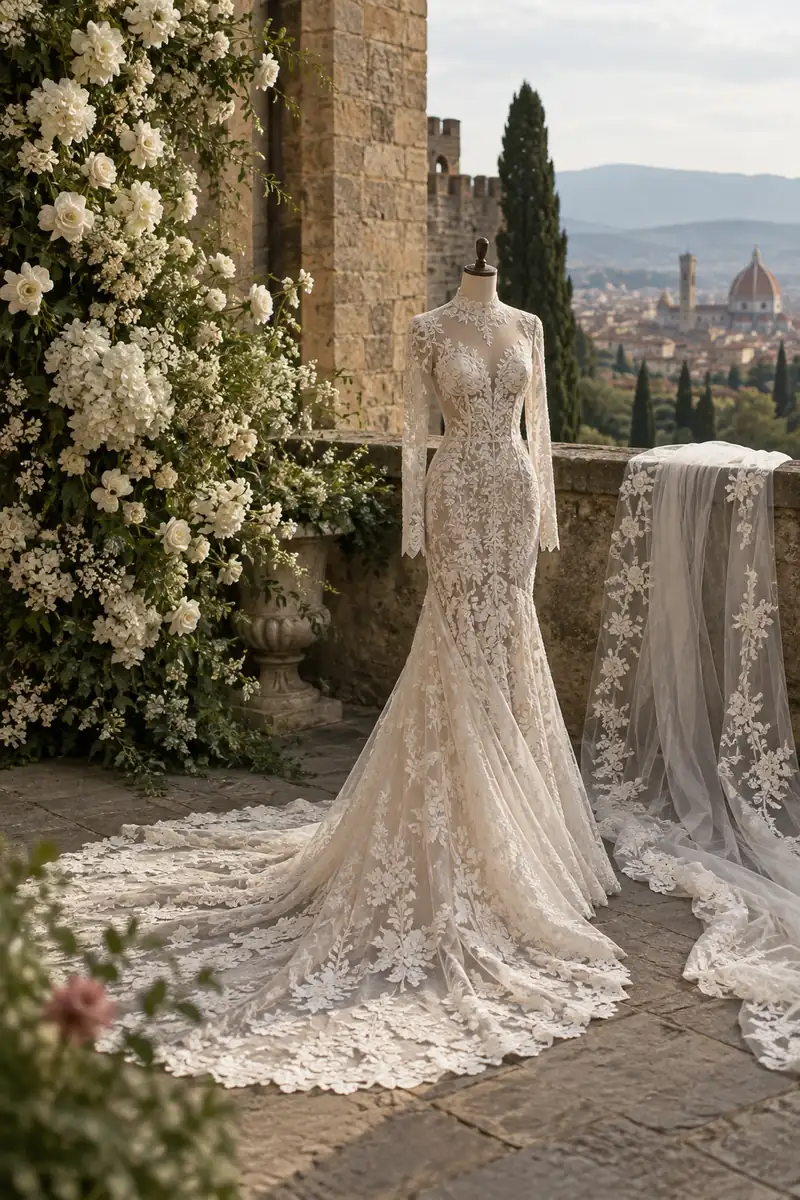
Kim Kardashian married Kanye West at the Forte di Belvedere in Florence on May 24, 2014, in a gown by Riccardo Tisci, then creative director of Givenchy. A wedding dress from a Paris couture house for a reality-television star made plain how far celebrity had moved into high fashion, and it set a pattern: the designer as friend and collaborator rather than supplier. The couple later divorced, but the Florence wedding remains one of the most discussed of its decade. Read the story of the wedding.
Meghan Markle, 2018 — Clare Waight Keller for Givenchy; Stella McCartney
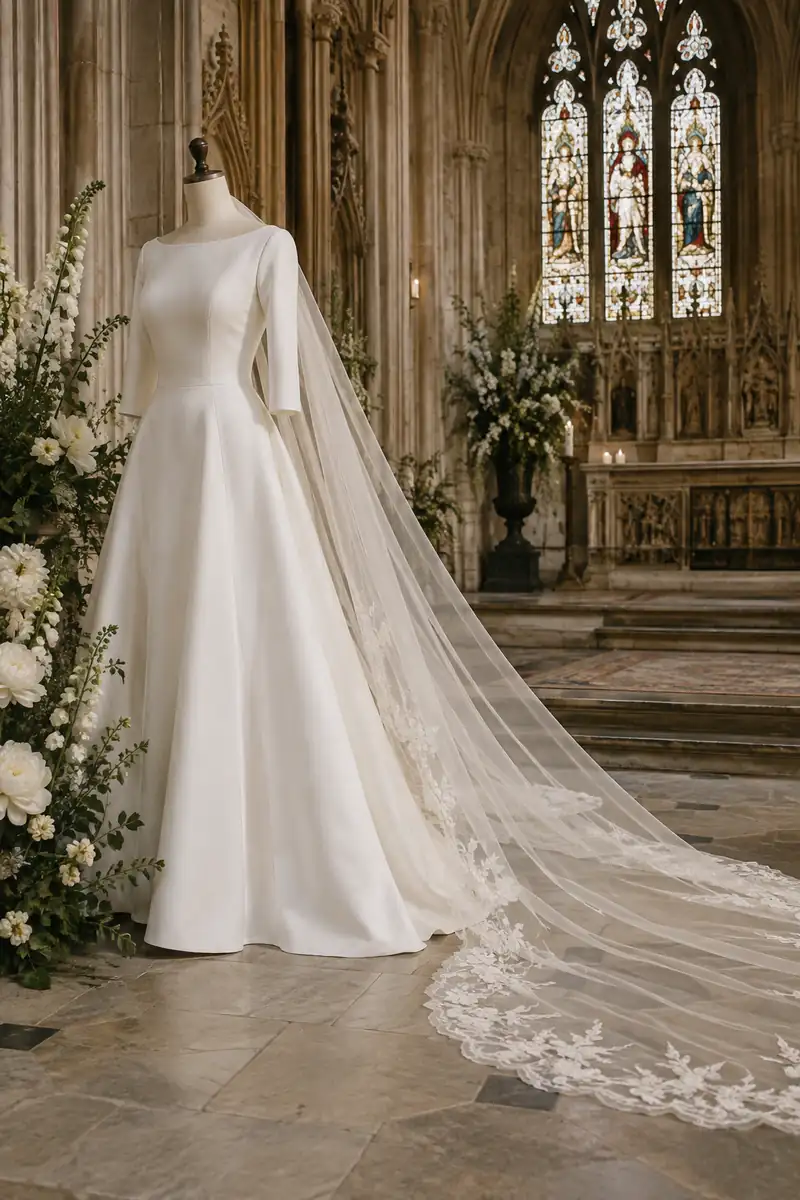
For her May 19, 2018, wedding at Windsor Castle, Meghan Markle wore a Givenchy gown by Clare Waight Keller in double-bonded silk cady, with an open bateau neckline, three-quarter sleeves and only six seams. The drama was in the five-meter silk tulle veil, embroidered over 500 hours with flowers representing all 53 Commonwealth nations, plus the California poppy and wintersweet. For the evening she changed into a halter-neck silk cady dress by Stella McCartney. The pairing did more than any other wedding to make the two-dress wedding standard. Read the story of the wedding.
Princess Eugenie, 2018 — Peter Pilotto and Christopher De Vos
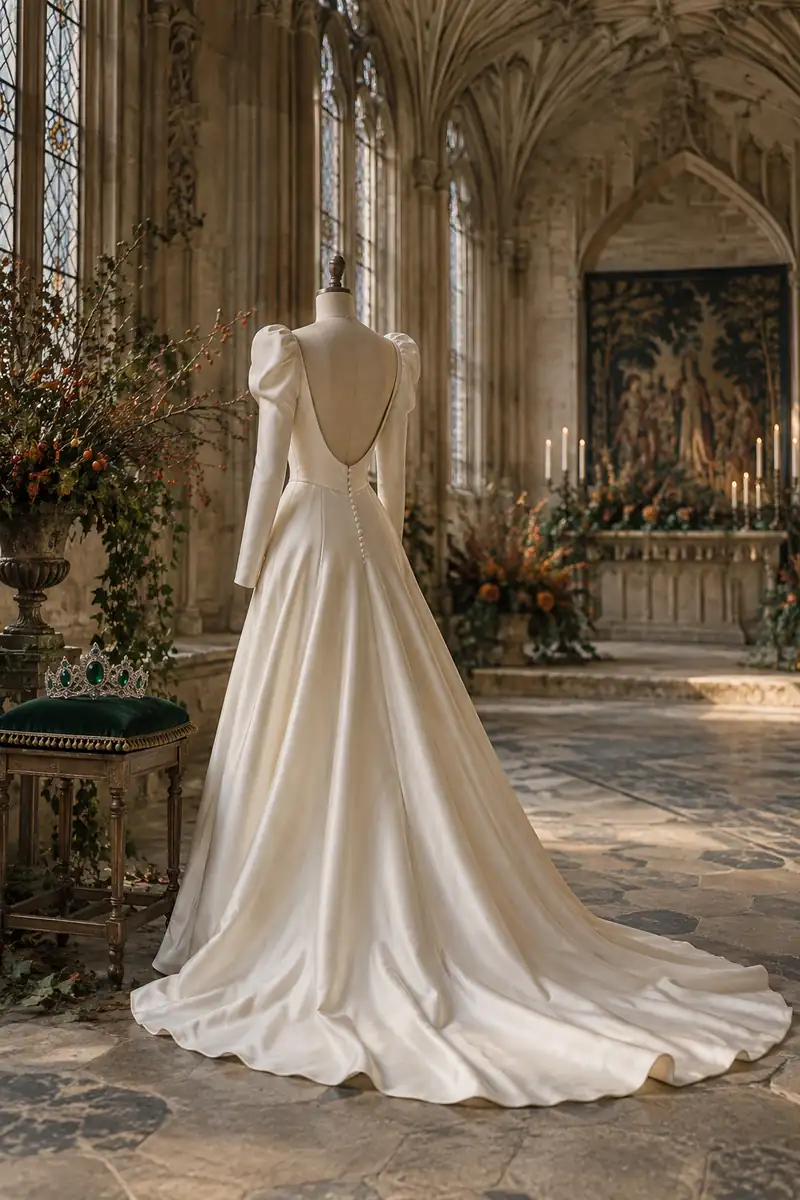
Princess Eugenie married Jack Brooksbank at St George’s Chapel, Windsor, on October 12, 2018, in an ivory gown by Peter Pilotto and Christopher De Vos with folded shoulders, a flowing train and a low back. She wore no veil, and she chose the open back deliberately to show the scar from the scoliosis surgery she had at twelve. It was a quiet, powerful gesture, and a reminder that a wedding dress does not have to hide anything. For the evening she changed into a blush silk gown by Zac Posen.
Deepika Padukone, 2018 — Sabyasachi
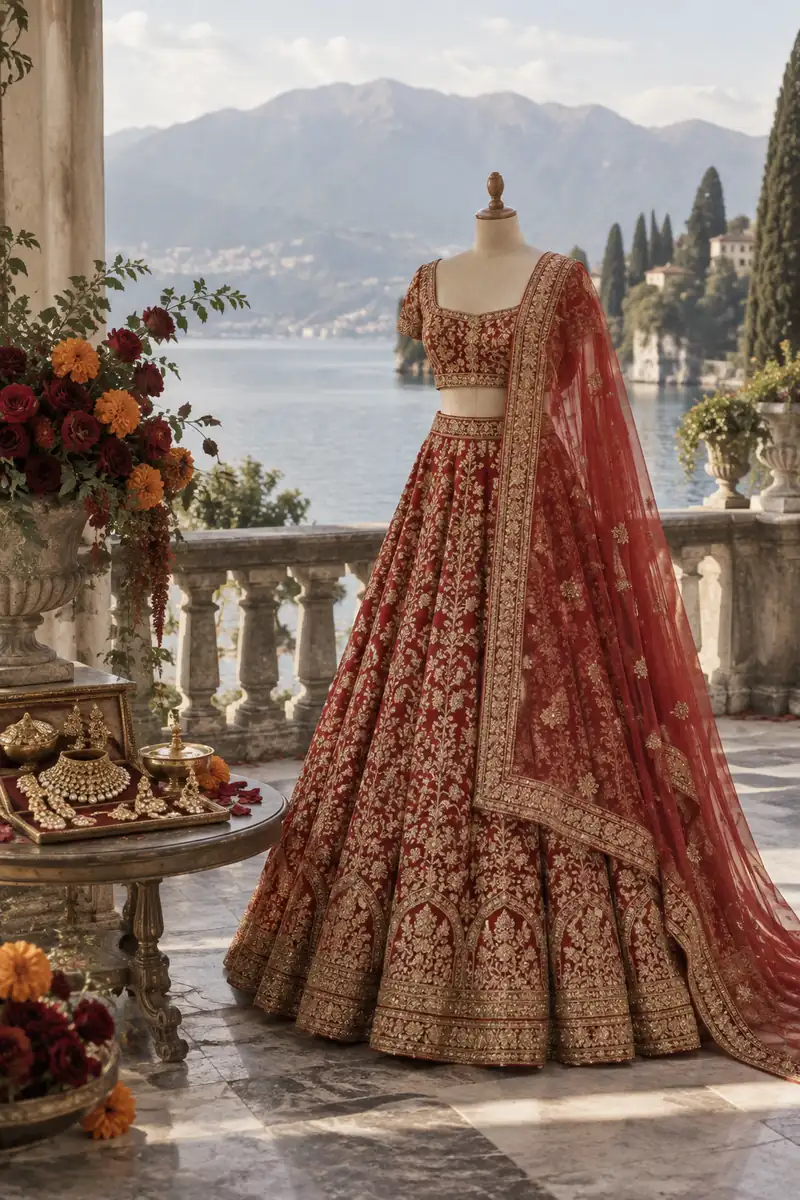
When Deepika Padukone married Ranveer Singh on November 14, 2018, both wore Sabyasachi: she a red lehenga, he a red raw silk sherwani. A year earlier, the designer had dressed Anushka Sharma in a pale pink lehenga for her wedding to the cricketer Virat Kohli. Together these weddings confirmed Sabyasachi Mukherjee as the best-known name in Indian bridal fashion and brought his handwork to an international audience, which now treats the bridal lehenga as the couture it is. See wedding dress styles.
Priyanka Chopra, 2018 — Sabyasachi
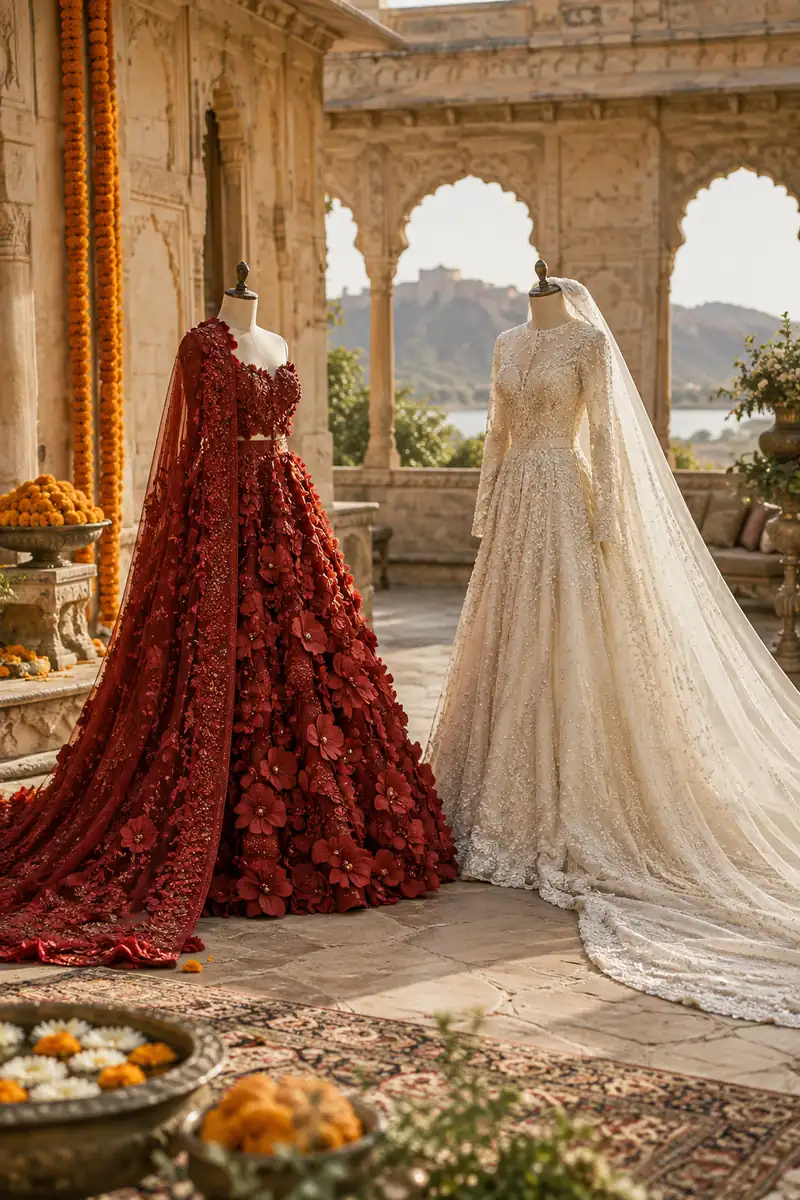
Priyanka Chopra and Nick Jonas married at Umaid Bhawan Palace in Jodhpur in December 2018, with both Hindu and Christian ceremonies and a dress for each. For the Hindu ceremony she wore a crimson Sabyasachi lehenga of hand-cut organza flowers, French knots in silk floss and Siam-red crystals, which the designer said took 110 embroiderers in Kolkata 3,720 hours. It remains one of the best-known examples of a two-tradition wedding, with each family’s culture honored in its own dress. Read the story of the wedding.
Hailey Bieber, 2019 — Virgil Abloh for Off-White
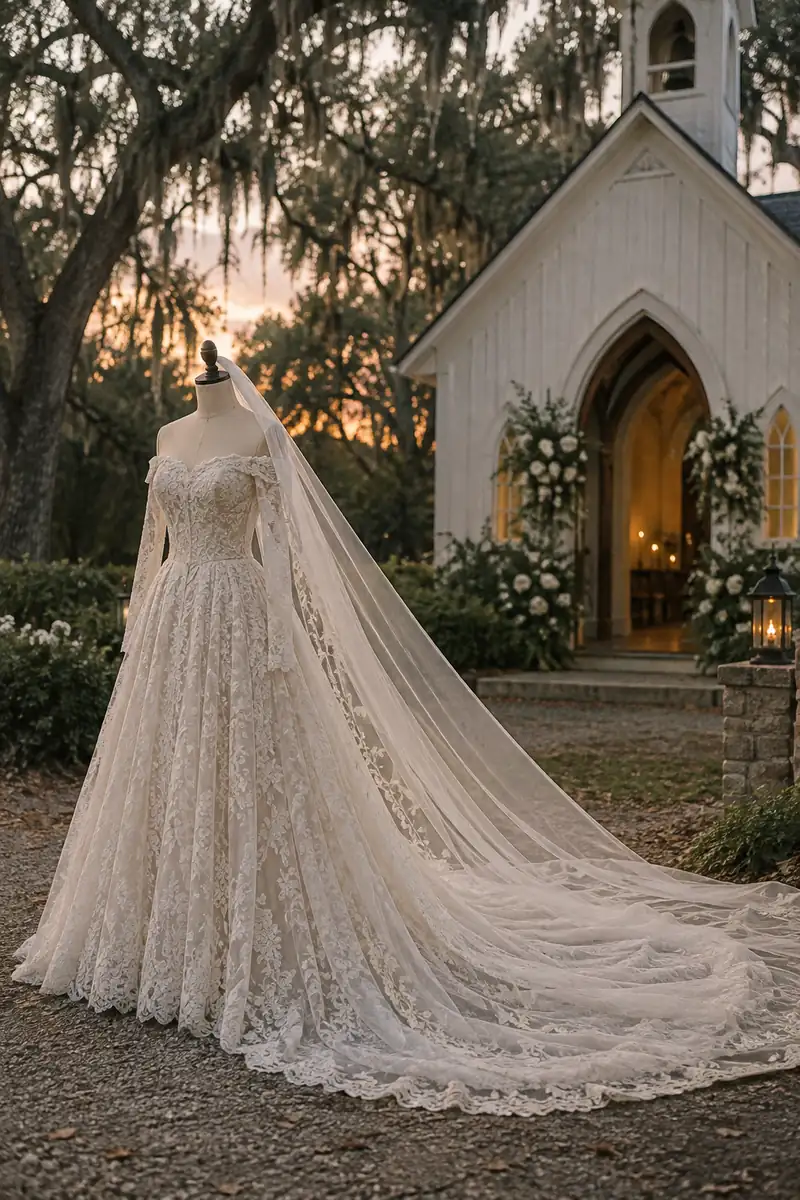
Hailey and Justin Bieber married legally at a courthouse in 2018 and held their wedding ceremony in South Carolina on September 30, 2019. Her custom gown and veil were designed by Virgil Abloh, founder of Off-White, and the veil carried the words “till death do us part” in his signature quotation marks. It was the moment streetwear arrived in bridal, and it made the personalized, lettered veil a detail brides still ask for. Abloh died in 2021, which has given the dress an added poignancy. Read the story of the wedding.
Jennifer Lopez, 2022 — Ralph Lauren
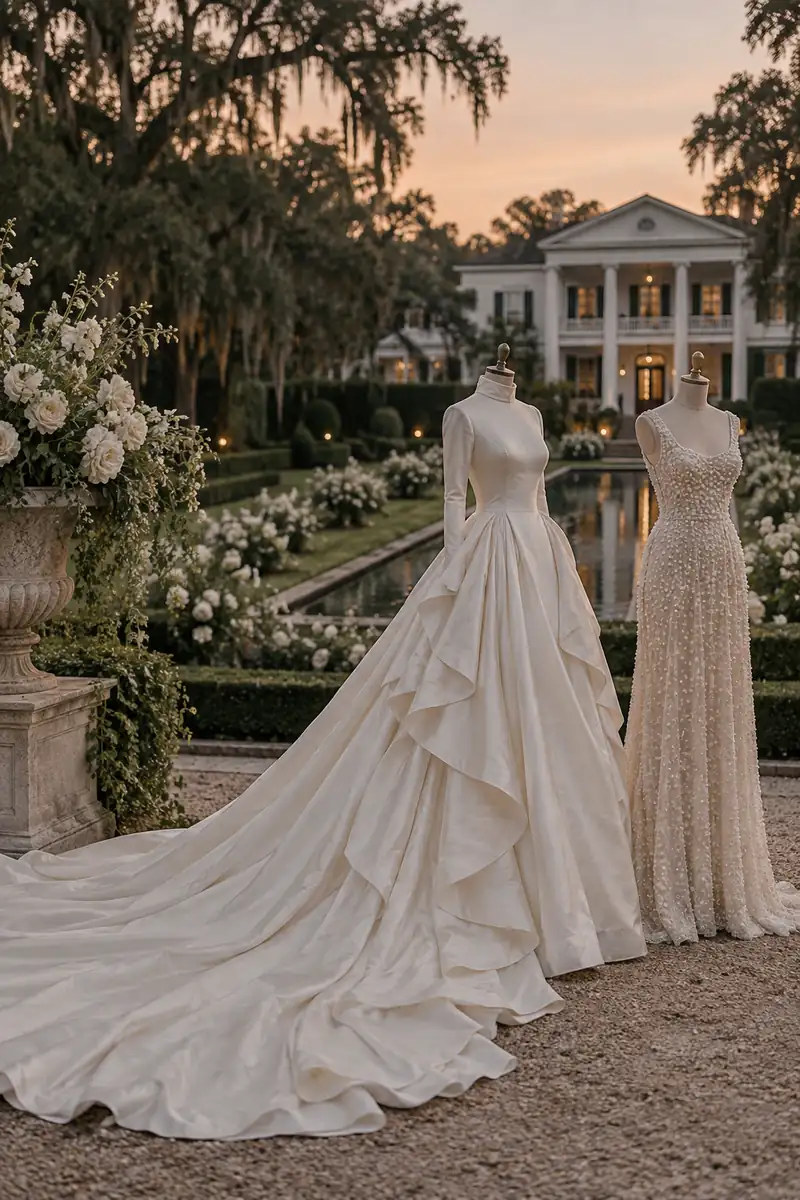
Jennifer Lopez married Ben Affleck in Las Vegas on July 16, 2022, twenty years after their first engagement, and they celebrated with family and friends in Georgia the following month. Ralph Lauren designed her wedding dresses. The appeal of the story was its second chance, and the dresses, made by an American house better known for tailoring than for bridal, helped establish Ralph Lauren as a destination for celebrity brides; Selena Gomez followed in 2025. The couple divorced in January 2025. Read the story of the wedding.
Sofia Richie, 2023 — Chanel
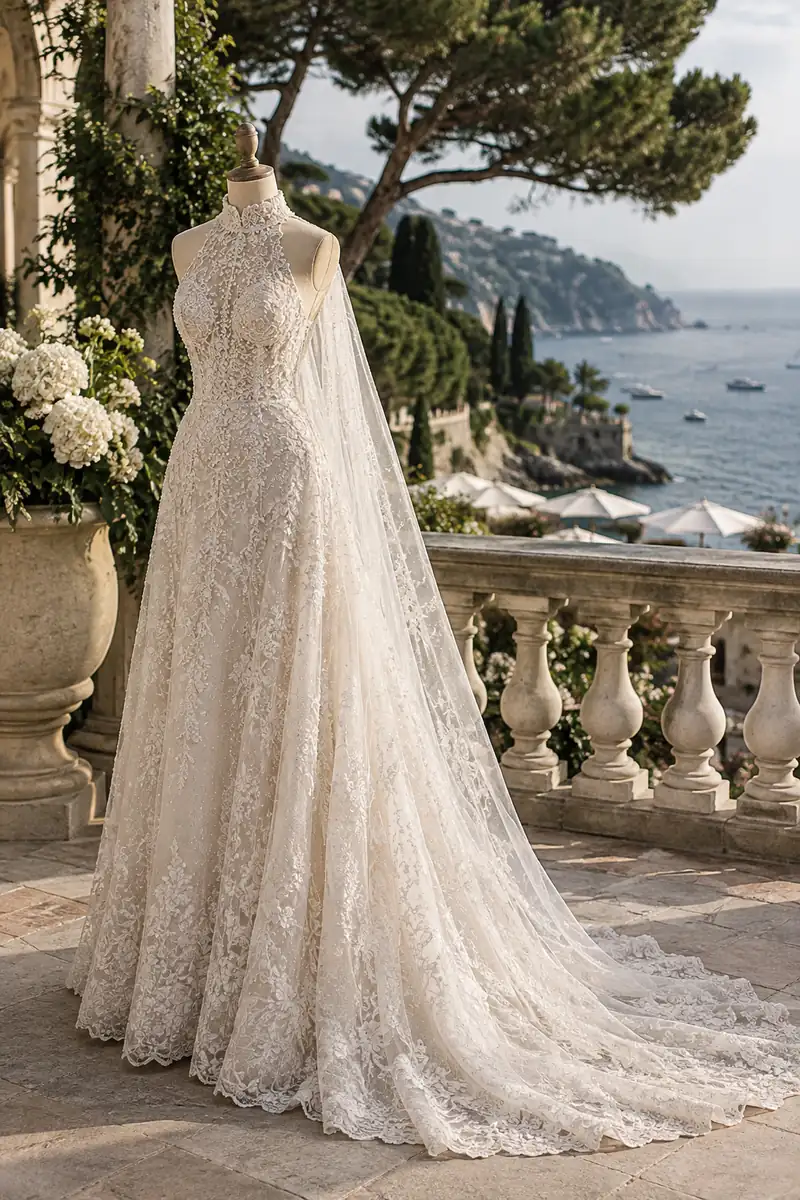
Sofia Richie married Elliot Grainge in the south of France on April 22, 2023, in a Chanel gown; Vogue documented her final fitting at the house. The look, pared-back, polished and without obvious logos, became one of the most discussed wedding looks of the year and a reference for brides who wanted luxury to whisper rather than shout. It showed a new generation that a couture dress could be quiet, and that the house, not the ornament, could do the talking. Read the story of the wedding.
Lauren Sánchez, 2025 — Dolce & Gabbana
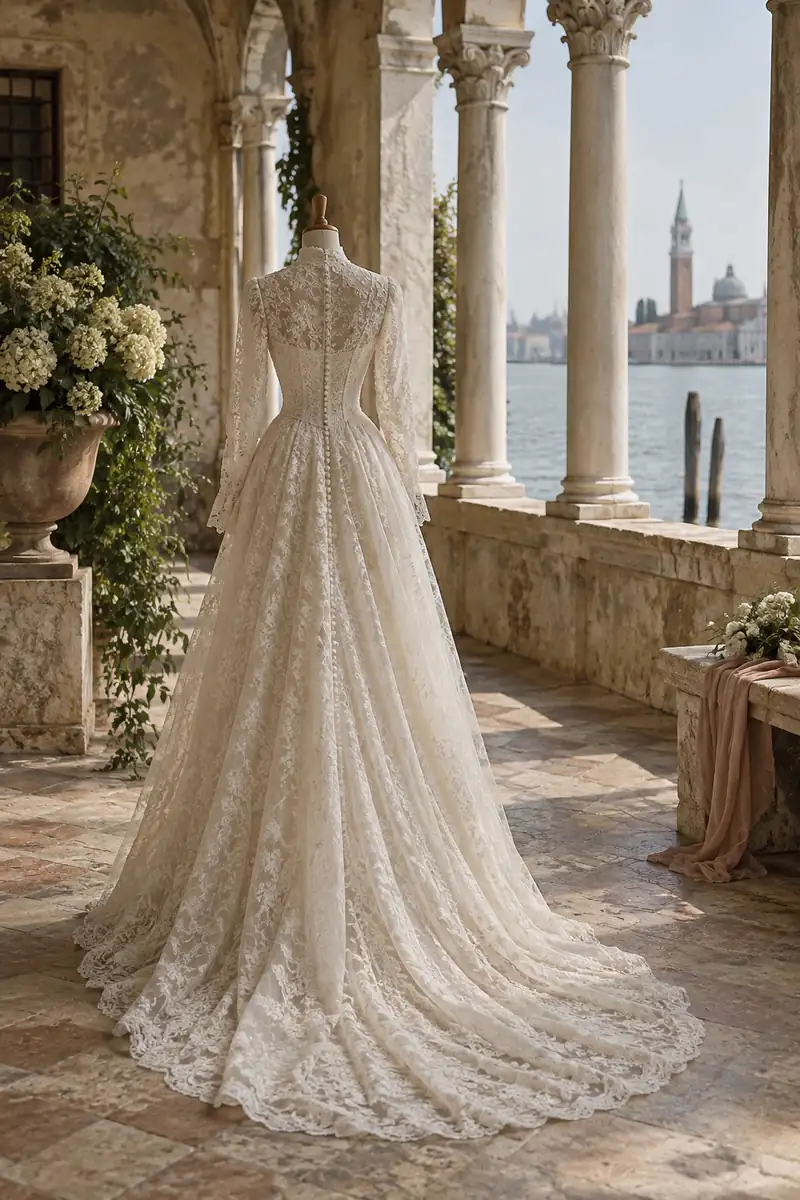
Lauren Sánchez married Jeff Bezos in Venice on June 27, 2025, in a Dolce & Gabbana mermaid-line gown with a high lace neckline and buttons down the front, which took some 900 hours to make. She said she had first wanted “a simple, sexy modern dress,” but changed course after seeing a photograph of Sophia Loren in a high lace neckline, and she called the result “a piece of poetry.” The 1950s Italian reference caught the mood: high-necked lace gowns were one of the trends on the bridal runways the following spring. Read the story of the wedding.
Selena Gomez, 2025 — Ralph Lauren
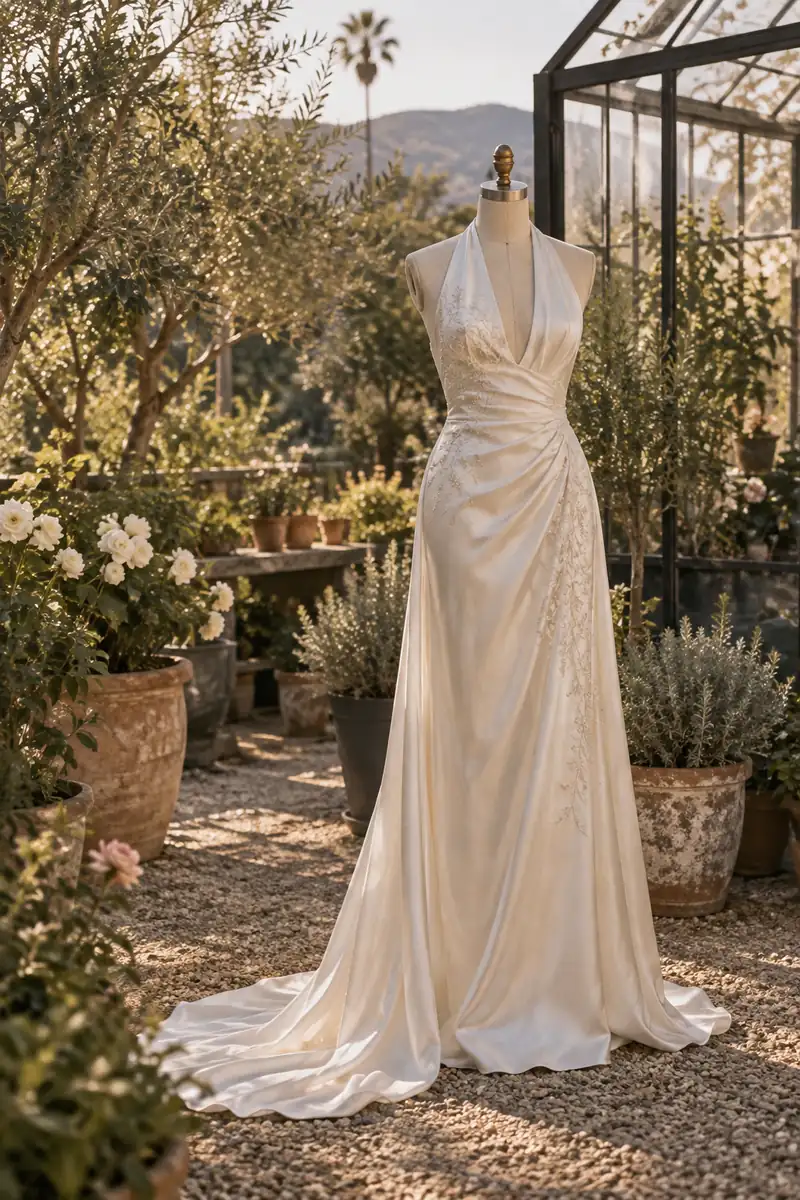
Selena Gomez married Benny Blanco in California on September 27, 2025, in Ralph Lauren. Her ceremony gown had a high halter collar with drapes like flower petals, a deep V at the back and a long train, worn with a long veil and Tiffany & Co. diamonds. She changed into a second dress with a lace, boudoir-style bodice, and then into a Marilyn Monroe-inspired midi with a crisscross neckline and a circle skirt for dancing. Three dresses, each designed for a different part of the day, is the template many fashion-minded brides now follow. Read the story of the wedding.
Taylor Swift, 2026 — Jonathan Anderson for Dior
Taylor Swift married Travis Kelce in New York on July 3, 2026, in bespoke Dior Haute Couture by Jonathan Anderson, who became creative director of Dior’s women’s and couture collections in 2025. It was reported as his first couture wedding dress for a world-famous client, and he also dressed the groom. Slate noted that Swift had rarely worn the house and that Anderson had not been among the predicted names. “It was a joy to work with her,” he told WWD. Few wedding dresses in history have been as anticipated, and brides will be asking for its details for seasons to come.
How to borrow a famous look
Take one element, not the whole dress. Carolyn Bessette’s bias cut, Grace Kelly’s lace sleeves, Meghan Markle’s bateau neckline, Audrey Hepburn’s tea length: any one of these can be adapted to your own dress, venue and budget. The silhouettes and necklines guides will help you name what you want.
Consider the second dress. Many of the most influential looks on this list were changes of clothes. See reception and second dresses.
Personalize the hidden parts. Initials in the train, a scrap of fabric sewn into the lining, embroidered flowers in the veil: these are the details brides have borrowed most from famous weddings, and they cost little. See veils and headpieces and something old, something new.
Know what it costs to copy. Handwork and couture fabrics are what make these dresses expensive. What a wedding dress costs explains where the money goes, and wedding dress designers explains the price tiers.
Written and edited by the Today’s Weddings editors. How we research and check what we publish is set out in our editorial standards. Spotted something wrong? Tell us.