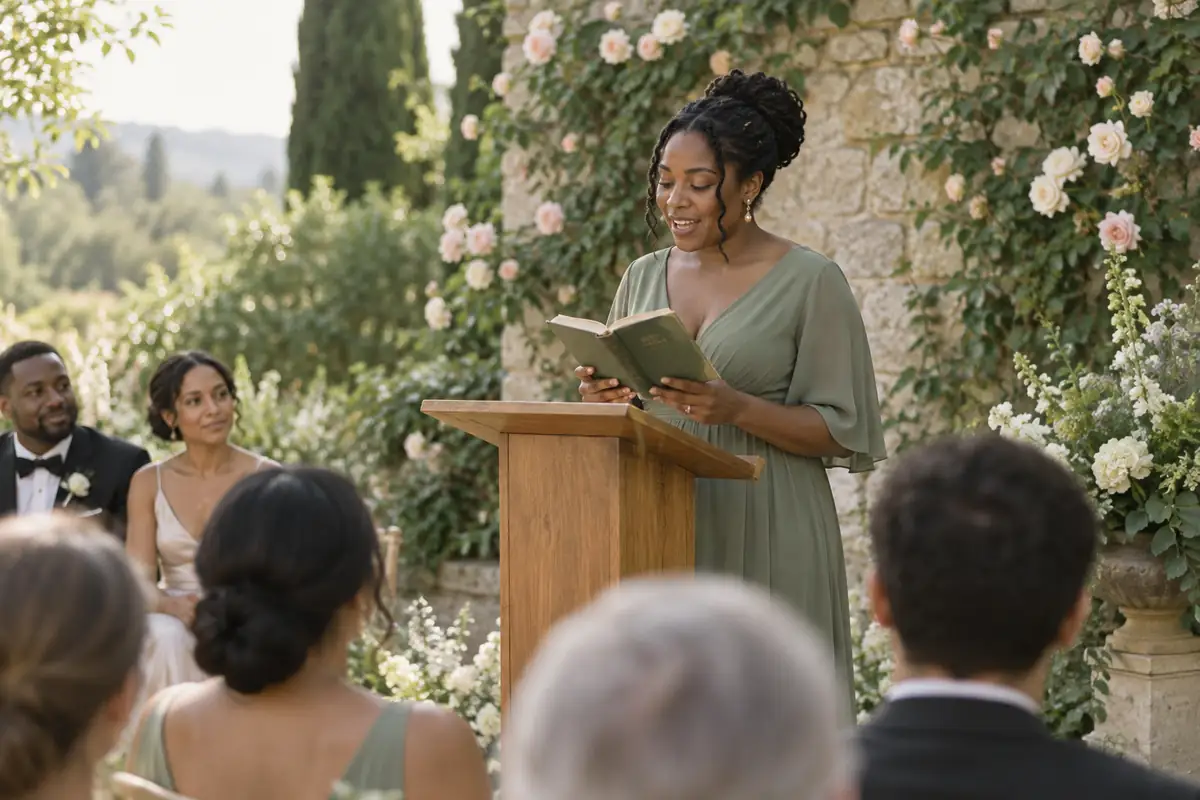
Ceremony · Readings
Modern Wedding Readings: Twenty-Five Couples Still Choose
Neruda, cummings, Angelou, Rilke, Wendell Berry and the anonymous favorites — what each piece says, how long it takes to read aloud, and where to find the full text.
The wedding reference, since 1999
Poems, Bible verses and prose for your ceremony — printed in full, with a note on each and how long it takes to read aloud.
A reading is the only part of the ceremony that belongs to someone other than the two of you and the officiant, which is why choosing one — and choosing who reads it — matters more than it looks. Today’s Weddings has been collecting ceremony readings since 1999. The 104 here are printed in full: poetry from Spenser to Yeats, scripture in the King James Version, prose from Austen, Eliot and Twain, and blessings from several traditions. Each has a note on where it comes from, how long it takes to read aloud and who tends to read it well. For Neruda, cummings, Angelou and other modern writers still under copyright, see modern wedding readings.
Eleven poems from the age of Shakespeare, Spenser and Donne, from the most-read sonnet in English to a Jacobean wedding song almost no guest will know.
Eight poems from the Romantic age, from Burns’s red, red rose to Keats’s bright star: some of the most musical love poetry in English, and how to choose among it.
Elizabeth Barrett Browning counted the ways; her husband wrote eight lines that end on a kiss. Nine Victorian poems for weddings, and how to choose among them.
From a Puritan wife’s poem first printed in 1678 to Amy Lowell’s six lines of 1919: eleven American wedding readings, with Whitman’s open road and Dickinson at her most direct.
Yeats’s embroidered heavens, Tagore’s henna and jasmine, Edward Thomas’s gifts for Helen and the mysterious Roy Croft: seven readings from the turn of the modern age.
Eight brief, mostly anonymous verses that have been read at weddings for decades, nearly all under a minute and several simple enough for a child, with honest notes on where they come from.
Ten passages from novels, letters and children’s books, from Captain Wentworth’s letter to Piglet in the mist: prose readings that sound like people talking rather than poems being recited.
Plato’s other half, Gibran’s pillars and a Quaker’s plain advice: six readings that think about love rather than simply praise it, for couples who want ideas as well as feeling.
Twenty-seven passages from Genesis to the First Letter of John, printed in the King James Version, with advice on choosing, on translations and on what to ask your officiant.
The Prayer Book’s “Dearly beloved,” the Irish road rising to meet you, the Peace Prayer and a prayer by Robert Louis Stevenson: seven blessings and prayers, with honest notes on where they come from.
Short wedding readings that take under a minute to read aloud
Non-religious wedding readings for civil, secular and humanist ceremonies
Classic wedding poems printed in full
Romantic love poems for wedding ceremonies, from Donne and Keats to Christina Rossetti, Yeats and Tagore
Unique and unusual wedding readings that few guests will have heard
Wedding readings for second marriages, blended families and later-in-life weddings
Neruda, cummings, Angelou, Rilke, Wendell Berry and the anonymous favorites — what each piece says, how long it takes to read aloud, and where to find the full text.
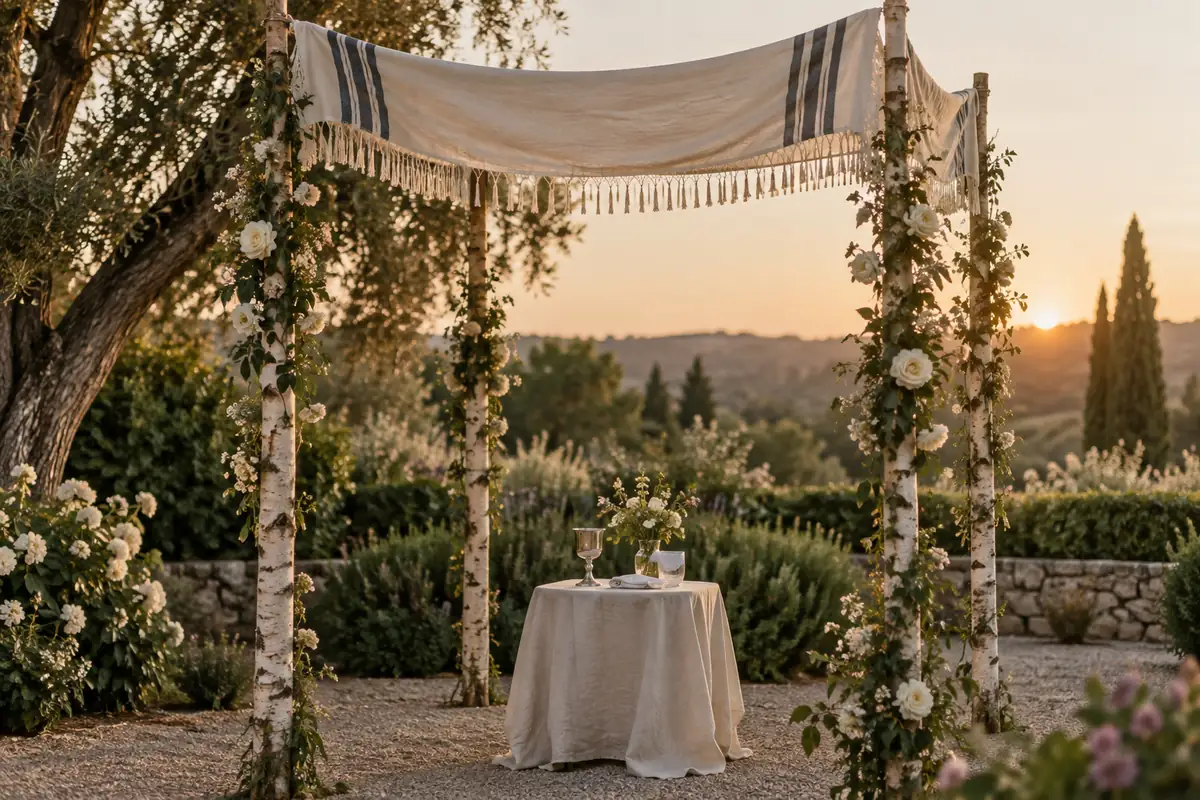
The seven blessings sung beneath the chuppah are among the oldest wedding words still in use. What each one says, who recites them, and how couples make them their own.
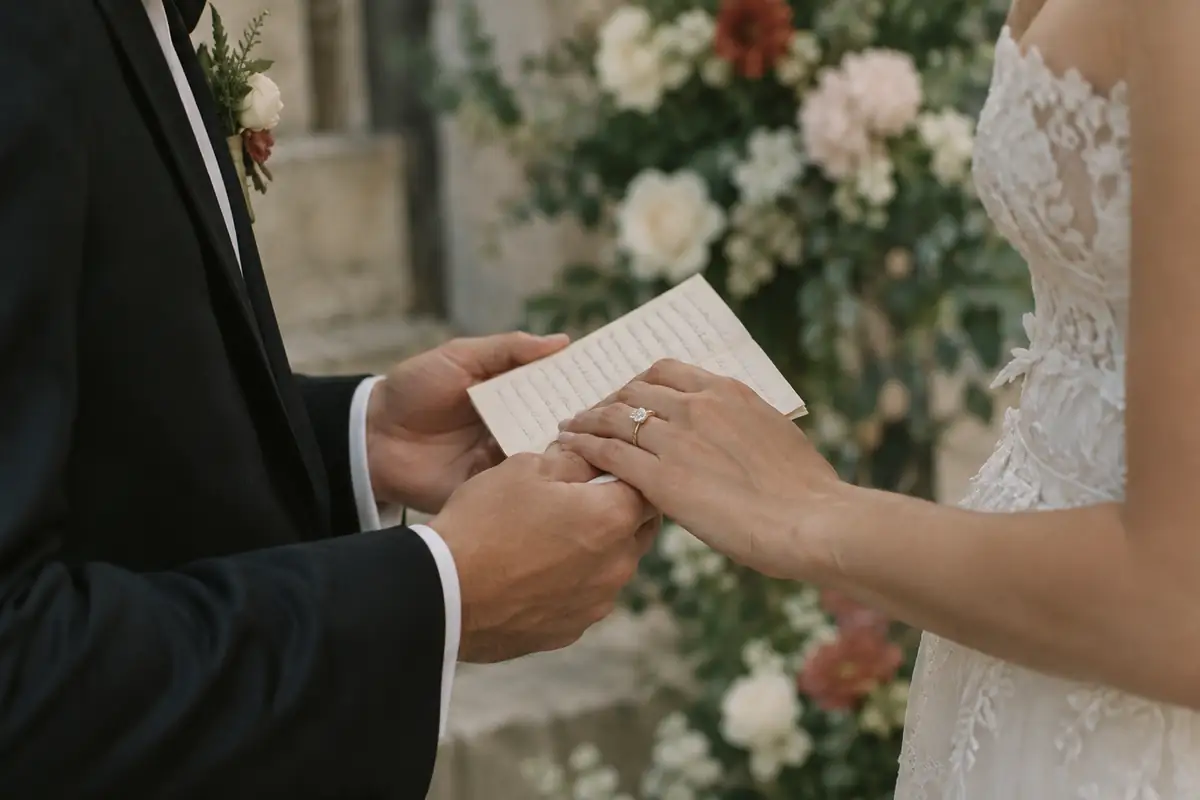
From a blank page to two minutes you can say out loud — what to include, what to leave out, and how to get through it standing up.
Most ceremonies have one to three readings, and two is the most common: often one religious and one secular, or one classic and one modern. A Catholic wedding Mass usually has three (an Old Testament reading, a New Testament reading and a Gospel read by the priest), plus a psalm.
One to two minutes is ideal, which is roughly 130 to 250 words at a comfortable speaking pace. Every reading in our library shows its read-aloud time. If a favorite is longer, read an excerpt.
Readers are usually people the couple want to honor who are not otherwise in the wedding party: siblings, grandparents, godparents, close friends. Choose people who are comfortable speaking in public, give them the text at least two weeks ahead, and ask them to practice aloud.
The perennial favorites are 1 Corinthians 13 (“Love is patient, love is kind”), Shakespeare’s Sonnet 116, Elizabeth Barrett Browning’s “How Do I Love Thee?”, Ruth 1:16–17, the Song of Songs, Kahlil Gibran’s “On Marriage” from The Prophet, the Skin Horse passage from The Velveteen Rabbit, Robert Burns’s “A Red, Red Rose” and the Irish blessing.
Often, yes, but ask first. Many Protestant churches welcome a secular poem alongside scripture; a Catholic wedding Mass takes its readings from an approved lectionary, though a poem may be allowed at another point, such as after communion or at the reception. Civil ceremonies in some places require the opposite: no religious content at all.
You can print any reading in the public domain, which includes everything printed in full on Today’s Weddings. Modern poems and prose still under copyright should be listed by title and author only; see our guide to modern wedding readings.