How Much Does a Wedding Dress Cost in 2026?
The average American bride spends about $2,100 on her dress, before alterations. What that buys, what pushes the price up, how the 2025 tariffs changed bridal, and where to save.
The average wedding dress in America costs about $2,100. That is the figure from The Knot’s 2026 Real Weddings Study, a survey of 10,474 couples married in 2025, published in February 2026. The same study put the average wedding at $34,000, so the dress takes roughly six cents of every wedding dollar. The range around that average is wide: The Knot found brides in its budget, middle and high tiers spending about $1,200, $2,000 and $3,200.
Where you marry matters, too. The Knot reported averages of about $2,200 in the Mid-Atlantic, $2,500 in the Midwest and $2,900 for international destination weddings. And the average leaves out several costs that every bride pays.
What the average leaves out
Alterations. The Knot’s figure does not include them, and almost every dress needs some. Melissa Lynn Oddo of deMelis Atelier told The Knot that standard alterations, meaning a hem, a bustle and bodice adjustments, run about $700 to $1,000, with a hem alone at $125 to $450 and a bustle at $75 to $175. Zola suggests setting aside 20 to 30 percent of the dress price. Our guide to wedding dress alterations explains what each change involves.
Customization. Added sleeves, a detachable overskirt, a cape or a changed neckline are charged separately, and a request made after ordering costs more than one made at the start.
Rush fees. If you order late, both the maker and the seamstress may charge extra. Zola notes that rushed alterations can add 25 to 50 percent.
Everything else. A veil or headpiece, shoes, foundation garments, jewelry, a second dress for the reception, steaming before the day and preservation afterward. Price each one before you choose the dress, not after.
The deposit. The Knot notes that salons typically take 30 to 50 percent when you order, with the balance due at pickup. Deposits are often non-refundable, so read the contract.
What drives the price
Fabric. Silk costs far more than polyester, and heavy silks such as duchess satin and mikado cost more again. Lace is one of the most expensive components of any dress; tulle is cheaper. At the April 2026 bridal shows, WWD described tulle skirts as “a more streamlined and cost-effective alternative” to lace. For the differences between fabrics, see fabrics and lace.
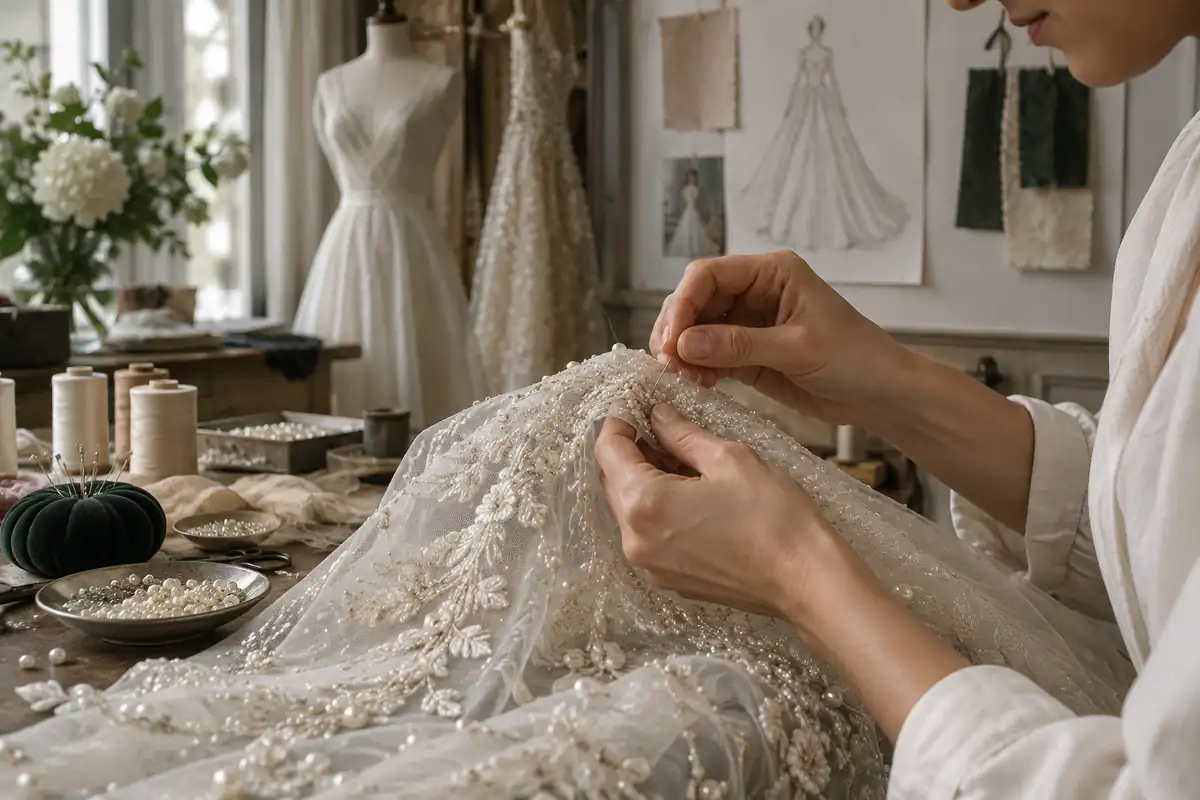
Handwork. Beading, embroidery and appliqué are paid for by the hour. At the top of the market, houses now publish the numbers. The Knot reported that an Ines Di Santo gown shown in April 2026 took 13,000 hours of work; Lauren Sánchez’s 2025 Dolce & Gabbana wedding gown took about 900.
Where and how it is made. A made-to-order dress from a large overseas factory, a gown sewn in a New York atelier and a bespoke couture piece are different products. Wedding dress designers explains the tiers and what “couture” actually means.
The inputs. “Brands are paying anywhere from 15–50% more on inputs alone,” the Chicago designer Alyssa Hoersten of Alyssa Kristin told The Knot in 2026, citing tariffs and higher shipping costs on nearly every material used in a wedding dress.
The tariffs, and what they did to bridal
The American bridal industry depends on China. The National Bridal Retailers Association, which represents about 6,000 bridal and special-occasion shops, says roughly 90 percent of wedding dresses are made there. When the United States raised tariffs on Chinese imports to 145 percent in April 2025, bridal felt it at once, and the association began a letter-writing campaign asking lawmakers for an exemption.
CNBC reported the effects in May 2025:
- Mon Cheri added a 39 percent tariff surcharge for shops, roughly a 15 percent rise at retail, and its founder said production had been cut roughly in half.
- Justin Alexander added surcharges equal to about a 6 percent retail increase and absorbed the difference on orders placed before the tariffs. About half its production was then in China, 45 percent in Vietnam and 5 percent in Myanmar.
- Anne Barge said it was leaving China altogether; one of its dresses, the Norfolk, would have risen from $3,730 to $6,150 under the tariffs then in force.
- David’s Bridal made 48 percent of its merchandise in China at the end of 2024 and aimed to move nearly all production out by the end of 2025.
The association’s vice president, Sandra Gonzalez, estimated that dresses were costing 5 to 25 percent more, changing “on a week-by-week basis.” Tariff rates on Chinese goods changed repeatedly over the rest of the year.
What happened in 2026. On February 20, 2026, the Supreme Court ruled 6–3 in Learning Resources, Inc. v. Trump that the emergency-powers law used for most of the 2025 tariffs did not authorize them. The administration replaced them within days with a temporary tariff on most imports, initially 10 percent, under Section 122 of the Trade Act, which is limited to 150 days. When it expired on July 23, 2026, new Section 301 tariffs took effect on imports from 60 economies, including China and Vietnam, at roughly 10 to 13 percent depending on the country, on top of earlier Section 301 duties on Chinese goods that remain in force. Importers may be owed refunds for the struck-down tariffs, but in February 2026 NPR spoke to the owner of a long-established Indiana store that sells bridal gowns, who buys through suppliers rather than importing directly and was unsure any refund would ever reach him.
What it means for you. Tariffs are lower than at their 2025 peak, but they have not gone away, and manufacturers have moved production to Vietnam, Myanmar and elsewhere at a cost. Expect surcharges on some labels, ask whether the price quoted includes them, and get it in writing. MediaPost, reporting on the market in 2026, noted that about a third of couples named tariffs as a budget concern.
How to save
Set a ceiling that includes alterations, and tell the consultant on arrival. A good one will not show you anything above it.
Shop sample sales and trunk shows. Salons sell floor samples at a discount to make room for new collections, and some offer incentives when a designer’s full collection visits. Our guide to secondhand, rental and sample dresses explains what to check before you buy.
Consider pre-owned, rental or off-the-rack. A designer dress worn once can cost a fraction of its original price. Alternatives to the bridal salon covers more options.
Look beyond bridal. White and ivory evening dresses, bridal separates and courthouse and civil dresses are often priced well below gowns of similar quality.
Choose simpler construction. Tulle instead of lace, less beading and a shorter train all reduce both the price and the alterations bill.
Order in time. Rush fees are among the most avoidable costs in a wedding. Our shopping guide sets out the timeline, and the wedding budget guide shows how the dress fits into the whole.
Written and edited by the Today’s Weddings editors. How we research and check what we publish is set out in our editorial standards. Spotted something wrong? Tell us.