Wedding Veils and Headpieces: How to Choose and Wear Them
The veil changes a bride’s whole silhouette in a single movement. How to choose its length, edge and headpiece, when a tiara is appropriate, and the royal veils everyone remembers.
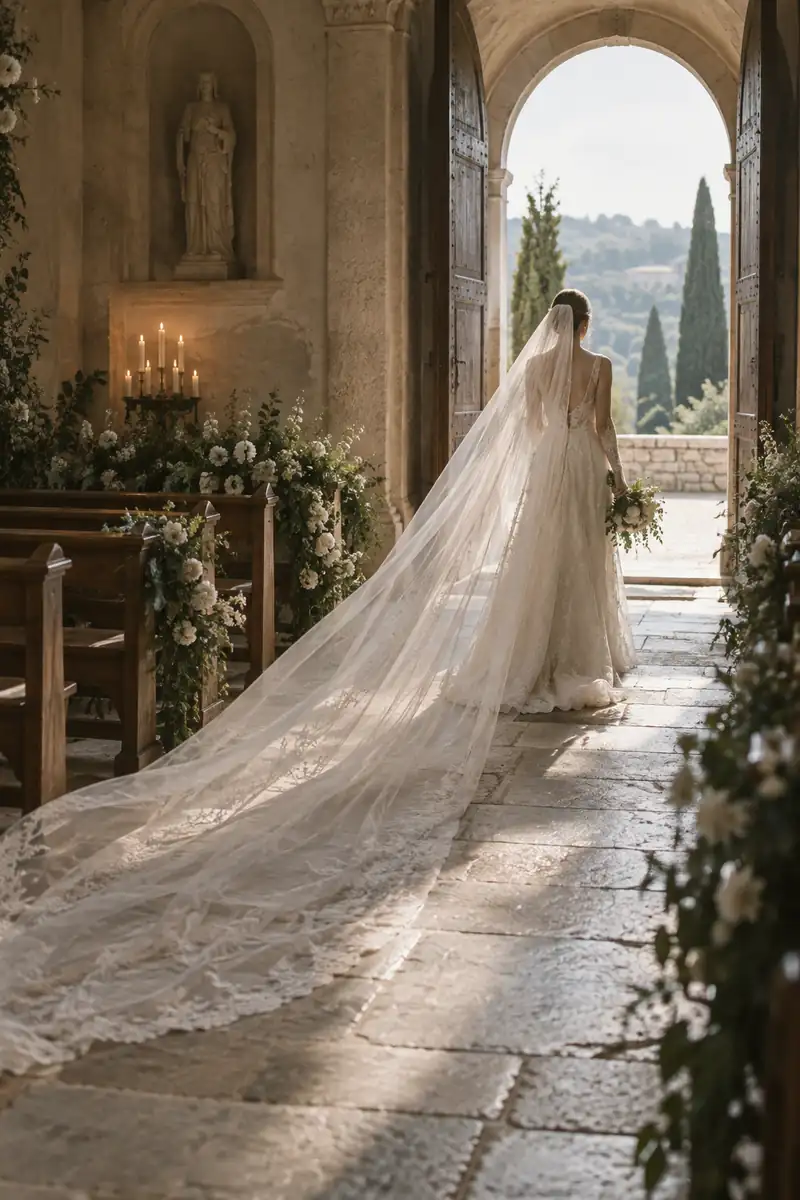
When Lady Diana Spencer arrived at St. Paul’s Cathedral on July 29, 1981, the world saw the veil before it saw the dress. Made from some 153 yards of ivory silk tulle scattered with mother-of-pearl sequins and held by her family’s Spencer tiara, it floated above a 25-foot train, reportedly the longest in royal wedding history. It remains the extreme example of a simple truth: the veil changes the whole silhouette of a bride, and more than any other accessory it decides how she will look in the aisle.
Choosing the length
The lengths themselves, from birdcage to cathedral, are listed with measurements in Veils, decoded. What matters is how the length relates to the dress.
Frame the best part of the dress. A veil that ends at the waist draws attention to the waist; one that ends at the fingertips falls over the hips and skirt. If the dress has a beautiful back, a sheer, simple veil lets it show through, and a veil that ends above a low back can hide it altogether.
Balance the train. A veil should generally be no longer than the train, or equal to it. A cathedral veil over a chapel train overpowers the dress.
Think about the room. A cathedral veil looks glorious in a long church aisle and awkward in a small registry office. Short veils suit civil ceremonies and gardens; long ones need space. Courthouse and civil wedding dresses has ideas for small rooms.
Consider movement. Long veils catch on chairs, heels and wind. A waltz or fingertip veil can be worn all evening; a cathedral veil usually comes off after the photographs.
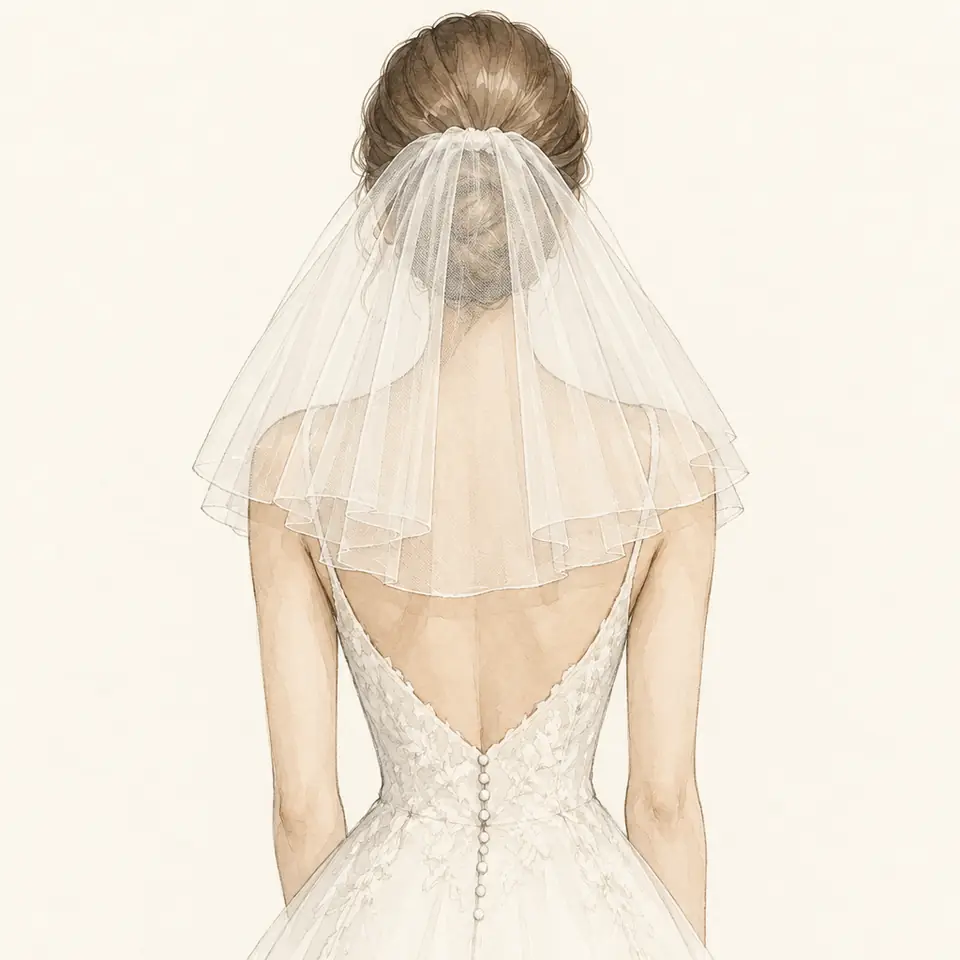 Shoulder
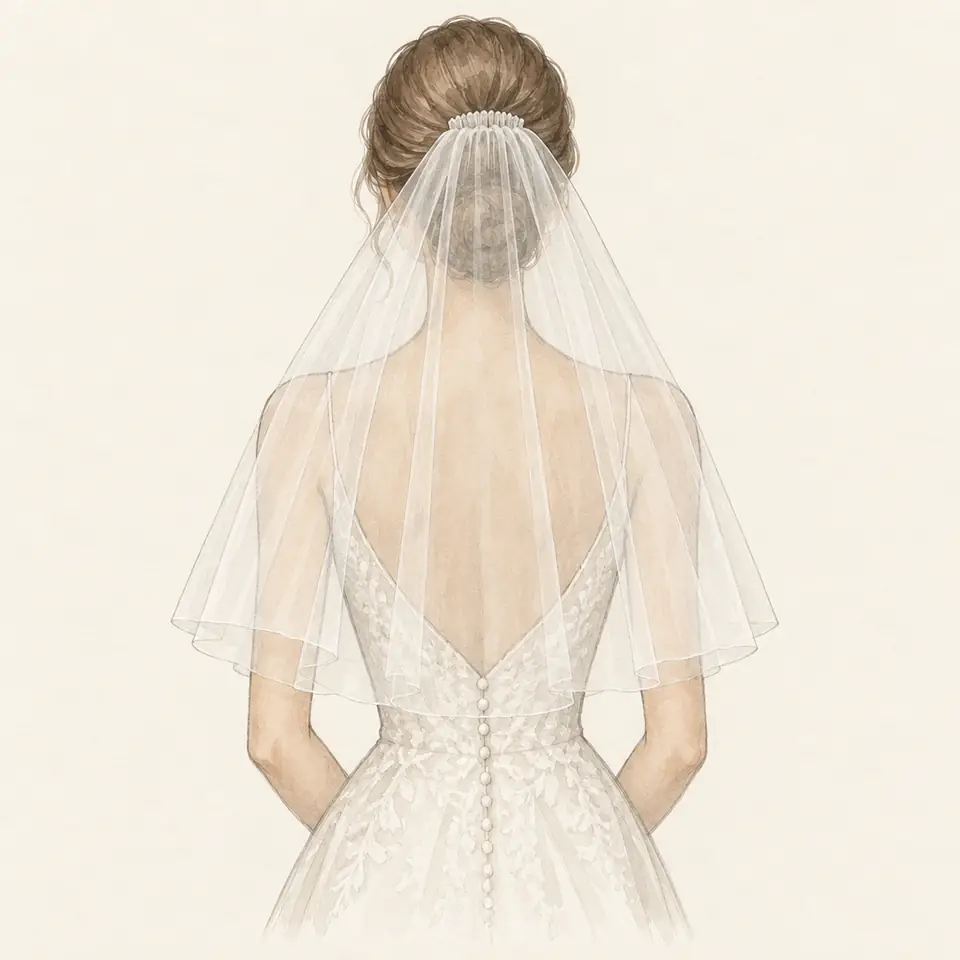 Elbow
Elbow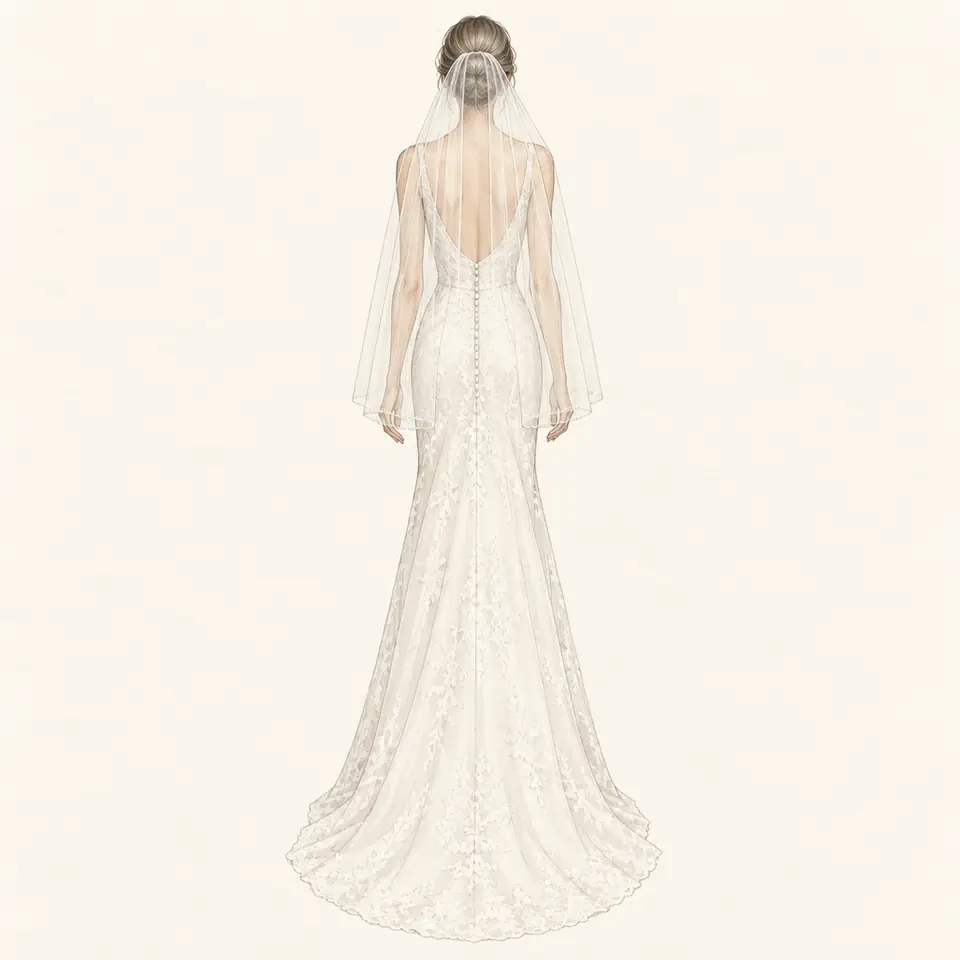 Fingertip
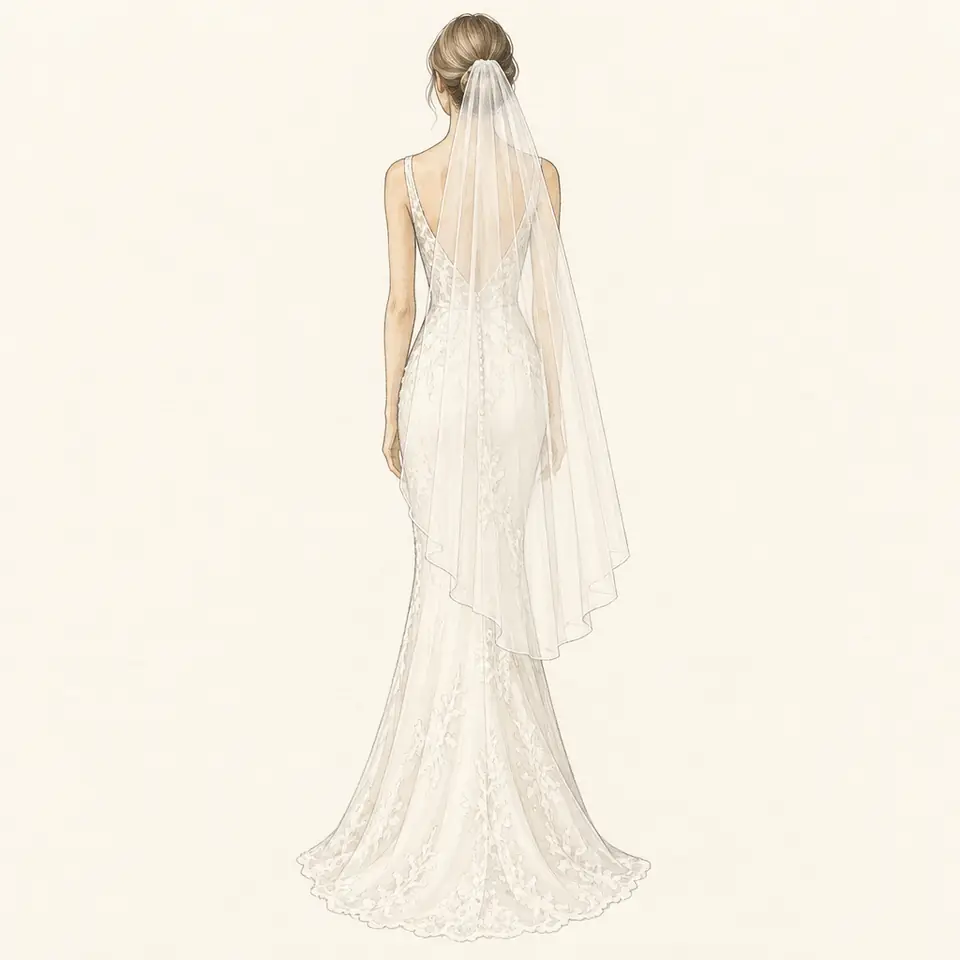 Waltz
Waltz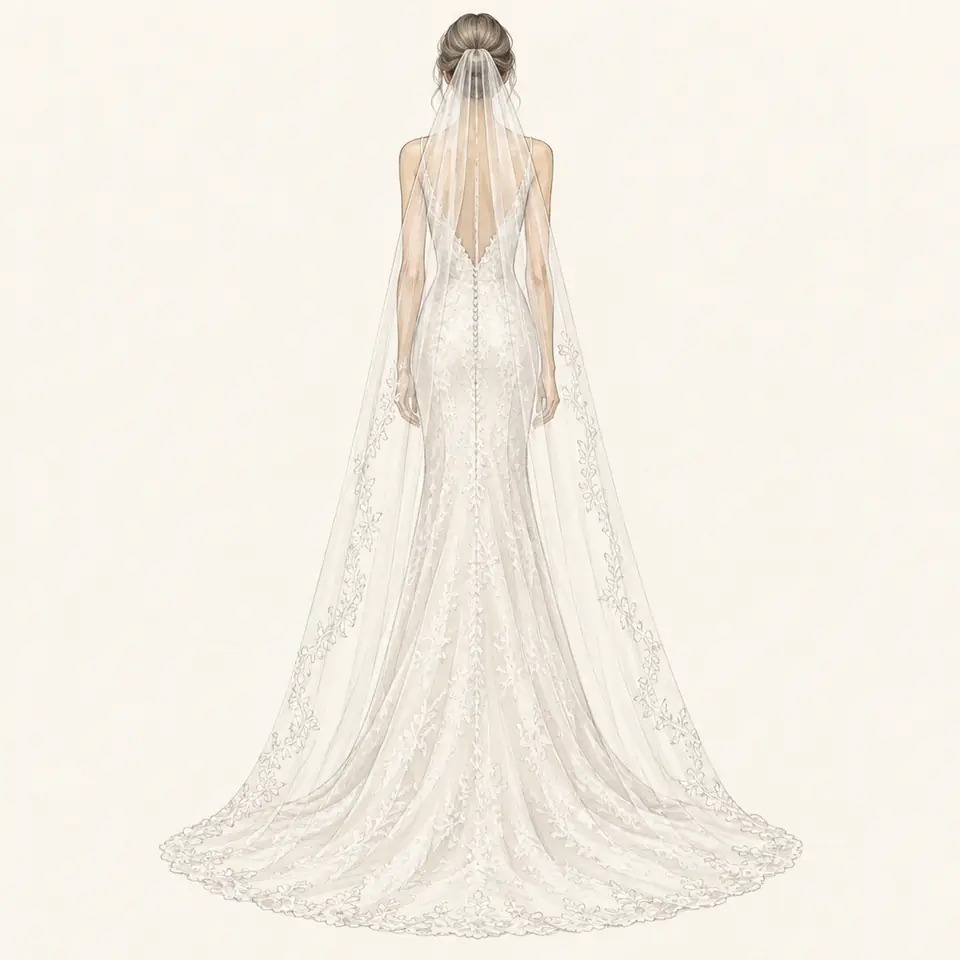 Chapel
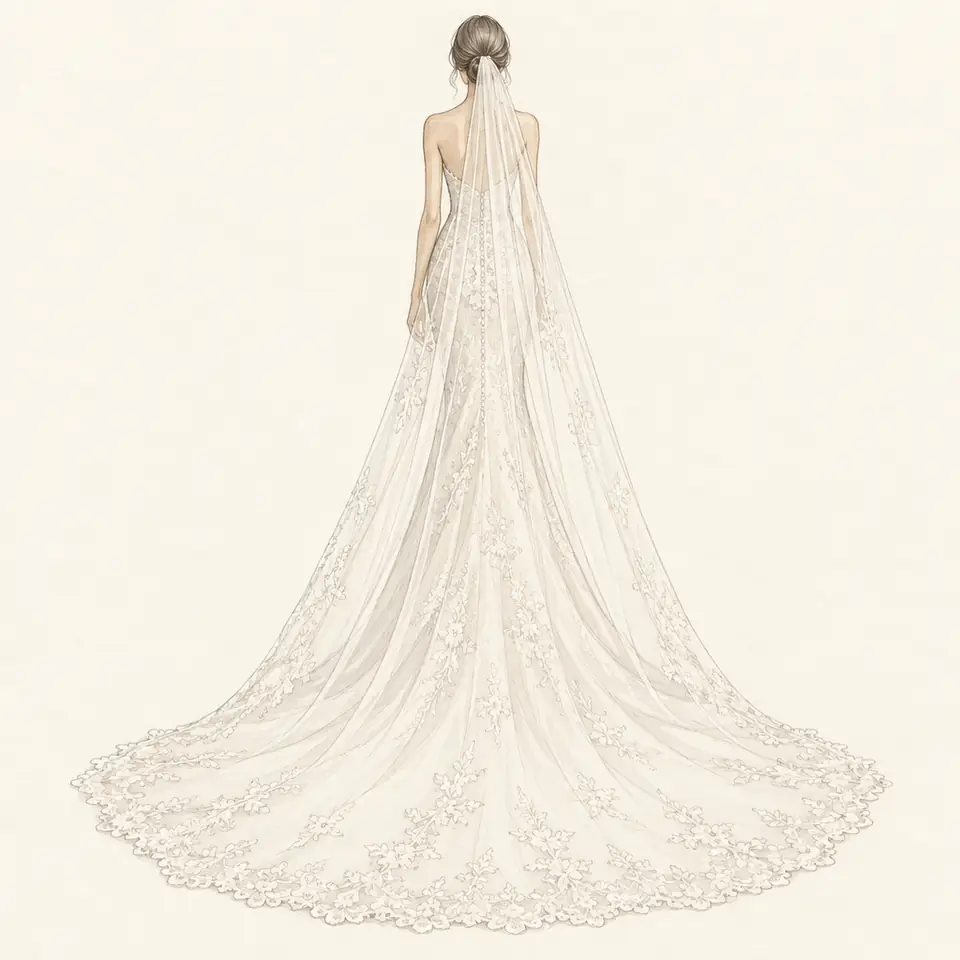 Cathedral
Tiers, blushers and mantillas
Single or two tiers. A single-tier veil is simple and modern. A two-tier veil has a short layer that can be worn forward over the face as a blusher, then lifted back.
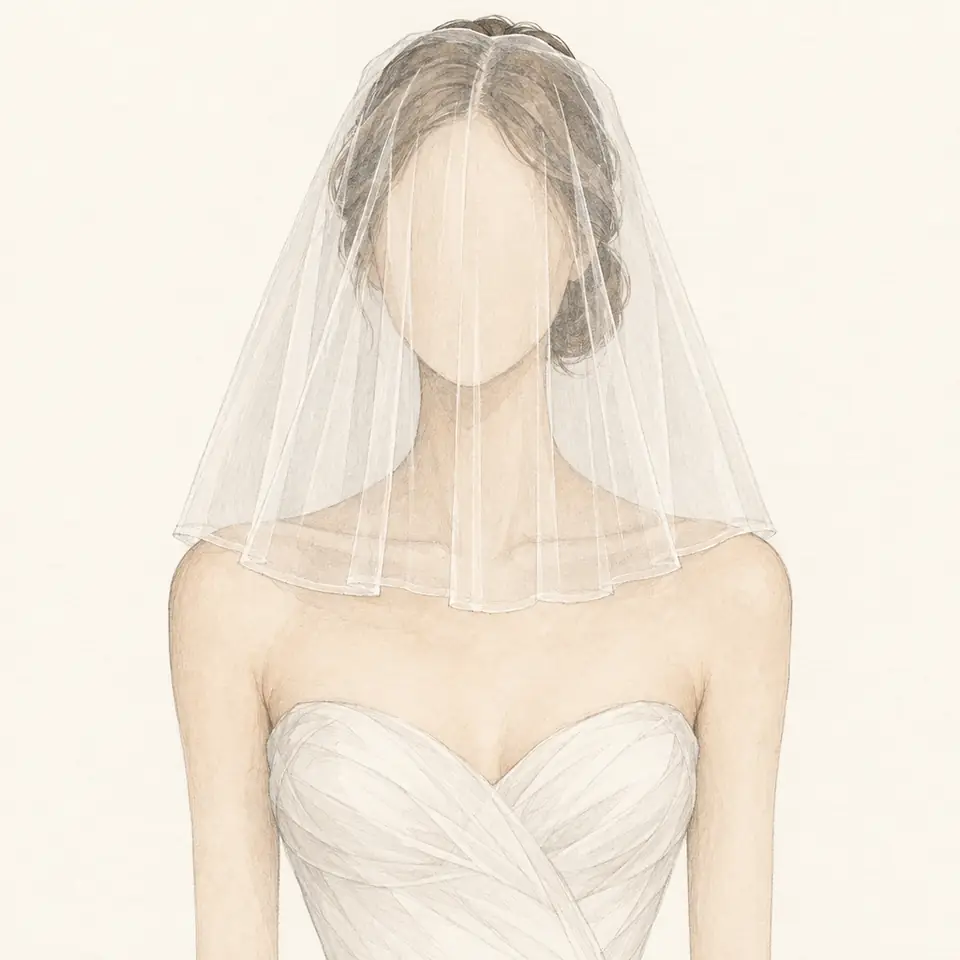
The blusher. A short layer worn over the face for the processional. It is lifted after the vows or at the altar, depending on custom. It makes for a dramatic moment and a beautiful photograph, but it needs a hairstylist who knows how to anchor it.
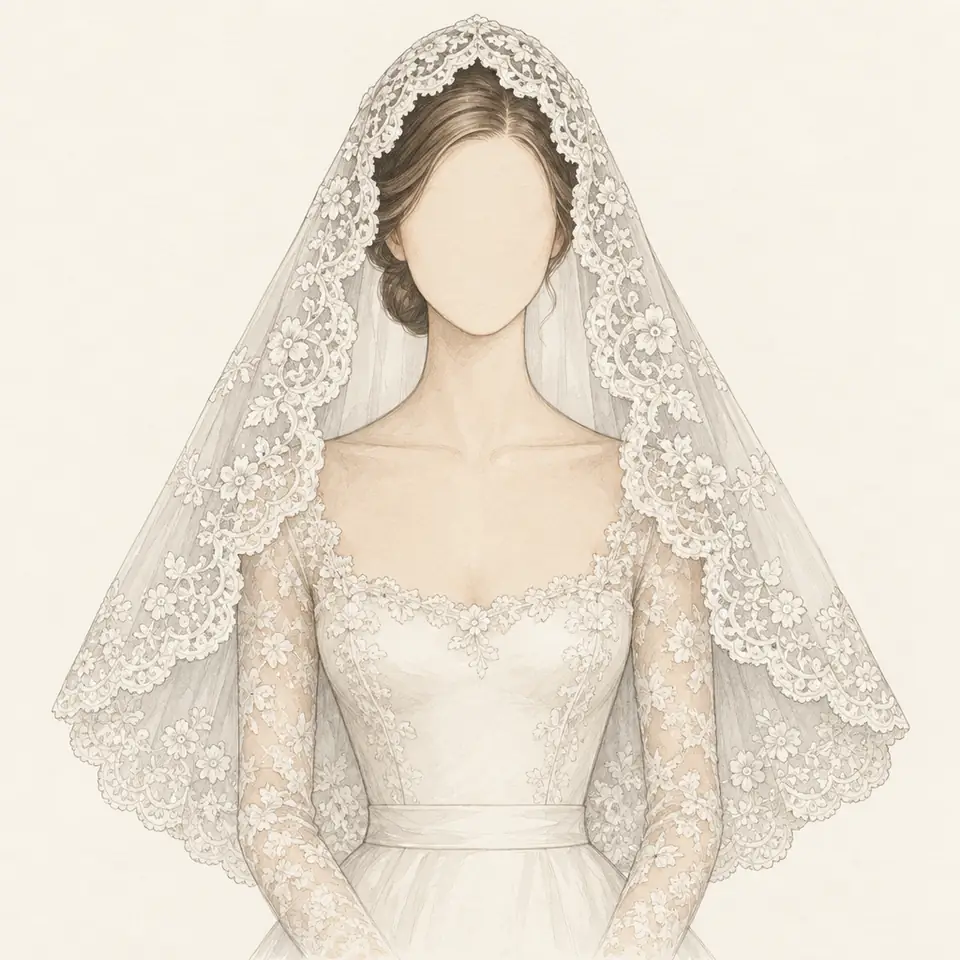
The mantilla. A lace or lace-edged veil worn further forward on the head, framing the face. It comes from Spain, where it was traditionally worn with a tall comb called a peineta, and where Spanish brides traditionally wear white mantillas at church weddings. It is beautiful in church and with a simple gown whose lace or neckline it can echo.
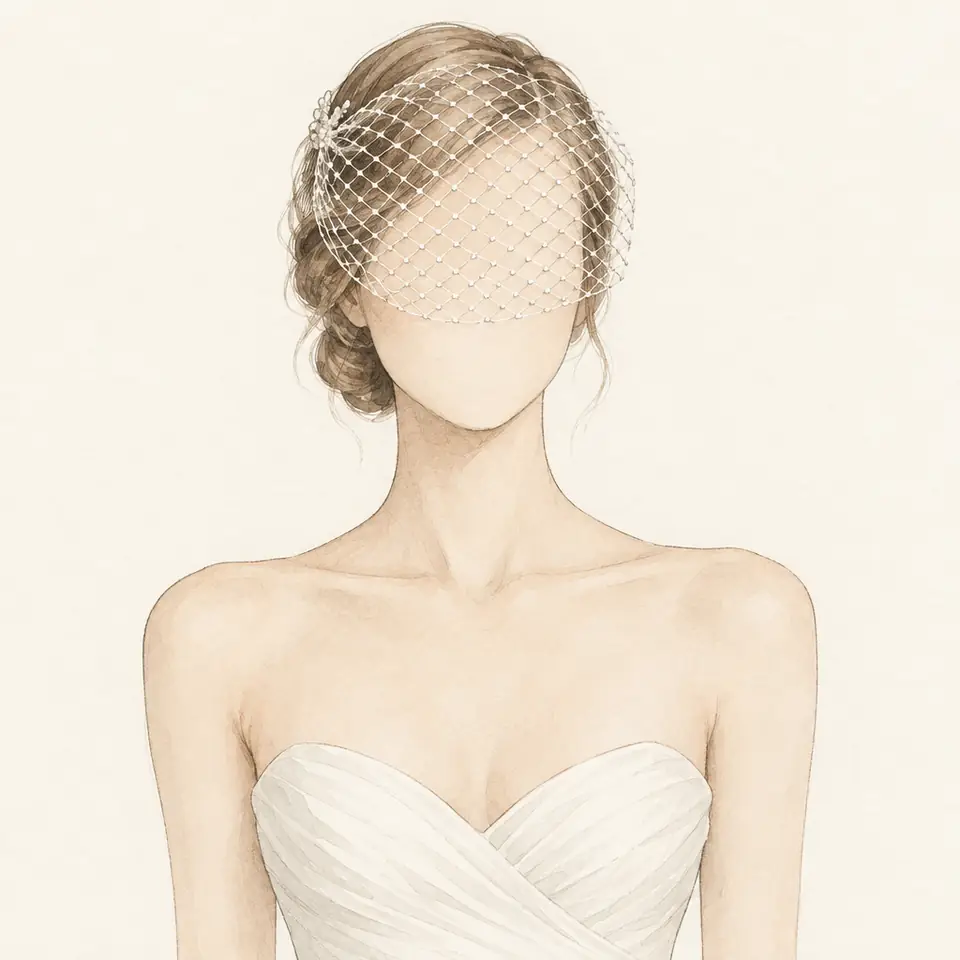
The birdcage. A short veil of netting covering the eyes or face, attached to a comb or small hat. Chic with short dresses, suits and vintage-inspired looks.
The edge finish
The edge decides how the veil reads from a distance.
- Cut edge. The tulle is simply cut. It is almost invisible and very modern.
- Pencil or rolled edge. A narrow stitched edge, lightly defined.
- Ribbon edge. A satin ribbon border, from narrow to wide. Graphic and classic; best with simple dresses.
- Lace edge. Lace appliqués or a lace border. Choose lace that matches the dress.
- Horsehair or crinoline edge. Gives body and a gentle wave.
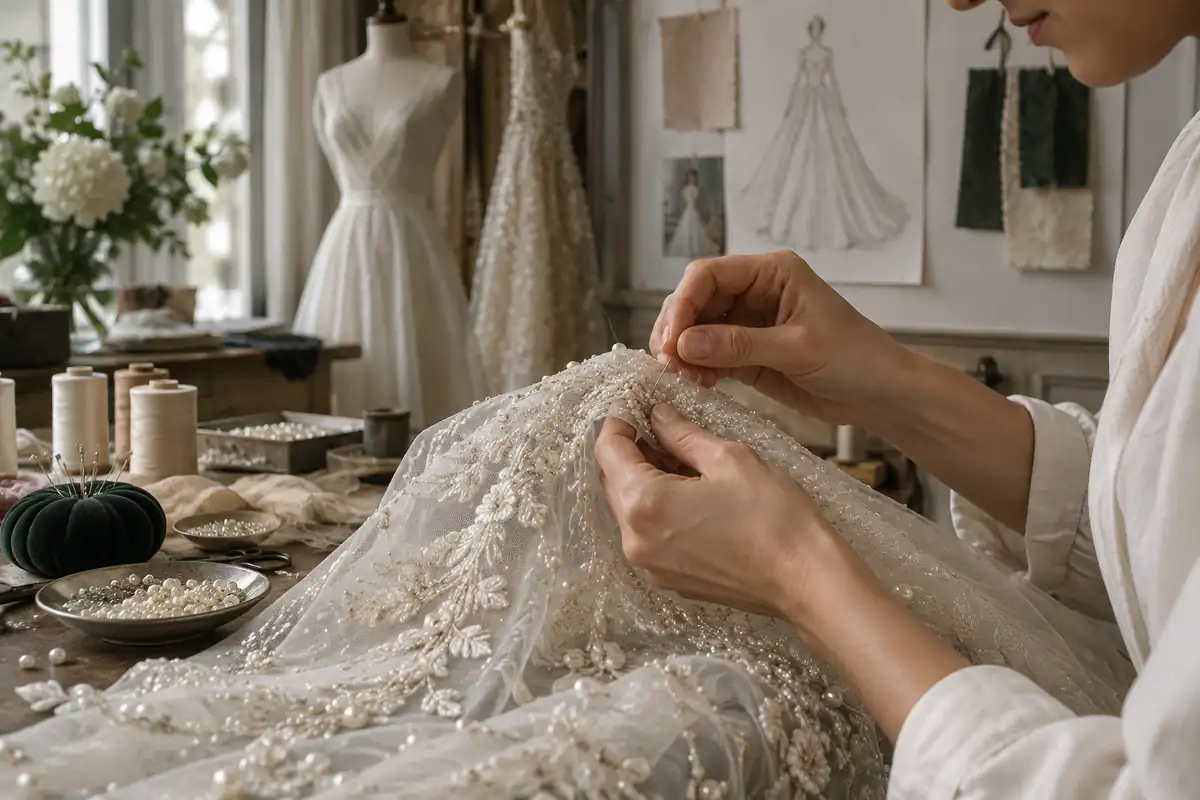
- Embellished. Scattered crystals, pearls, embroidery or appliqués across the tulle. Meghan’s Givenchy veil for her 2018 wedding was five meters of silk tulle embroidered with flowers representing the 53 countries of the Commonwealth.
Tulle choice. Soft silk tulle drapes and moves; stiffer nylon tulle holds its shape and is less expensive. Match the tone of the tulle to the dress, since a white veil over an ivory dress makes the dress look yellow.
The veil changes the whole silhouette of a bride, and more than any other accessory it decides how she will look in the aisle.
Headpieces
The full range, from combs and hair vines to crowns and fascinators, is explained in headpieces, decoded. Some practical advice:
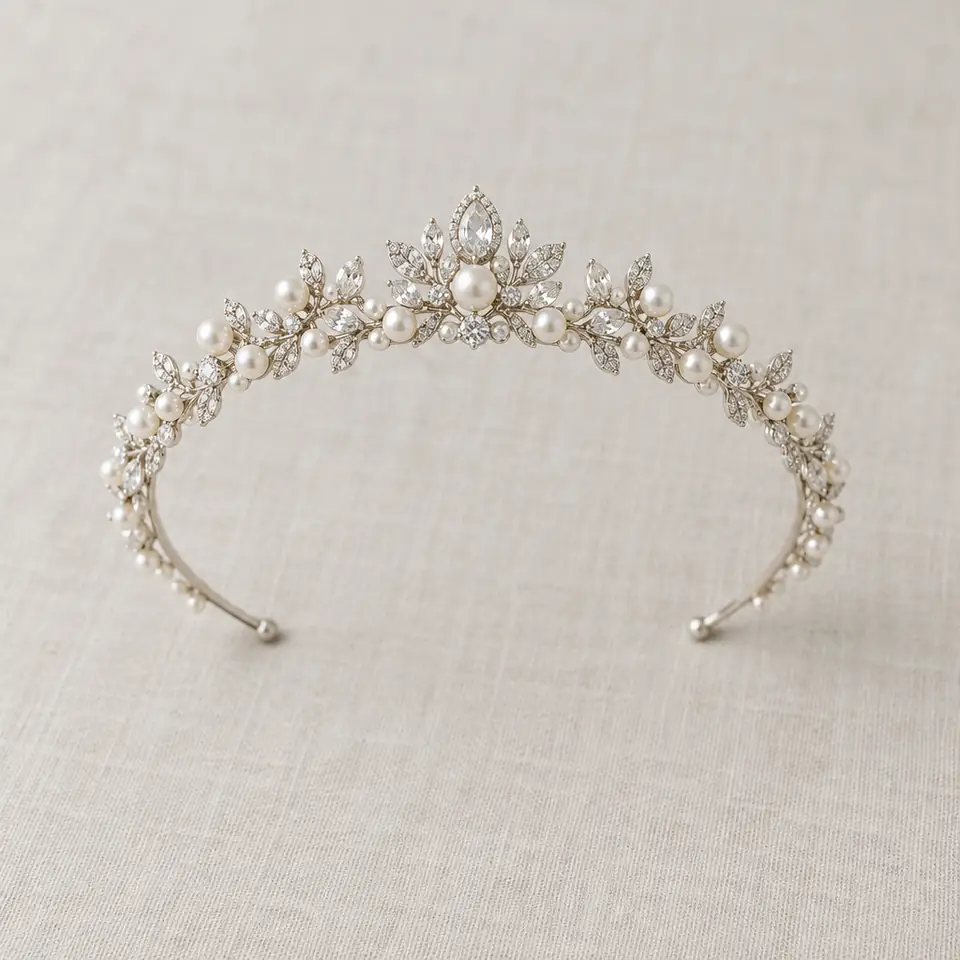 Tiara
Tiara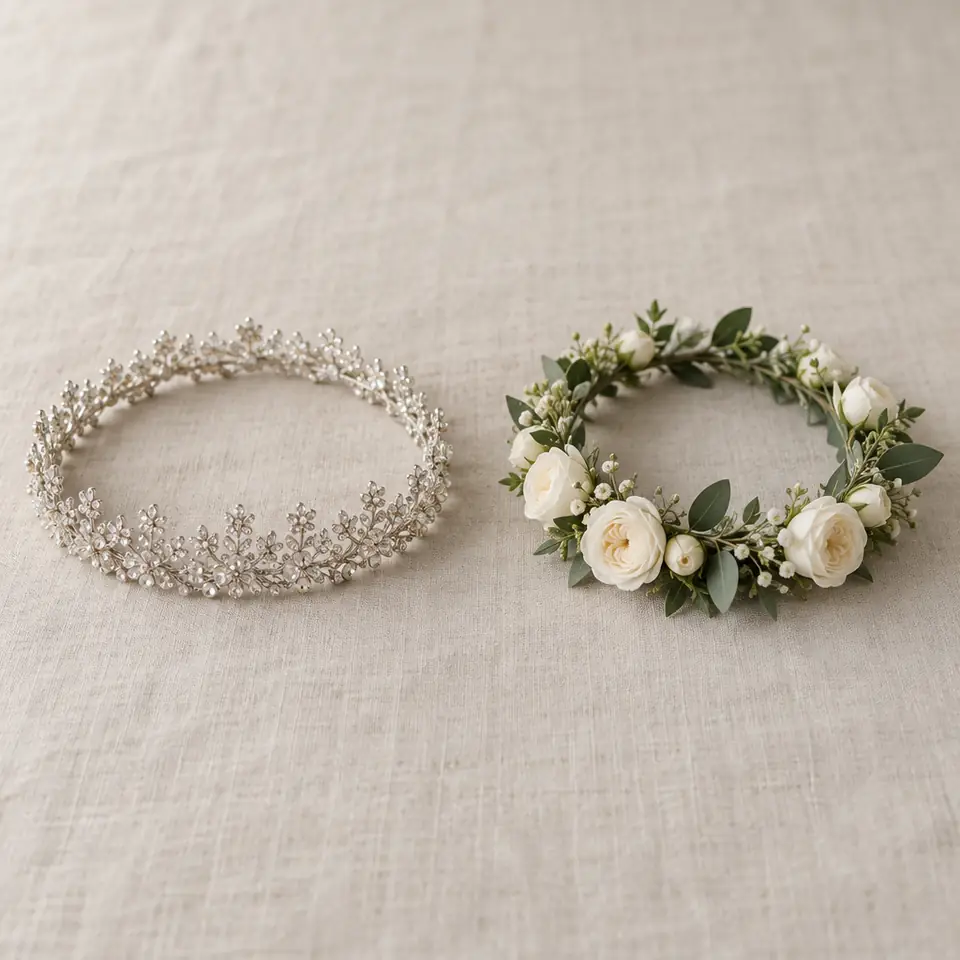 Crown
Crown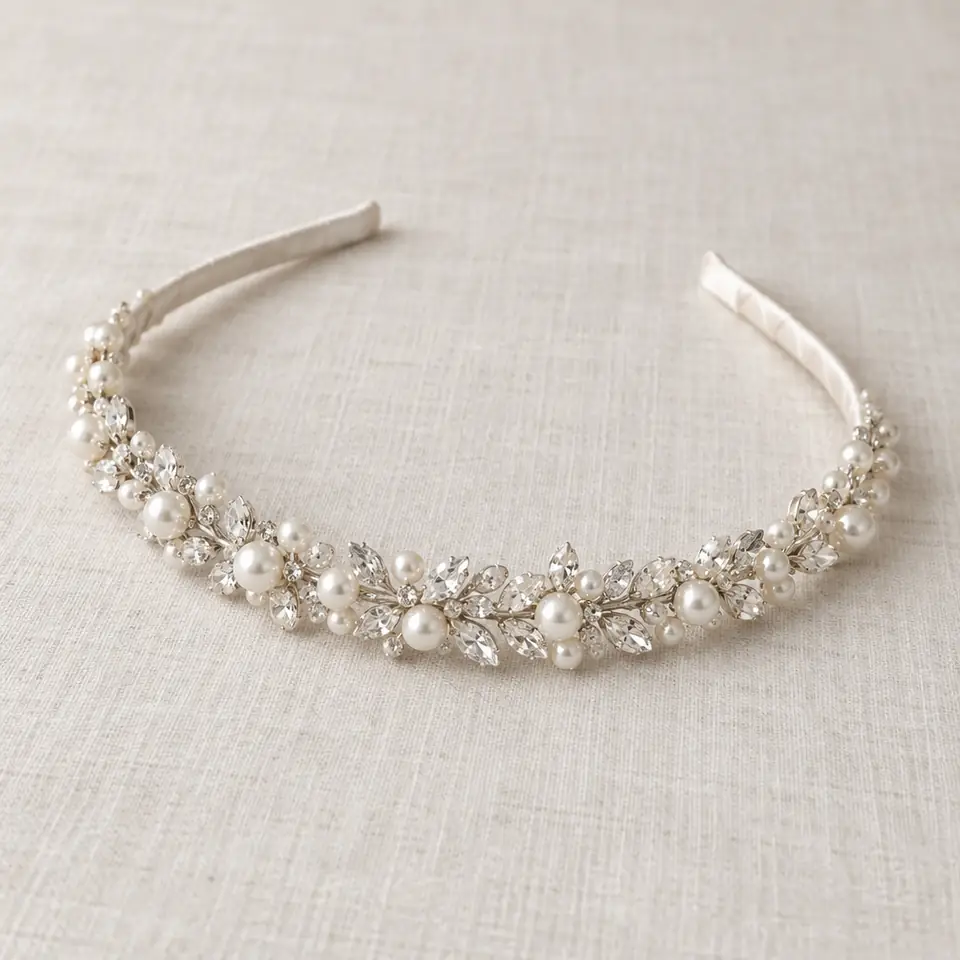 Headband
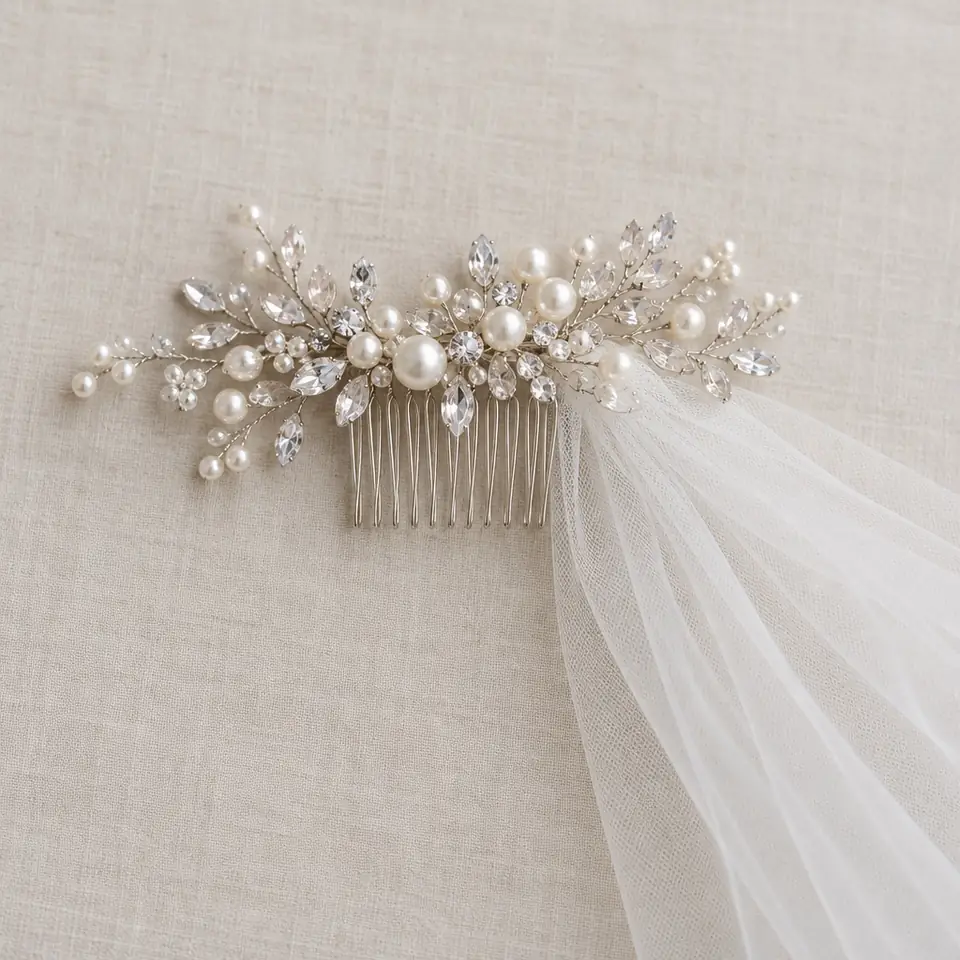 Comb
Comb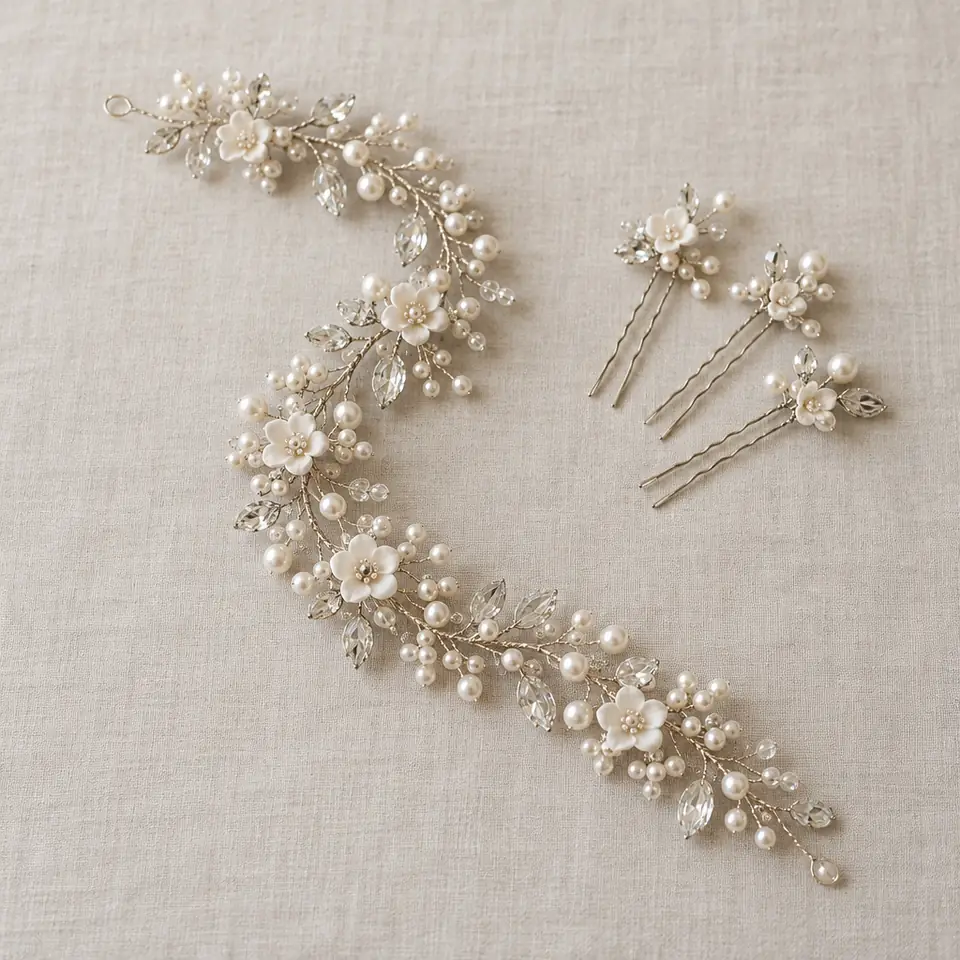 Hair vine and pins
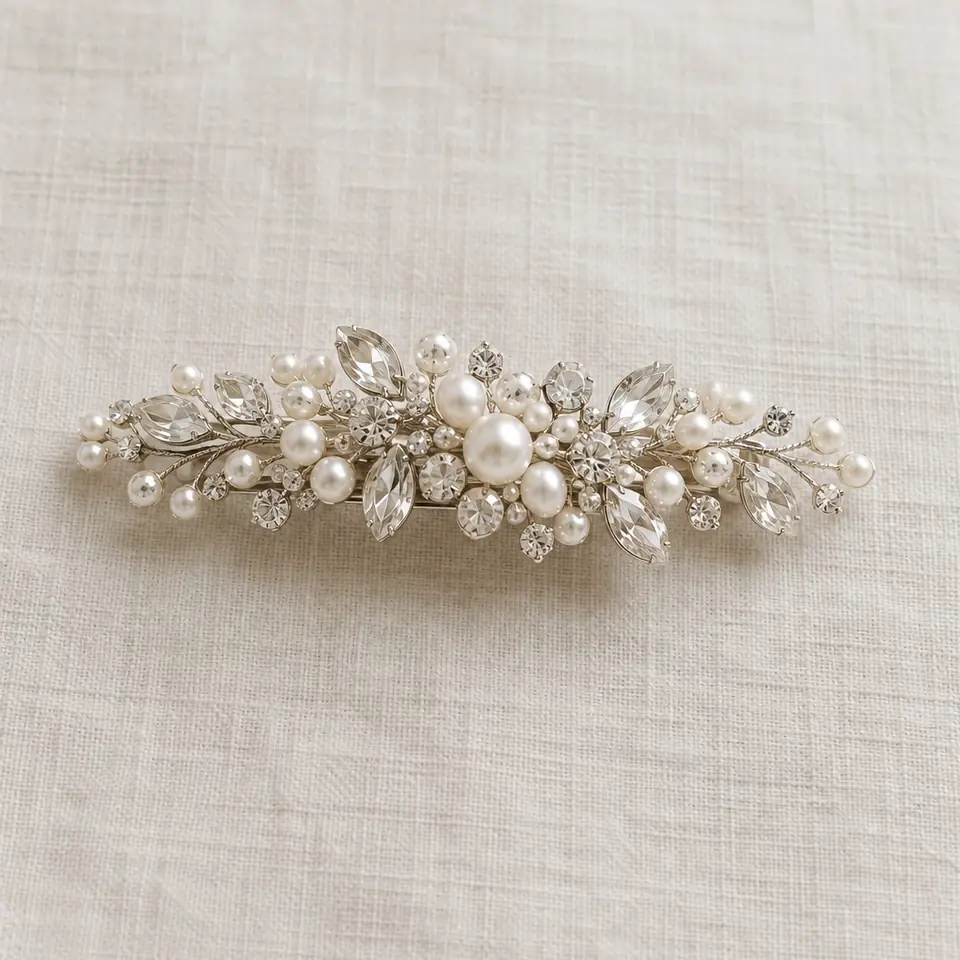 Barrette or clip
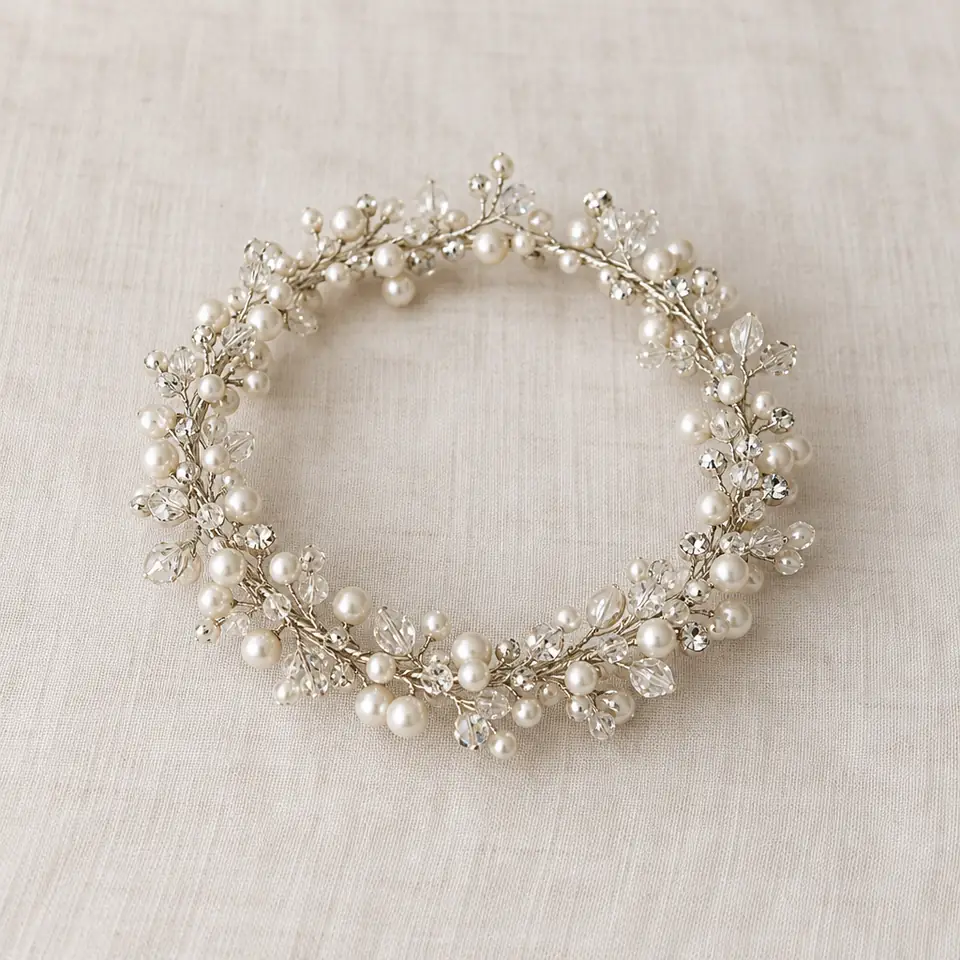 Bun wrap
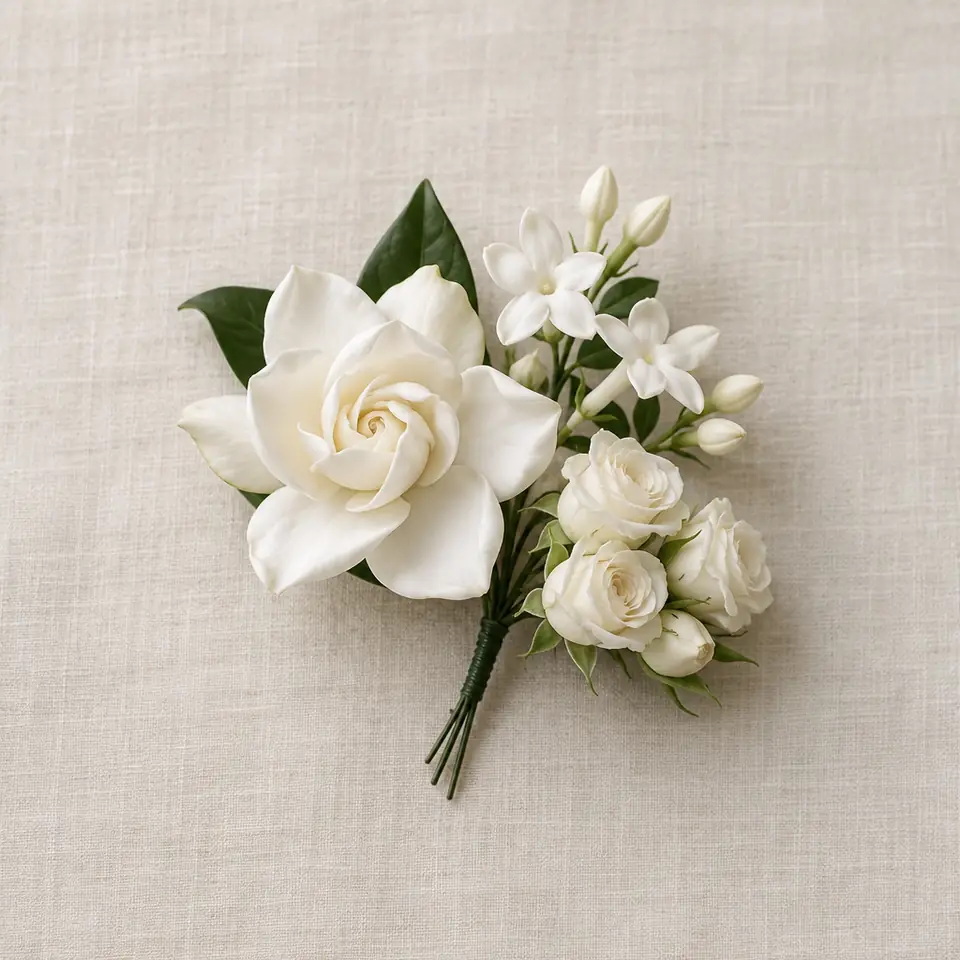 Fresh flowers
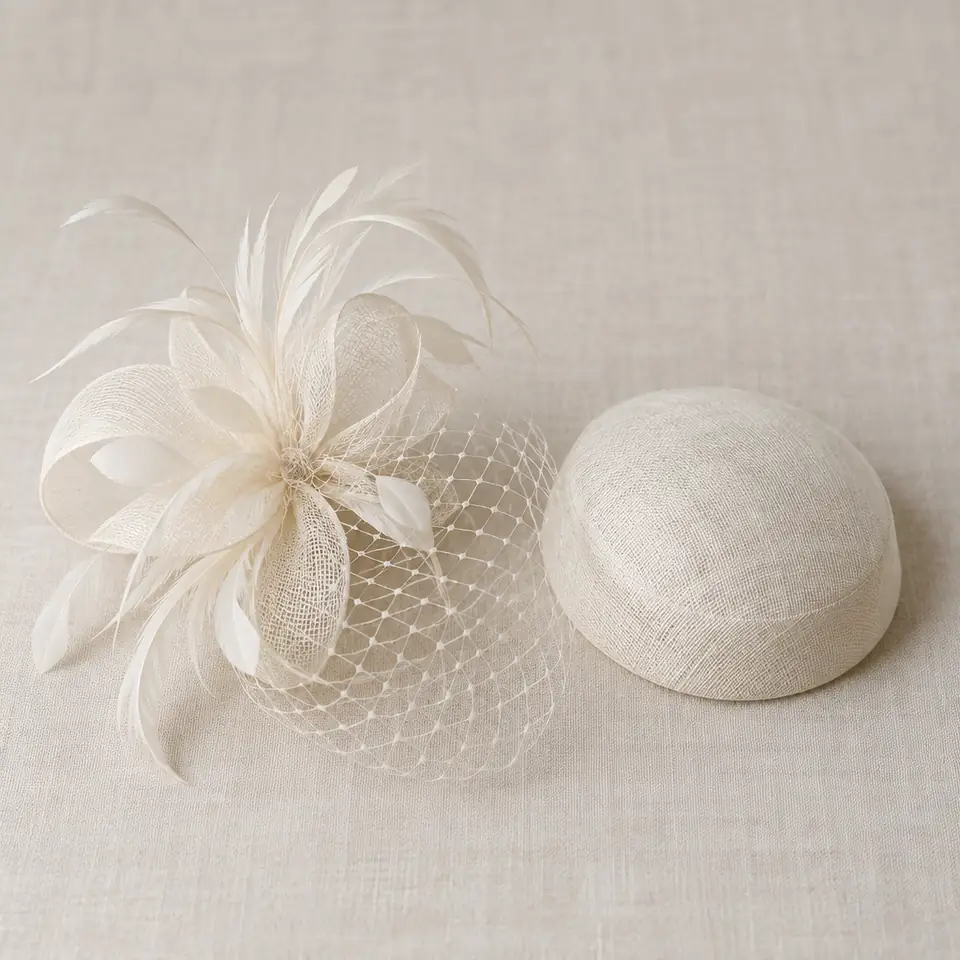 Hats and fascinators
Match the metal and the stones to your jewelry and engagement ring.
Consider the veil and the headpiece together. A veil can sit beneath a tiara or behind a comb; the headpiece should hold the veil securely, not merely decorate it.
Try it with the dress and hair together before the day, ideally at your hair trial.
Tiaras: when are they “allowed”
By traditional European court and aristocratic etiquette, tiaras were worn by married women at formal evening occasions, and a bride’s wedding day was often the first time she wore one, usually from her own family. Unmarried women generally did not, with exceptions for royal princesses. That is why royal brides so often wear borrowed or family tiaras: the Spencer tiara for Diana in 1981; for Catherine Middleton in 2011, a Cartier “halo” tiara made in 1936 and lent by the Queen; for Meghan in 2018, Queen Mary’s diamond bandeau tiara of 1932, also lent by the Queen.
Today anyone may wear one to her wedding. A tiara looks most at home with a formal gown, an updo and a veil; a slim tiara or a jeweled headband is easier to wear with a simpler dress.
Hair and the veil
Updos. A classic chignon or low bun gives a secure anchor for a comb, placed above or below the bun. A veil under the bun falls beautifully from the back.
Half-up styles. The veil sits at the crown where the hair is pinned.
Hair down. The veil sits at the crown with a comb and a few hidden pins. A lightweight veil stays in better than a heavy one.
Short hair. A comb, clips or a headband keep the veil secure.
Book a hair trial with the veil and headpiece, and ask the stylist to show whoever will remove the veil after the ceremony how to do it. Wedding hair and makeup has timings.
Veil customs in the ceremony
Who lowers and lifts it. Traditionally, the blusher is lowered before the processional and lifted after the vows. In some families the bride’s father or mother lifts it at the altar; in others the partner lifts it before the kiss.
The bedeken. In Jewish tradition, the groom lowers the veil over the bride’s face before the ceremony, a custom tied to the biblical stories of Rebecca and of Jacob, Leah and Rachel. Something old, something new explains the veil’s history.
Religious expectations. Some faiths or houses of worship expect covered hair or a veil. See modest wedding dresses.
Removing it. Most brides remove the veil after the ceremony photographs or before the first dance.
Famous veils
Grace Kelly, 1956. A tulle veil attached to a Juliet cap decorated with seed pearls and orange blossoms, worn with a high-necked Helen Rose gown.
Diana, 1981. Ivory silk tulle with mother-of-pearl sequins, held by the Spencer tiara, above a 25-foot train. See the 1981 royal wedding.
Catherine Middleton, 2011. Layers of ivory silk tulle trimmed with flowers hand-embroidered by the Royal School of Needlework, held by the Cartier halo tiara. See the 2011 royal wedding.
Meghan, 2018. Five meters of silk tulle embroidered with flowers of the Commonwealth, with California poppies and wintersweet as personal details, held by Queen Mary’s bandeau tiara. See the 2018 royal wedding.
For more, see royal wedding dresses, or the archive’s making your own wedding veil if you would like to try it yourself.
Written and edited by the Today’s Weddings editors. How we research and check what we publish is set out in our editorial standards. Spotted something wrong? Tell us.