The Seven Blessings (Sheva Brachot)
The seven blessings sung beneath the chuppah are among the oldest wedding words still in use. What each one says, who recites them, and how couples make them their own.
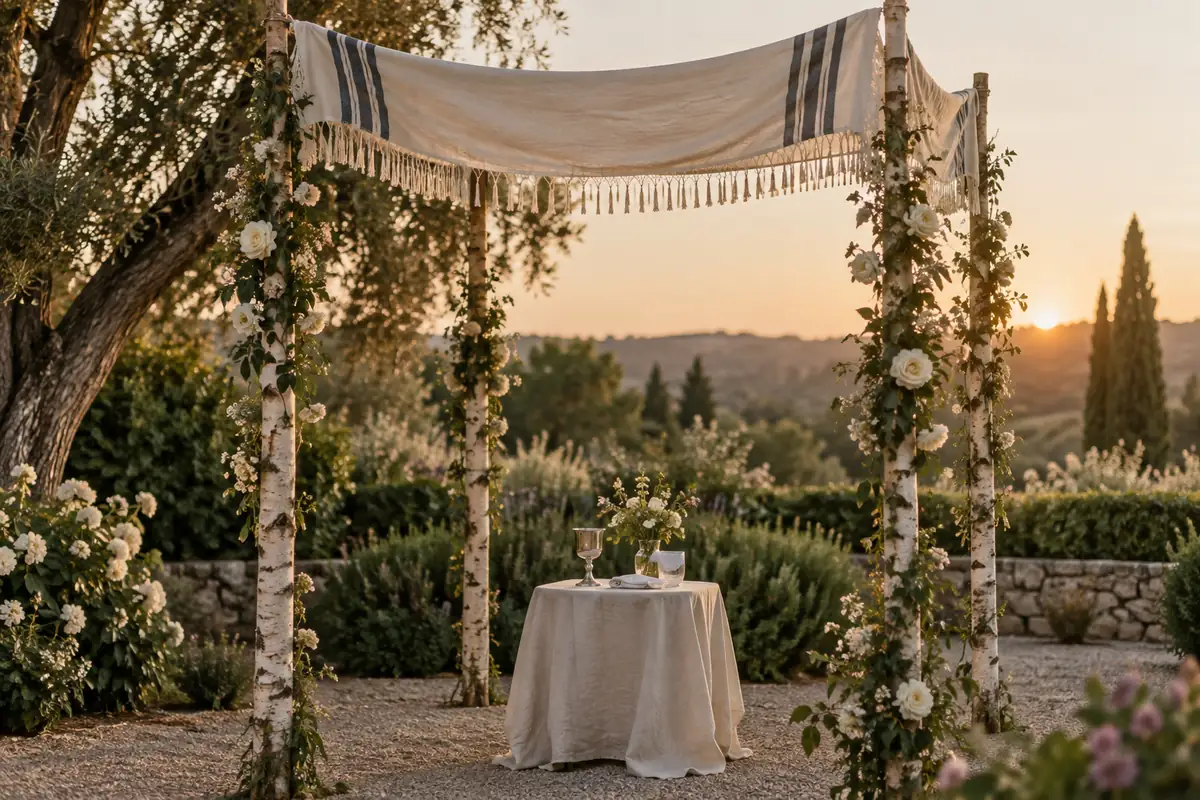
Few words spoken at weddings anywhere are older than these. The Seven Blessings — Sheva Brachot in Hebrew — are recorded in the Talmud, compiled some fifteen hundred years ago, and they were already traditional then. They are sung or recited near the end of a Jewish wedding ceremony, over a cup of wine, and they close the second half of the ceremony, the nissuin, when the couple are fully married.
What makes them remarkable is their shape. The blessings begin as widely as possible — with wine and with the whole of creation — and narrow, one by one, until they arrive at the couple beneath the canopy. By the time the seventh is sung, the room has traveled from the beginning of the world to this particular wedding.
What each blessing says
What follows is our own plain-English summary of the traditional Hebrew. Each blessing opens with the familiar formula Baruch atah Adonai, Eloheinu melech ha-olam — “Blessed are You, Lord our God, ruler of the universe.”
1. For the wine. Blessed are You, who creates the fruit of the vine. Wine is the sign of celebration throughout Jewish ritual. Under the chuppah this blessing is said first; after the meal it is said last.
2. For creation. Blessed are You, who created all things for Your glory. The wedding is set, from the start, within the whole created world — and the guests, gathered to witness, are part of it.
3. For humanity. Blessed are You, the creator of the human being.
4. For humanity made in God’s image. A longer blessing giving thanks that people were made in the divine image, and that from the first person came a partner and the possibility of a shared life.
5. For Zion. A prayer that Zion, pictured as a mother who has lost her children, will rejoice at their gathering home. At the height of personal joy, the blessings remember collective loss and hope — the same instinct as the breaking of the glass that follows.
6. For the couple, as in Eden. A prayer that these two loving companions be given the joy that the first couple knew in the Garden of Eden. It ends: blessed are You, who gladdens groom and bride.
7. For joy itself. The longest and most exuberant blessing, and the one most guests recognize. It names ten kinds of happiness — joy and gladness, mirth and song, delight and rejoicing, love and harmony, peace and companionship — and prays that the voices of the bride and groom, of celebration and of feasting, will soon be heard in the cities of Judah and the streets of Jerusalem. It ends: blessed are You, who makes the groom rejoice with the bride.
Who recites them
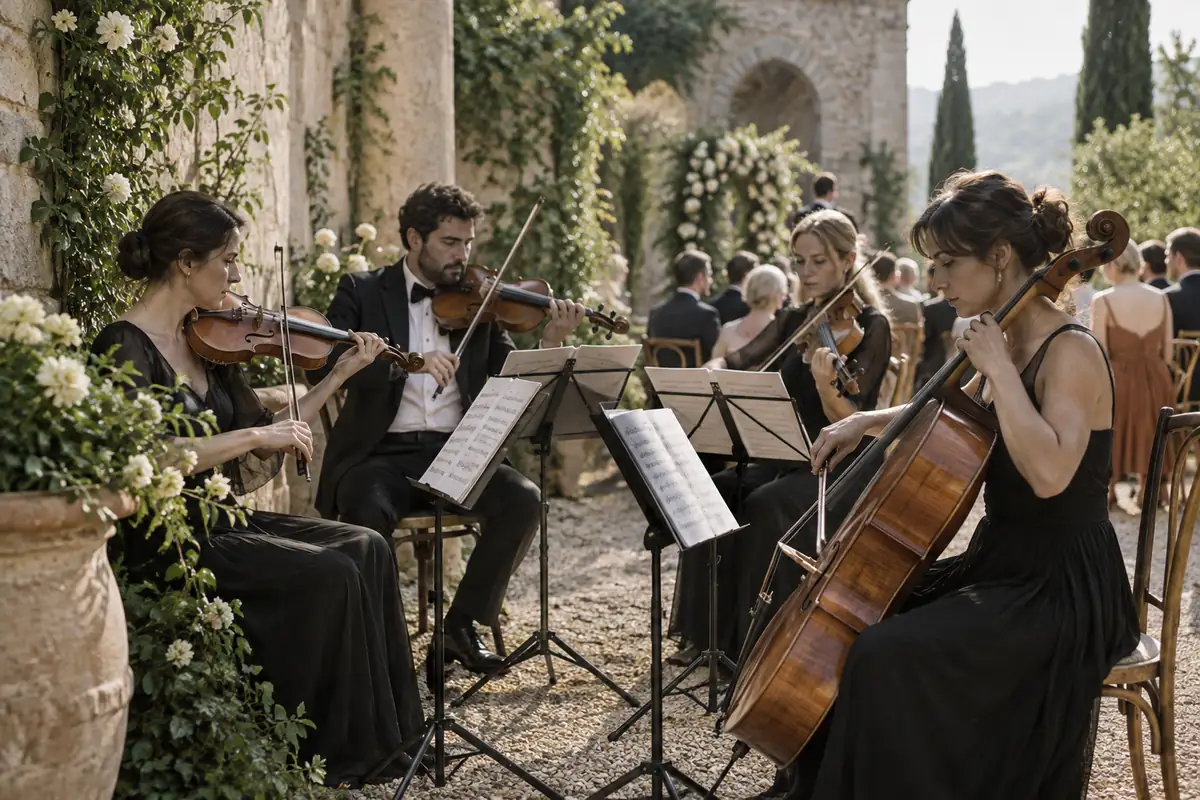
Traditionally the rabbi or cantor chants the blessings, or they are divided among honored guests — grandparents, siblings, close friends, a teacher. Asking seven different people to take one blessing each is a lovely way to include those who are not in the wedding party. Readers may recite in Hebrew, in English, or in Hebrew followed by an English reading; many cantors sing the Hebrew while a guest reads a translation.
The blessings are then repeated at the end of the wedding meal, after the grace after meals, and — in observant communities — at a festive meal each evening for the following week, provided there is a quorum and at least one guest who was not at the wedding. The week of dinners itself is often called sheva brachot.
Making them your own
Many couples keep the Hebrew exactly as it is and choose an English rendering that speaks to them. Others use an interpretive version that keeps the structure — from creation to the couple — in modern language. Reform, Reconstructionist and Conservative rabbis routinely adapt the wording of the sixth and seventh blessings for two brides or two grooms, and for couples who prefer “partners” or “loved ones.”
The best-loved interpretive version is Anita Diamant’s, published in The New Jewish Wedding (1985, revised 2001) — a book worth owning if you are planning a Jewish or interfaith ceremony. Because it is copyrighted, we don’t reprint it here. Ask your rabbi or cantor, too; most have several versions they have used and can help you choose.
Interfaith ceremonies
The Seven Blessings translate unusually well to interfaith weddings, because their movement — gratitude for the world, for being human, for companionship and for joy — is shared across traditions. Some couples ask seven guests from both families to read one blessing each, alternating between the two sides. If you do, talk it over with your officiant first; some rabbis prefer the blessings be recited in Hebrew by a Jewish guest, with the English read by anyone.
For the wider ceremony, see the order of the ceremony and wedding traditions around the world, which explains the chuppah and the breaking of the glass. For other scriptural readings, see our religious readings.
Written and edited by the Today’s Weddings editors. How we research and check what we publish is set out in our editorial standards. Spotted something wrong? Tell us.