Wedding Dress Alterations: Fittings, Bustles and Costs
Almost no wedding dress fits perfectly when it arrives. What a good seamstress can change, what she can’t, how many fittings to plan for and what it all costs.
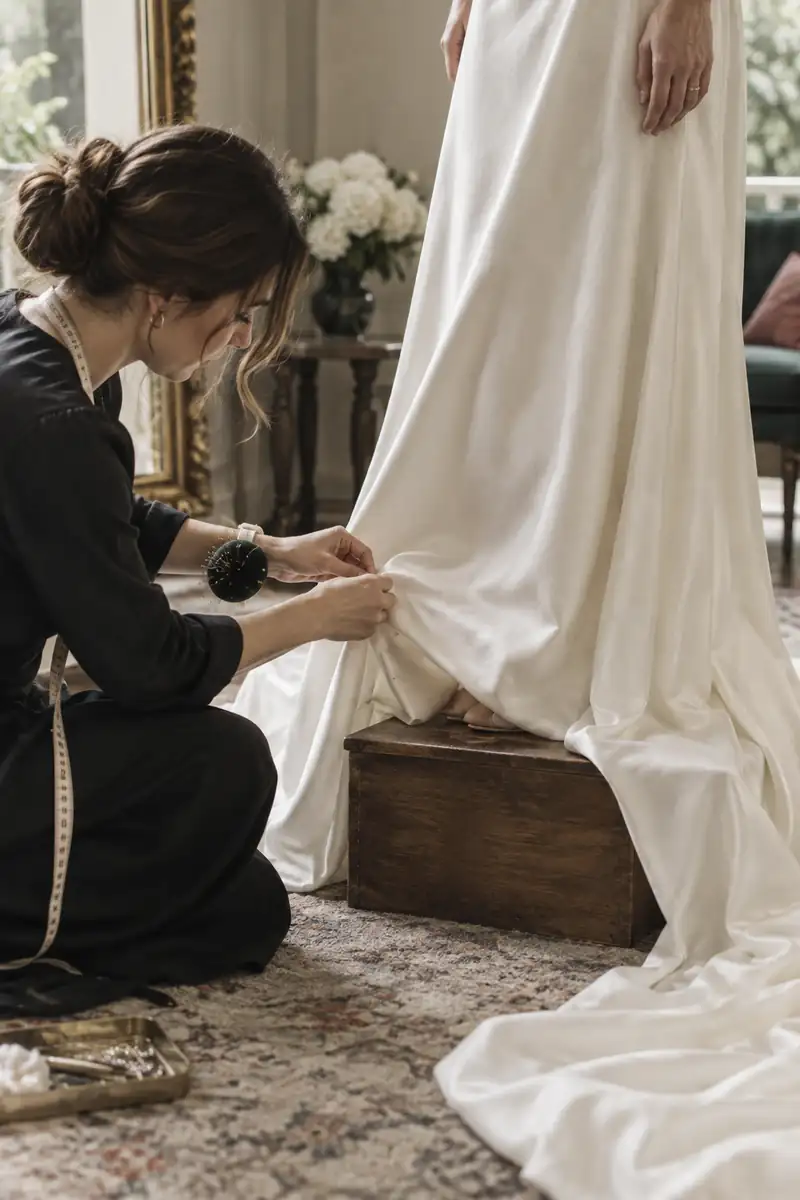
A bridal gown is built to a size chart, not to you. Even a made-to-order dress is cut from a standard pattern in the size closest to your measurements, and it arrives expecting a seamstress to finish the job: to set the hem to your heel, fit the bodice to your ribcage, and lift the train off the floor for dancing. Alterations aren’t a sign that something went wrong. They are the last stage of making the dress, and the stage that decides whether it looks bought or looks made for you.
What alterations can do
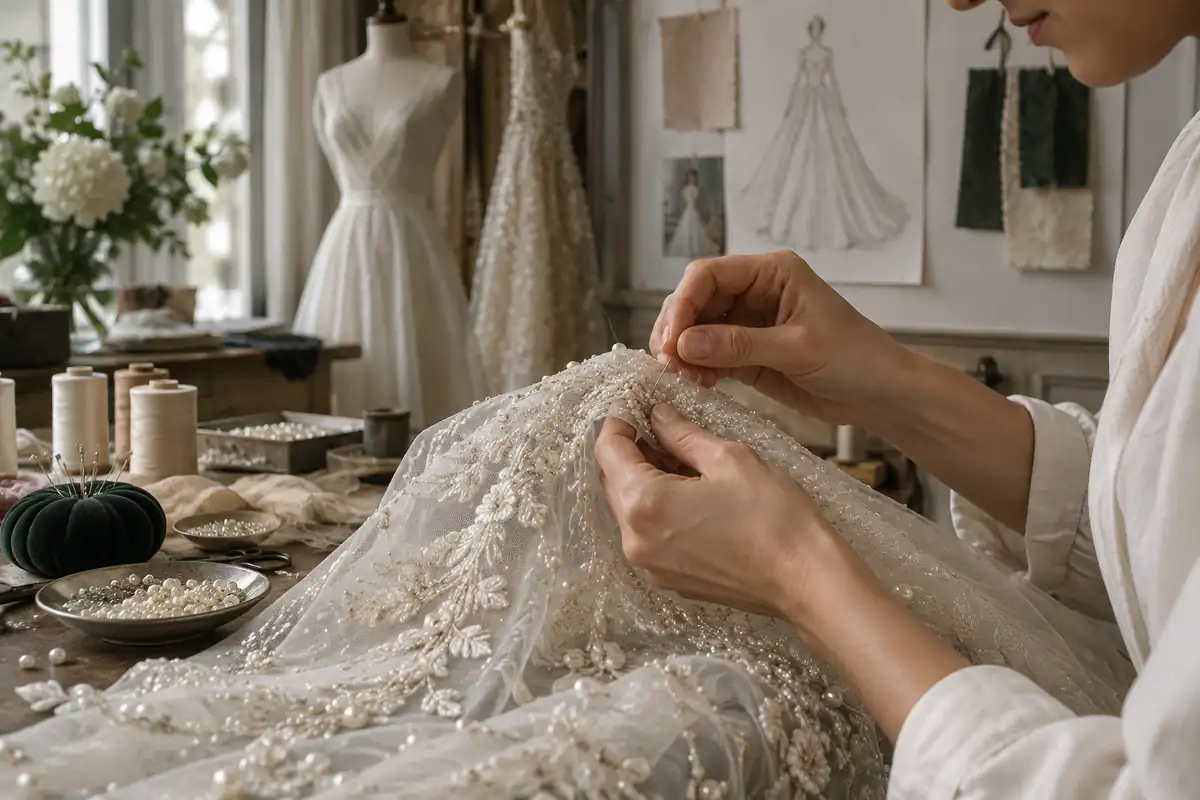
The hem. Nearly every gown needs one. A floor-length dress should just clear the floor in the shoes you will wear, so the front doesn’t catch as you walk. Hems on layered skirts are more work than they look: a ball gown may have a lining, several layers of tulle and a lace edge, and each is shortened separately. Lace with a scalloped border is often cut away and re-applied higher up so the scallop survives, which is why lace hems cost more.
Taking in. The side seams, the bodice and the waist can almost always be taken in. Boned bodices are adjusted at the seams so the boning still sits correctly; corset backs can be tightened with the laces.
Straps and sleeves. Straps can be shortened, added or made wider. Sleeves can be added to a strapless gown, often in matching lace or illusion tulle, and long sleeves can be shortened. Adding sleeves is one of the larger jobs, since the seamstress is effectively designing a new piece to match fabric she didn’t choose.
Cups and support. Sewn-in bra cups, extra boning or a waist stay (an inner grosgrain band that anchors the bodice at the waist) can make a strapless dress feel secure enough to dance in.
Necklines. A neckline can usually be raised with illusion tulle or lace, or lowered slightly if there is no structural boning in the way.
Bustles, and which kind to ask for
If your dress has any train at all, you will want a bustle, which lifts the train for the reception. The three main types are:
American, or over-bustle. The train is lifted and fastened on the outside of the skirt with hooks or buttons, creating soft swags at the back. Simple, secure and good for heavier fabrics.
French, or under-bustle. The train is folded under and tied inside with numbered or color-coded ribbons, giving a fuller, gathered look. It suits softer fabrics and is the most common choice for lace and tulle.
Ballroom bustle. A variation of the under-bustle with many tie points, arranged so the skirt falls as though it were cut to floor length. When it works, no one can tell there was ever a train. It suits heavy satin ball gowns and requires the most tie points.
Ask the seamstress which style suits your fabric and the shape of the train. Then bring the person who will fasten it on your wedding day to the final fitting. With ribbons numbered one through twelve in the dark at 9 p.m., a lesson helps. The Wedding Dress, Decoded explains train lengths if you are still choosing.
How many fittings, and when
Most gowns need about three fittings. The Knot recommends a first fitting two to three months before the wedding and notes that alterations generally take six to eight weeks. A typical schedule:
- First fitting, eight to twelve weeks out. The seamstress pins the whole dress: hem, sides, straps, bustle points. Discuss anything you want changed now, not later.
- Second fitting, about four to six weeks out. The major work is done; this is for refinements.
- Final fitting, one to two weeks out. Check everything, practice the bustle, sit, dance and raise your arms. Take the dress home or arrange pickup.
Bring your wedding shoes and underwear to every appointment. The hem is cut to a precise heel height and the bodice fitted over a particular bra or shapewear, so changing either later means changing the dress. Wedding shoes explains why they should be bought before the first fitting.
If your weight is likely to change before the wedding, tell your seamstress. She may leave the final bodice work until closer to the date.
Alterations aren’t a sign that something went wrong. They are the last stage of making the dress.
What it costs
Alteration prices depend on where you live, the construction of the dress and how much beading or lace has to be removed and reattached. Two recent guides give a useful range:
| Alteration | The Knot (2025) | Zola (2025) |
|---|---|---|
| Hem | $125–$450 | $150–$500 |
| Bustle | $75–$175 | $75–$400 |
| Taking in sides or bodice | $100–$200 | $100–$400 |
| Adding or adjusting straps | Up to $200 | $30–$250 |
| Adding sleeves | — | $300–$600 |
| Corset back | $100–$300 | $250–$500 |
The Knot’s March 2025 guide, drawing on bridal seamstresses, puts standard alterations at around $700 to $1,000. Zola’s guide, updated in September 2025, suggests setting aside 20 to 30 percent of the dress price and warns that rush jobs can add 25 to 50 percent. Neither figure is included in the price on the dress tag, so build it into your wedding budget from the start. How much a wedding dress costs covers the rest of the bill.
Choosing a seamstress
Ask the salon first. Many bridal shops have an in-house seamstress who already knows their designers’ construction. In-house work is not always the cheapest, but the dress never leaves the building, and some shops offer a set package price.
Look for a bridal specialist. A good dry cleaner can hem trousers; a wedding gown with six layers and a lace train is a different skill. Ask how many gowns they alter a year and whether they have handled your fabric.
Ask these questions before you book:
- Do you charge per alteration, by the hour or a flat fee, and is the estimate written?
- How many fittings are included?
- Will you steam or press the dress before I collect it?
- Is there a rush fee, and when does it apply?
- Can you show me a bustle you have done on a similar dress?
Read the room. A good seamstress will tell you when something you want won’t work. That honesty is worth more than a lower quote.
What can’t be changed
Much larger sizes. Most gowns are made with only a small seam allowance. Letting a dress out more than that may need panels of new fabric, which rarely match perfectly. Order the size that fits the largest part of you and take in the rest.
Length, if the dress is too short. A hem can’t be lengthened unless there is fabric folded inside, and bridal hems rarely have much.
The silhouette. A mermaid can’t become a ball gown. Skirts can sometimes be narrowed or slightly reshaped, but the basic line of the dress is set.
Some fabrics. Silk satin and crepe show old stitch holes, so a seam let out may leave a visible line. Heavily beaded areas can be reworked, but beadwork is slow and expensive.
Complex lace patterns. Lace can be moved, but a seamstress needs enough of it. If your dress has a single continuous motif, altering around it may be limited.
If you are buying a secondhand or sample dress, ask a seamstress to look at it before you pay. Secondhand, rental and sample dresses explains what to check. For the appointments before all this, see Finding the Dress and the wedding dress shopping guide.
Written and edited by the Today’s Weddings editors. How we research and check what we publish is set out in our editorial standards. Spotted something wrong? Tell us.