Secondhand, Rental and Sample Wedding Dresses: A Guide
A designer gown worn once, a salon sample or a rental can cost a fraction of new. Where to look, how to check condition before you pay, and how to sell your own dress afterwards.
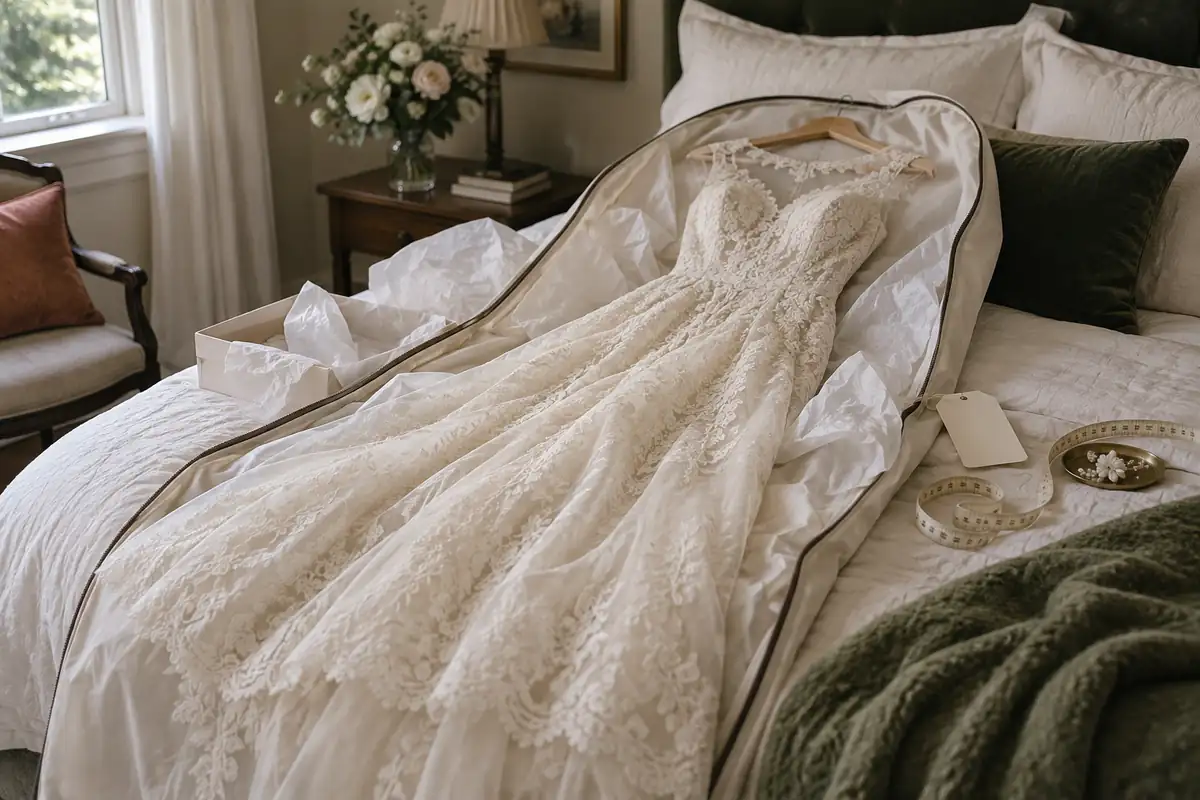
Most wedding dresses are worn once, for about twelve hours, and then put in a box. That makes the bridal market unusually rich in dresses that are almost new, and many brides now start their search there. The Knot’s 2026 Real Weddings Study, of couples married in 2025, found the average wedding dress cost about $2,100; resale sites routinely list designer gowns at a fraction of their original prices. Buying secondhand also keeps a well-made garment in use. The trade-off is that you need to shop more carefully than you would in a salon, because what you see is what you get.
Your options
Preowned. A dress worn by another bride, usually once, and sold directly by her or through a platform. It may have been cleaned and altered.
Sample. A dress a bridal salon used for try-ons, sold when the style is discontinued or the salon refreshes its stock. Samples have never been worn to a wedding, but they have been tried on many times and may have makeup marks, stretched seams or loose beading. They come in the salon’s sample sizes.
New with tags. Some brides change their minds, or their weddings are postponed, leaving an unworn dress to sell. Salons sometimes sell overstock too.
Consignment. A shop sells the dress on the owner’s behalf and takes a commission. You can try it on in person, which is a real advantage.
Rental. Some salons and specialist services rent gowns for the wedding, usually with a deposit and a fixed return date. Alterations are limited to what can be undone, so rentals suit brides whose measurements are close to the dress’s.
Vintage. A dress from a previous generation, bought from a vintage dealer or inherited. Vintage has its own rules; fabrics may be fragile and sizing differs from modern charts.
Where to look
Resale platforms. Three well-established US sites were operating at the time of writing:
- Stillwhite describes itself as the world’s largest online wedding dress marketplace, with tens of thousands of dresses listed by brides who sell directly to buyers.
- Nearly Newlywed, founded in 2004, sells new, sample and preowned designer gowns from brides and salons.
- Borrowing Magnolia is a marketplace where brides list their dresses for a flat fee and deal with buyers directly.
General resale sites such as Poshmark and Vestiaire Collective also list bridal gowns, and The Knot’s 2024 guide to buying and selling used dresses mentions both. Fees, protections and return policies differ by site, so read them before you buy.
Salon sample sales. Many bridal salons hold periodic sample sales to clear discontinued styles. Ask your local salons whether they keep a sample rack or a mailing list.
Charity shops. Nonprofits such as Brides for a Cause, which has shops in the western US, resell donated gowns and give the proceeds to charity.
Friends and family. A borrowed dress is the most traditional secondhand gown of all.
Buying secondhand means shopping more carefully than you would in a salon, because what you see is what you get.
Checking condition
In person, look at the dress in daylight. Online, ask for photographs of each of these, and a video if possible.
- The hem. Look for dirt, fraying, torn tulle or a hem cut too short for you. A hem can be shortened but rarely lengthened.
- The underarms and bodice lining. Look for yellowing and deodorant marks.
- Seams and zipper. Check for stretched or stressed seams and a zipper that runs smoothly.
- Beading and lace. Look for missing beads, snags and loose appliqués.
- The train and bustle. Check for stains, footprints and the bustle’s hooks or ribbons.
- Yellowing and sugar stains. Spilled drinks and cake can leave sugar that is invisible at first and later caramelizes into brown marks. Ask whether the dress was professionally cleaned after the wedding. Wedding dress preservation explains why.
- Odor. Smoke and mustiness are difficult to remove.
Fit and sizing
Bridal sizes often run smaller than everyday clothing, and a secondhand gown may already have been altered. Ask the seller for measurements of the bust, waist, hips and length from the hollow of the neck to the hem, and compare them with your own. A dress that is slightly too large is a far better buy than one that is slightly too small.
Before you pay, ask the seller about any alterations: was the hem cut, was the bodice taken in, was a bustle added? If you can, show photographs to a bridal seamstress. Wedding dress alterations explains what can and can’t be changed. Budget for alterations from the start; reworking an already altered dress can cost more than altering a new one.
Protecting yourself
- Pay through the platform or with a method that offers buyer protection. Never wire money to a stranger.
- Ask for proof. A receipt, the designer’s label and the style number help you verify the dress and its original price.
- Check the return policy. Many private sales are final.
- Allow time. A secondhand dress still needs cleaning and alterations. Buy at least four months before the wedding.
Selling your own dress
Clean it first. A dress that has been professionally cleaned presents better and sells faster. The Knot’s 2024 guide notes that cleaned gowns can sell about twice as quickly.
Price it realistically. Nearly Newlywed has said that a dress in excellent condition and less than two years old typically sells for about half its original retail price, with some designer names fetching more. Older gowns and heavily altered ones sell for less.
Photograph it well. Hang it in good daylight against a plain background, and include close-ups of the details, the label and any flaws. Wedding photographs of you wearing it help, if you are comfortable sharing them.
Be honest about alterations. List the measurements after alterations, not the original size.
Sell sooner. Bridal trends move, and a dress’s value falls as its style ages.
Or donate it. Brides Across America gives gowns to military, first responder and frontline healthcare brides; Brides for a Cause resells donated dresses five years old or newer to fund charities. Check each charity’s current rules before sending anything.
For other ways to save, see alternatives to the bridal salon, the wedding dress shopping guide and how much a wedding dress costs.
Written and edited by the Today’s Weddings editors. How we research and check what we publish is set out in our editorial standards. Spotted something wrong? Tell us.