Wedding Shoes: Comfort, Height and the Aisle
The heel you choose decides the hem of the dress, how you stand for three hours and whether you are still dancing at eleven. A practical guide.
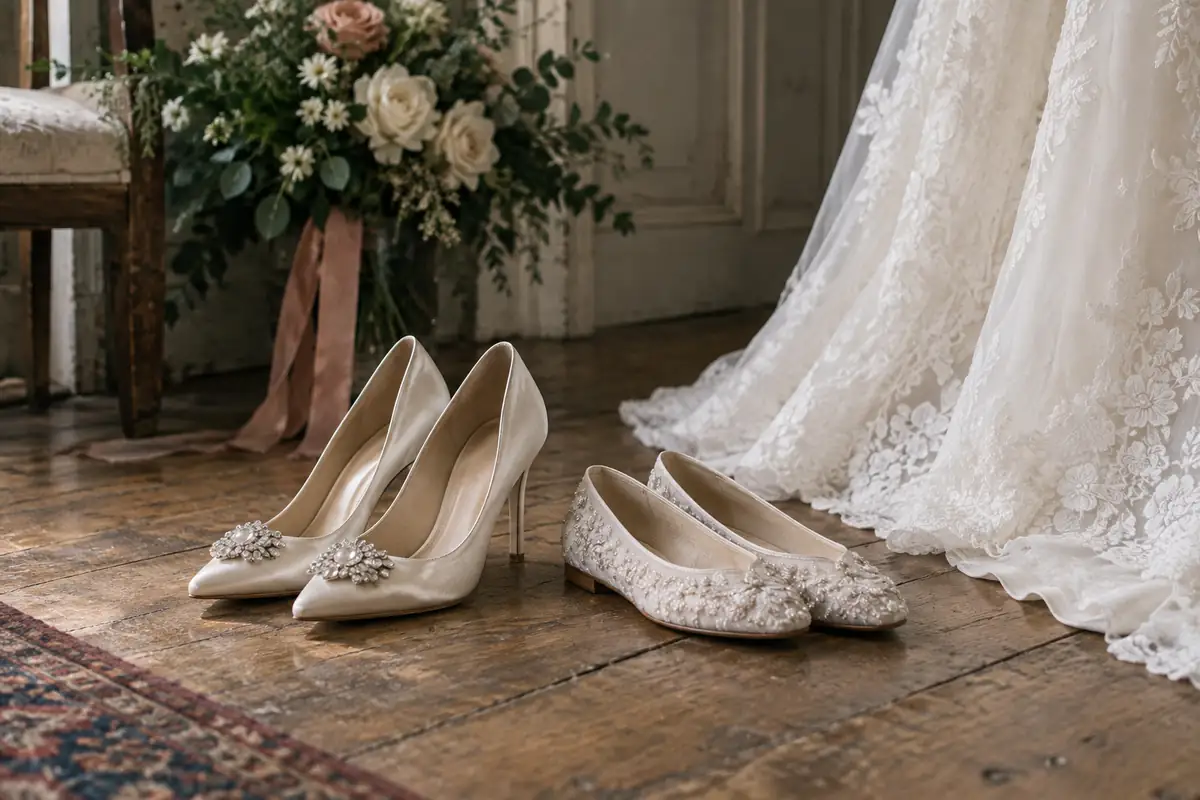
Wedding shoes are chosen twice. Once in a shop, for how they look, and once at about ten o’clock on the night itself, for how they feel. The trick is to choose for the second moment without giving up on the first.
Buy them early — before the hem
This is the one piece of advice that saves the most trouble. The seamstress hems the dress to the height of the heel you will be wearing. If you change your mind about the shoes after the hem is cut, you either walk on your dress all day or pay to have it altered again. Bring the shoes to the first fitting, and wear them at every fitting after that.
Height
Most brides are happiest in a heel between one and three inches. You will be standing for the ceremony, the photographs, the receiving line and the drinks — often for three hours before you sit down to eat.
If you rarely wear heels, your wedding is not the day to start. A low, elegant heel or a beautiful flat will look far better than a high heel you are visibly struggling in.
If you love heels, choose a pair you have worn for a full evening before, or that is built the same way. And plan a change for the reception.
Height difference is worth a thought. If you are close in height to the person you are marrying, a tall heel will put you above them in every photograph. Some couples like that. Decide on purpose.
The heel itself
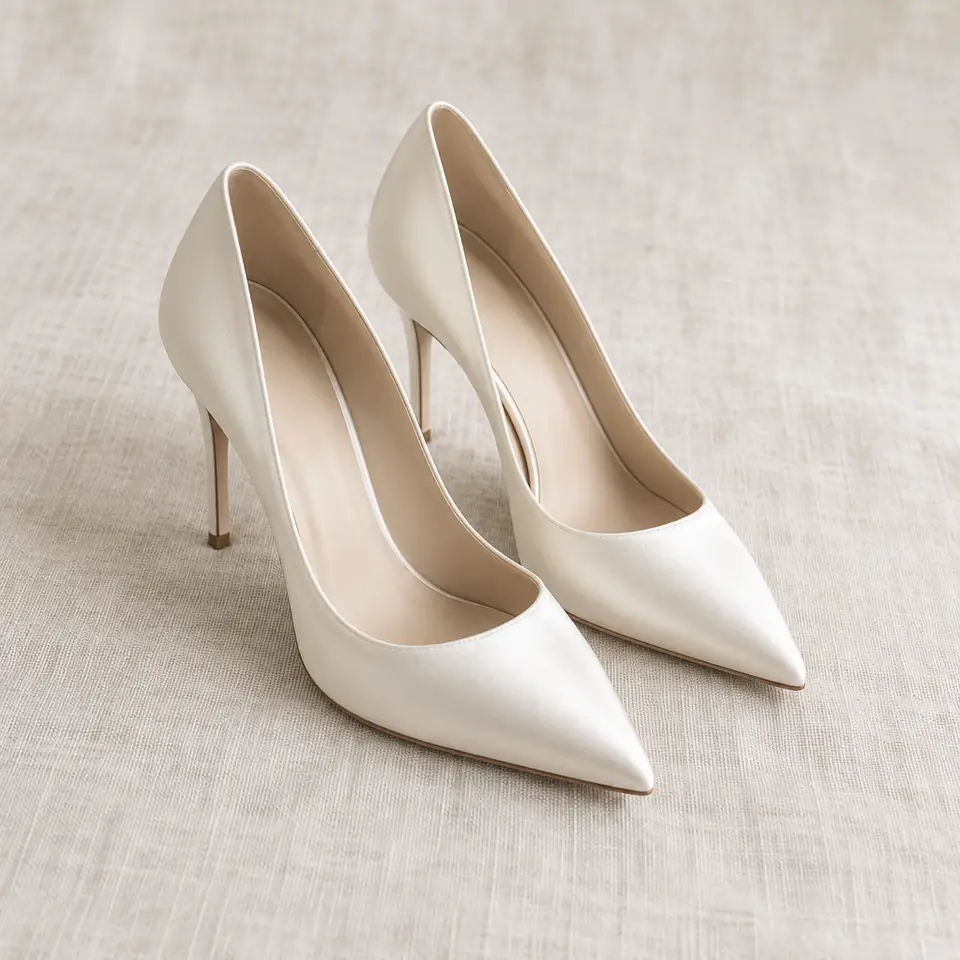
Stiletto: the most elegant line and the least forgiving. Sinks into grass, catches in old floorboards and gaps between stones.
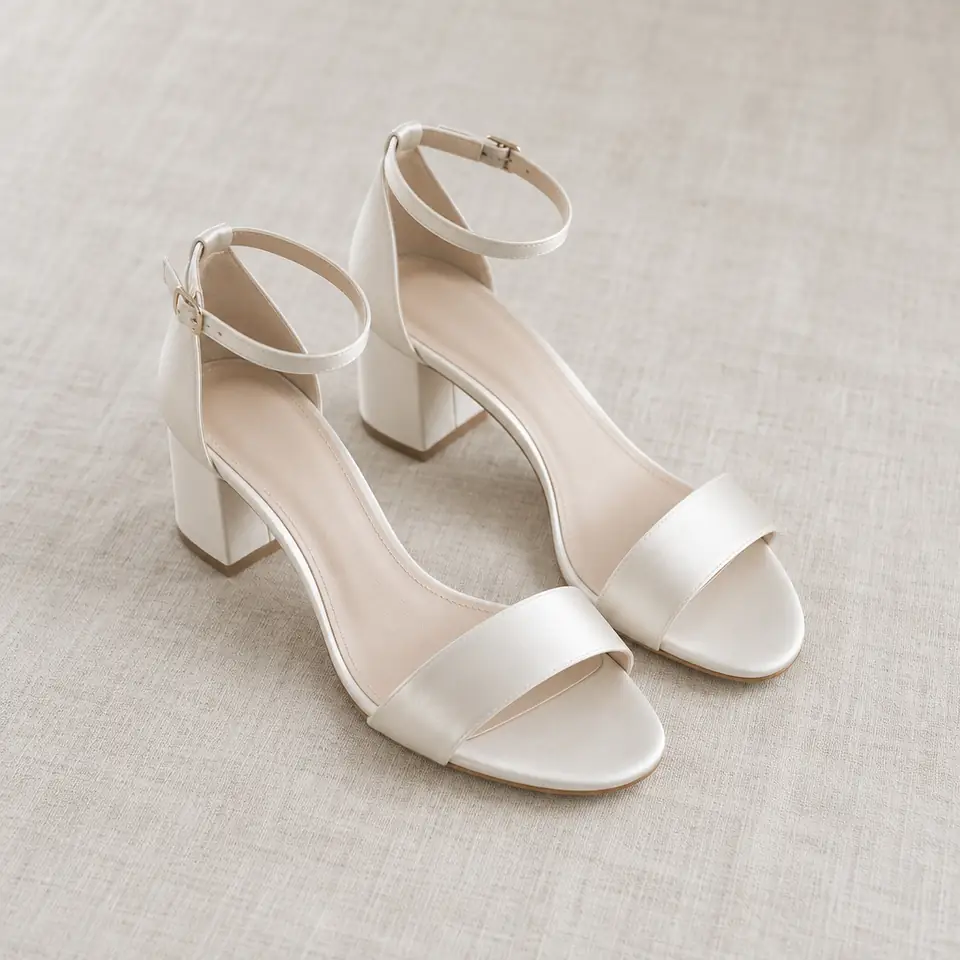
Block heel: far more stable, just as elegant in satin or leather, and the choice most brides are grateful for by midnight.
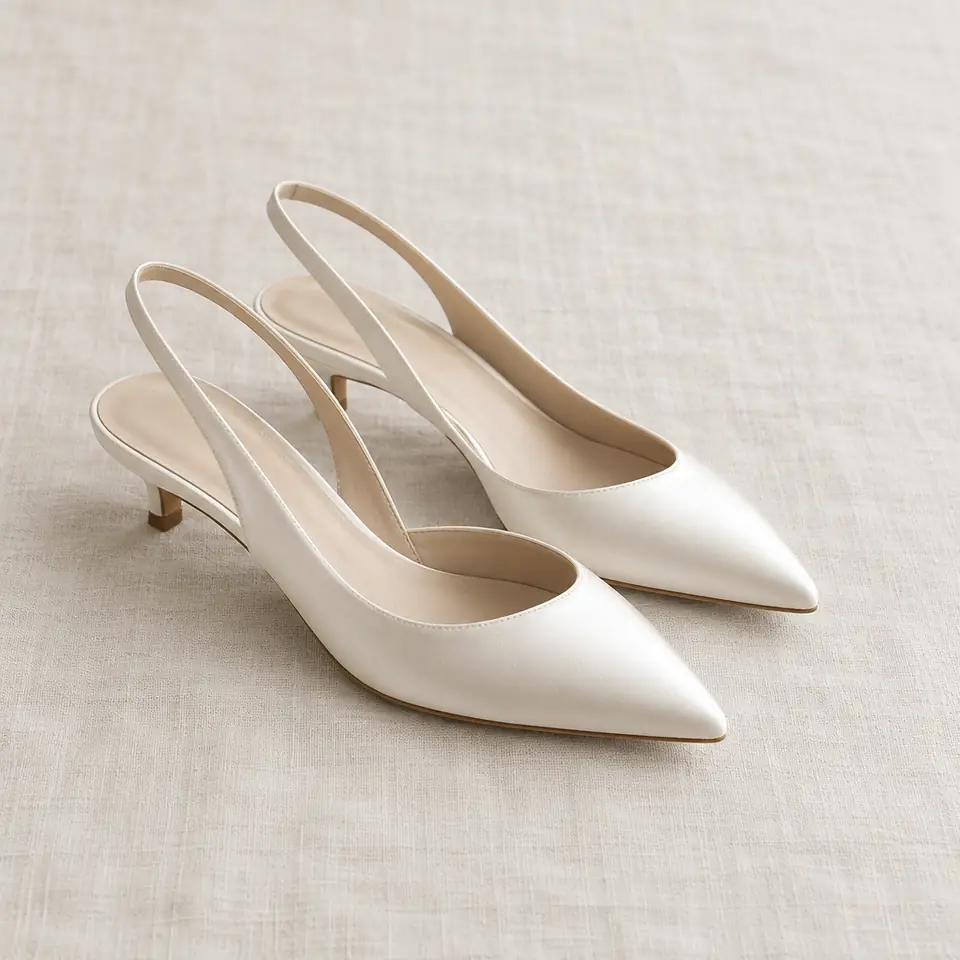
Kitten heel: a low, slim heel of an inch or so. Graceful, comfortable and very flattering under a long dress.
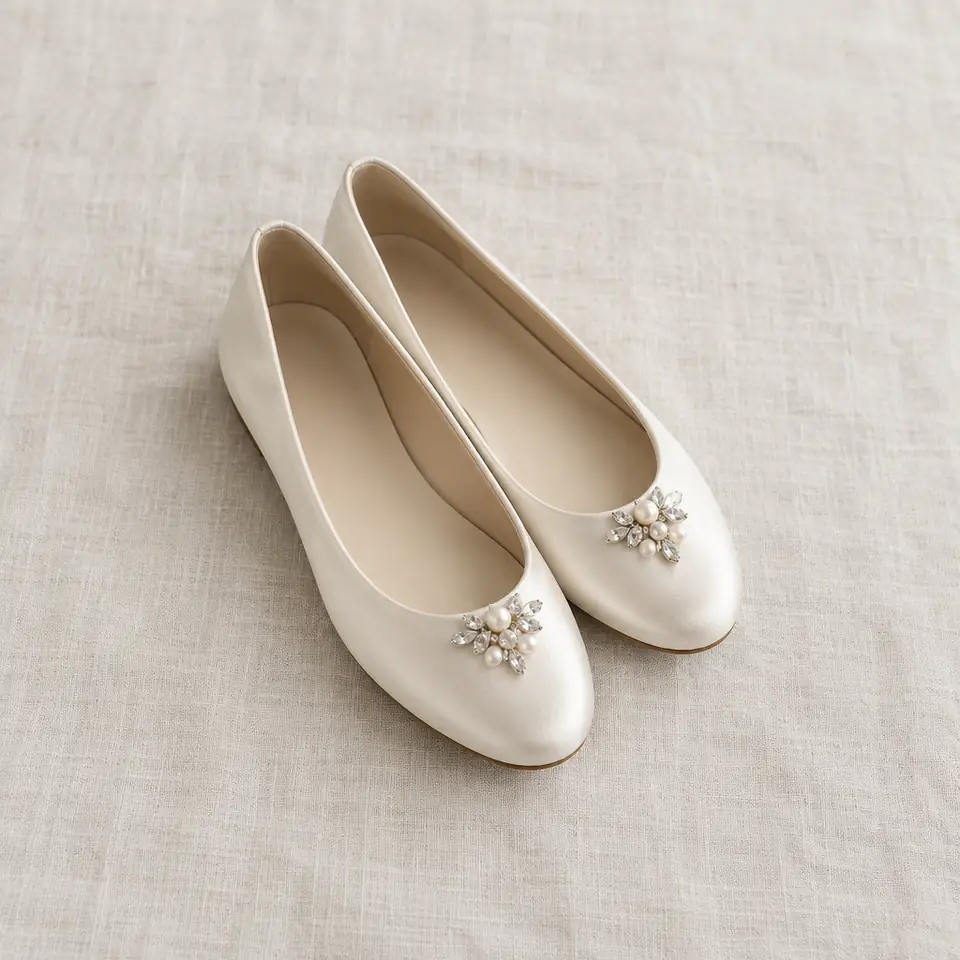
Flats and ballet shoes: under a floor-length dress, nobody sees your feet except in the photographs — and a pretty embellished flat photographs beautifully.
Wedding shoes are chosen twice: once in a shop for how they look, and once at ten o’clock on the night for how they feel.
Know the ground
Where you are standing matters as much as what you are wearing. Grass lawns swallow stilettos; ask for heel protectors, or wear a block heel or a wedge. Sand makes almost any shoe miserable; barefoot or flat sandals are the honest answer on a beach. Old stone, cobbles and church floors are slippery and uneven, so look for a leather sole you have scuffed, or ask a cobbler to add a thin rubber one.
Color and material
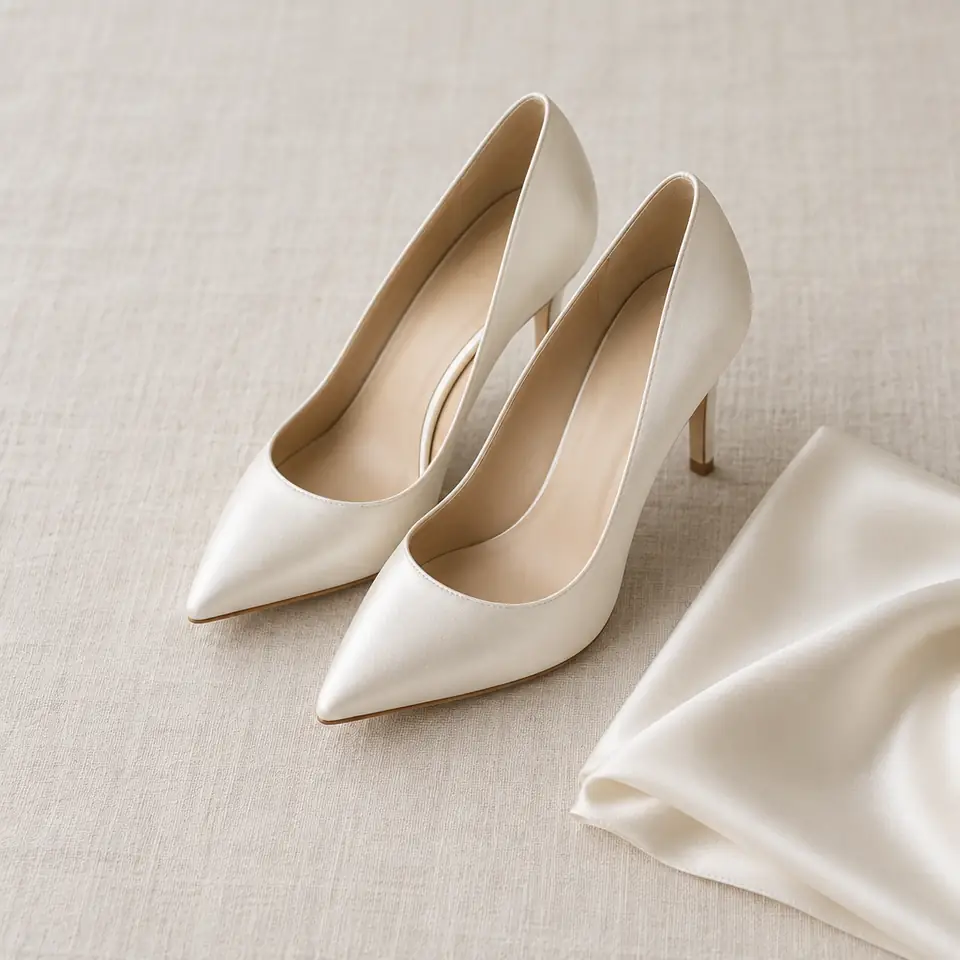
Ivory or white satin is the classic choice. Match the tone of the dress as closely as you can — a white shoe beside an ivory gown makes the dress look yellow. Bring a swatch of fabric when you shop.
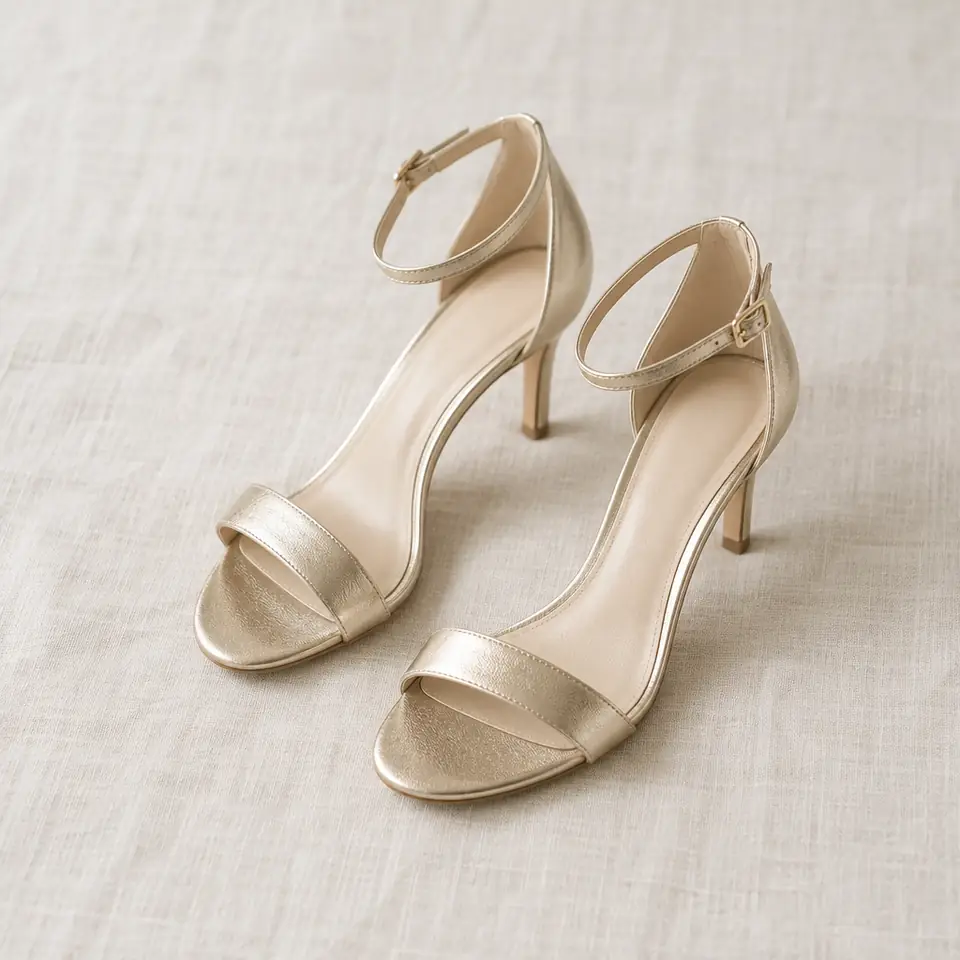
Metallic — pale gold, champagne, soft silver — flatters almost every dress and every skin tone, and hides scuffs.
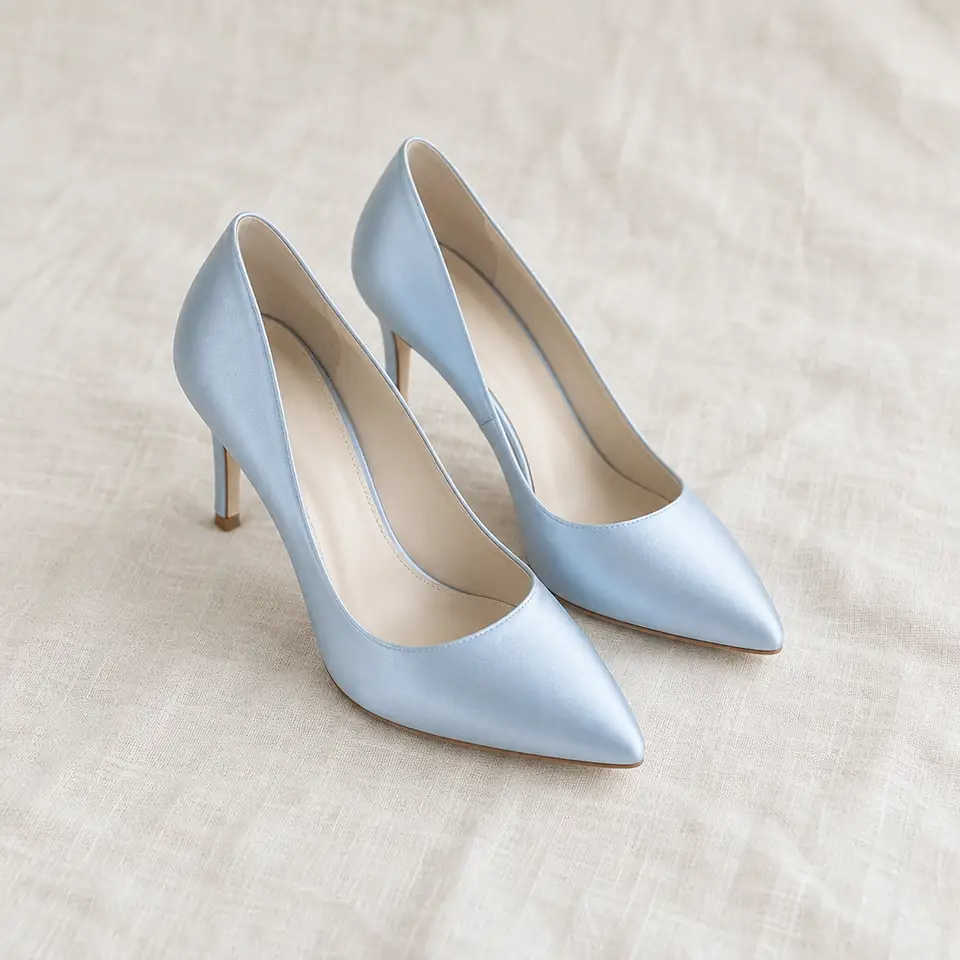
A color — the proverbial something blue, a deep green, a blush — is a lovely private detail under a long dress. It will be seen when you walk and in the photographs of your feet, which there will be.
Leather stretches and softens; satin does not stretch much and marks easily, so treat satin shoes with a fabric protector before the day.
Comfort, in practice
- Break them in at home for at least a week — on carpet if you want to be able to return them — for an hour or two at a time.
- Scuff the soles lightly with sandpaper so they grip.
- Buy half a size up if you will be standing all day; feet swell, especially in summer.
- Gel pads and blister plasters belong in the emergency kit, along with a small pair of scissors.
- Plan a second pair for dancing. Soft flats, clean white sneakers or embellished slides are all entirely normal now. Ask someone to leave them under your seat at the reception.
For the groom, briefly
The same rules apply, if less dramatically: new shoes worn for the first time on the day will hurt. Black oxfords for dark suits, brown for light ones, polished the day before and broken in for at least a week. The groom’s suit covers the rest.
For the dress the shoes will sit beneath, see The Wedding Dress, Decoded.
Written and edited by the Today’s Weddings editors. How we research and check what we publish is set out in our editorial standards. Spotted something wrong? Tell us.