Finding the Dress: A Fitting-Room Guide
When to start, whom to bring, what to try, and how to know — a practical guide to the most anticipated appointment of the engagement.
Almost everyone arrives at their first bridal appointment with a picture of the dress in their head. Almost no one leaves in it. That isn’t a failure; it’s the point. The fitting room is where the idea of a dress meets the reality of your body, your wedding and your budget, and the good news is that the reality is usually better.
Here is how to make the appointments count.
When to start
Eight to ten months before the wedding is comfortable. Most bridal gowns are cut and sewn to order once you have chosen them, which takes four to six months, and then they need two or three alteration fittings over the final six weeks. Start later than six months and you will be limited to what a shop has in stock or can rush, usually at a charge.
Before your first appointment
Three things will rule out more dresses than taste ever will, so settle them first.
Your budget — including alterations. Alterations routinely add a meaningful share of the dress price, and so can a veil, a slip and a bustle. Tell the consultant your true ceiling at the start; a good one will not show you anything above it.
The venue and the season. A cathedral-length train in a registry office, a heavy satin ball gown on a beach in August, a slip dress in a drafty stone chapel in January — each is a beautiful dress at the wrong wedding. The setting narrows the choice, and that is a relief.
The formality of the day. Black tie, garden, city hall, destination. The dress sets the dress code for everyone else, so it should agree with the invitation. Wedding dress codes, decoded explains the scale.
It is also worth learning the vocabulary, so that you can say what you want. The Wedding Dress, Decoded explains every silhouette, neckline, sleeve, waistline, train and fabric you will hear named.
Whom to bring
One or two people whose taste you trust and whose honesty you can bear. A mother, a sister, the friend who will tell you the truth. A large group is tempting and almost always a mistake: five opinions about one dress produce confusion, and someone’s feelings get hurt. If your family is large, bring the others to a later fitting, once you’ve chosen.
At the appointment
Wear, or bring, the right underwear — seamless, in a nude close to your skin — and shoes near the height you expect to wear on the day.
Try the silhouettes, not just the dresses. An A-line, a sheath, a mermaid, a ball gown: put on one of each early, even the ones you’re certain are wrong for you. You will learn more from one surprising dress than from ten variations on the one you pictured.
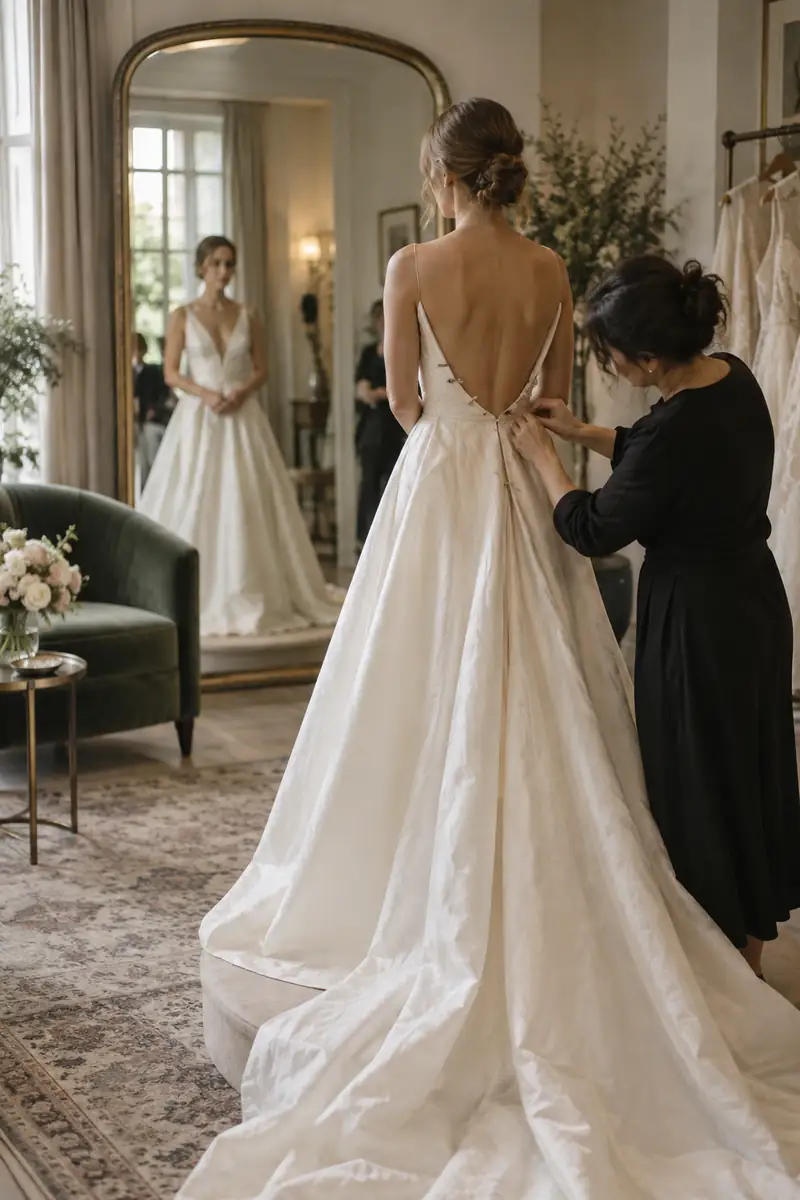
Samples are not your size. Shops carry one sample of each style, pinned and clipped to fit whoever is wearing it. Look at the line, not the fit; that is what the made-to-order dress and the seamstress are for.
Move in it. Sit, walk, raise your arms, turn around. You will be hugging people, dancing and getting in and out of a car. A dress that only works standing still is a dress for a photograph, not a wedding.
Take photographs if the shop allows it, and look at them the next day. A dress can feel wonderful in a flattering mirror under good light; the photographs show you what everyone else will see.
You will learn more from one surprising dress than from ten variations on the one you pictured.
How do you know?
The famous moment — tears, a sudden certainty, everyone in the room falling silent — does happen, and it’s lovely when it does. It doesn’t happen for everyone, and its absence doesn’t mean you haven’t found the dress. Often the sign is quieter: you stop looking at the mirror critically and start looking at yourself. You forget you’re wearing a dress at all. You find yourself thinking about the day rather than the gown.
A useful test: can you picture yourself walking toward the person you’re marrying in it? Not posing — walking, and then hugging your grandmother, and then eating dinner. If you can, it’s probably the one.
After you choose
- Get everything in writing: the style, the size ordered, the color, the delivery date and what is and isn’t included in the price.
- Buy the shoes now. The hem is cut to the heel. Wedding shoes explains why.
- Book alterations early and plan for two or three fittings in the last six weeks. Bring the shoes and underwear to every one.
- Ask for a bustle if there is any train at all, and have the person who will fasten it on the day come to the final fitting to learn how.
Other routes
The bridal salon isn’t the only way. Sample sales, consignment and pre-owned dresses, evening gowns in white, ready-to-wear bridal lines and dressmakers all produce beautiful weddings, often for far less. The archive’s piece on alternatives to the bridal salon is still a good starting point, and shopping dos and don’ts collects decades of readers’ hard-won advice. For a first-person account of the search, read my wedding dress search from the archive.
Written and edited by the Today’s Weddings editors. How we research and check what we publish is set out in our editorial standards. Spotted something wrong? Tell us.