Having a Friend Officiate Your Wedding
Online ordination takes minutes; making the marriage legal takes a little more care. What a friend or relative needs to do before, during and after the ceremony — and why the rules depend on where you marry.
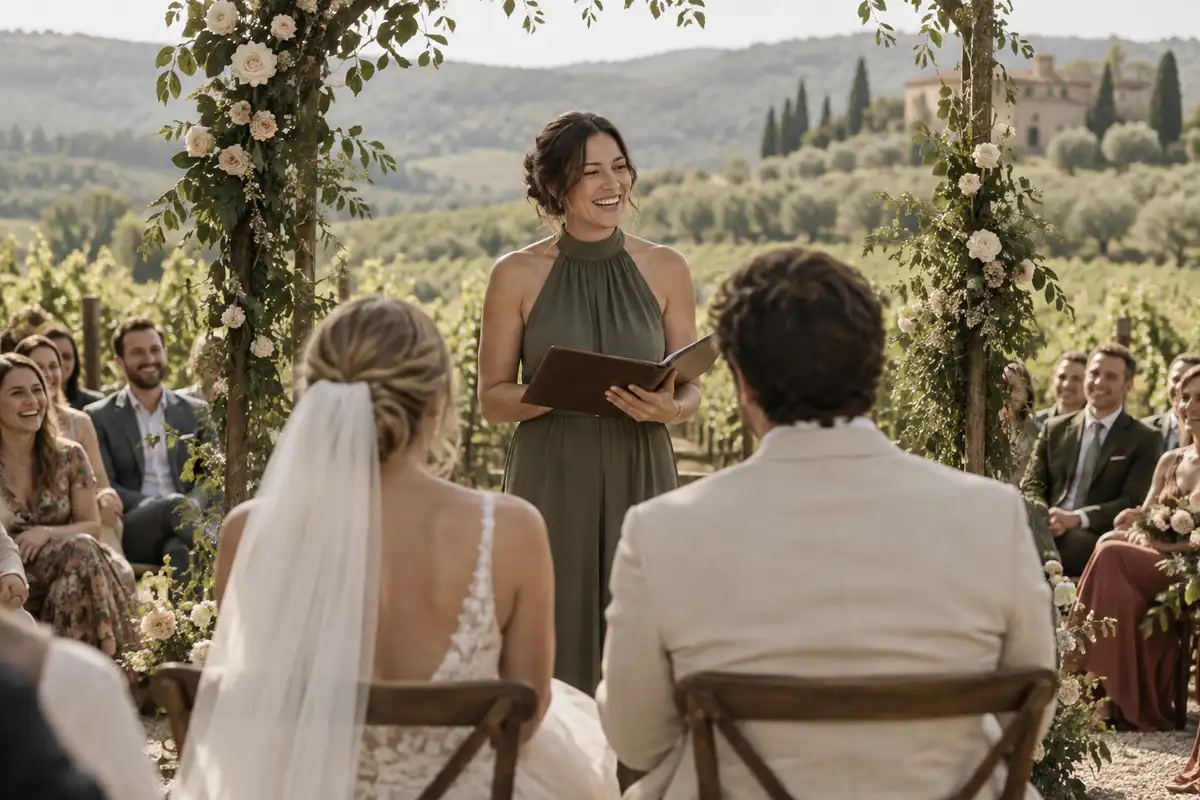
The best-received ceremonies of recent years are often led by someone the couple has known for decades: a college roommate, an aunt, the friend who introduced them. A friend knows the story, can pronounce every name, and can make a room of strangers feel like family in the first two minutes. What a friend may not know is the law — and a beautiful ceremony that isn’t properly licensed and recorded is a party, not a marriage.
The good news is that the legal part is short. It simply has to be done correctly, in the right place, before the day.
How friends become officiants
Most friends who officiate are ordained online. American Marriage Ministries, which has ordained more than 1.7 million ministers since 2009, describes its ordination as “a completely free service,” and the Universal Life Church states that its ordination is free, with no renewals. The process takes a few minutes and is recognized in most states for the purpose of performing weddings.
Both organizations say plainly that ordination is not always the end of it. Some states and cities require an officiant to register, file credentials or obtain a permit before the ceremony, and some courts take a narrower view of who counts as a minister. That is where the planning has to start.
The rules vary: some verified examples
Marriage law is set by each state and applied by counties, so the same friend with the same ordination may be able to marry you in one place and not in another. These examples come from official state and county sources as of September 2026. They show the range; they are not a complete list.
New York City. New York State’s Department of Health states that “the person performing the ceremony must be registered with the City of New York” to perform a ceremony within city limits. New York State also requires at least one witness and a 24-hour wait after the license is issued.
Nevada. Officiants must hold a Certificate of Permission from a county clerk before performing any marriage. Washoe County, which includes Reno, charges a $30 application fee plus a background check fee and says processing takes two to three weeks.
Virginia. Loudoun County’s circuit court states that it does not recognize online ordinations, including the Universal Life Church, citing an opinion of the state attorney general. It offers a one-time civil celebrant authorization instead, for $59, with residency requirements and a possible $500 bond. Other Virginia courts set their own procedures, so check the specific county.
California. Counties offer a Deputy Commissioner for a Day program that lets a friend or relative be deputized to perform one ceremony. Los Angeles County charges $75, asks for applications about two months ahead, and deputizes applicants in a short virtual class. The county notes that people already ordained, including online, do not need the program.
Massachusetts. The Governor can grant a one-day marriage designation allowing a non-clergy friend or family member to solemnize a specific wedding, through the Secretary of the Commonwealth’s office. It is not meant for clergy, with an exception for clergy living outside the United States.
Colorado. Couples may solemnize their own marriage, with no officiant at all, and witnesses are not required. A friend can still lead the ceremony; the couple simply signs the certificate themselves.
Pennsylvania. A self-uniting license allows couples to marry without an officiant. In Philadelphia it costs $100, and the couple and two witnesses sign it.
A beautiful ceremony that isn’t properly licensed and recorded is a party, not a marriage. The legal part is short; it just has to be done correctly.
Check with your county clerk
Before your friend gets ordained, call or email the clerk’s office in the county where the wedding will take place — not where you live, and not where your friend lives — and ask:
- Can a person ordained online perform a marriage here?
- Does the officiant need to register, file credentials or obtain a permit, and how long does that take?
- How many witnesses are required, and must they be a certain age?
- How long is the license valid, and is there a waiting period?
- Who returns the signed license, how, and by when?
Keep the answer in writing. Laws and county procedures change, and this article is not legal advice.
The officiant’s legal duties
A friend officiating has four responsibilities that matter to the state. Everything else is craft.
1. See the license before the ceremony. Confirm it was issued in the right state, has not expired, and that any waiting period has passed. New York licenses are valid for 60 days; California’s for 90; a Colorado certificate must be completed within 35 days of issue in Adams County, for example.
2. Include the legal essentials in the ceremony. In most places that means both partners clearly declare, in the officiant’s presence and any required witnesses’, that they take each other in marriage, and the officiant pronounces them married. Keep that exchange in, whatever else you change.
3. Sign correctly. Fill in the license in the right ink, with the officiant’s name, title and address exactly as the county asks, and make sure the couple and any witnesses sign too. Mistakes can mean correction fees, delays or a fresh license.
4. Return it on time. Deadlines vary: in San Diego County and Philadelphia the officiant is expected to return the license within 10 days; Adams County, Colorado, allows 63 days once the certificate is completed. Hand-deliver it or use tracked mail, and tell the couple when it’s done.
Writing the ceremony
Start with the structure every ceremony shares, then make it personal. The order of the ceremony sets out the beats: the processional, the welcome, readings, the address, vows, rings, the declaration and the recessional.
Meet the couple properly. An hour’s conversation about how they met, what they argue about and what they want the ceremony to feel like gives you everything you need.
Keep the address short. Five minutes at most. Tell one story about the couple, then turn it toward the promises they are about to make.
Agree on the vows. The Knot’s 2026 Real Weddings Study found that 61 percent of couples married in 2025 wrote their own. If they are, help them match length and tone; how to write your own vows is the guide to send them.
Choose readings with the couple. The ceremony readings are printed in full.
Aim for twenty to thirty minutes overall. Read the script aloud with a timer.
Running the ceremony
Attend the rehearsal and run it. You know the order better than anyone.
Print the script in large type in a plain folder or binder. Not a phone.
Make the announcements. If the couple want an unplugged ceremony, the request should come from you just before the processional; our guide to the unplugged wedding ceremony has wording.
Step aside for the kiss. Move out of the frame so the photographer gets the couple, not the back of your head.
Take the license with you when you leave, or hand it to the one person responsible for returning it.
For couples marrying small or abroad, where the legal ceremony may happen separately, see micro-weddings and elopements and destination weddings.
Written and edited by the Today’s Weddings editors. How we research and check what we publish is set out in our editorial standards. Spotted something wrong? Tell us.