Destination Weddings in 2026: How to Plan One Well
Choosing the place, the paperwork that decides whether you’re actually married, what your guests will spend, and why so many couples say their legal vows at home first.
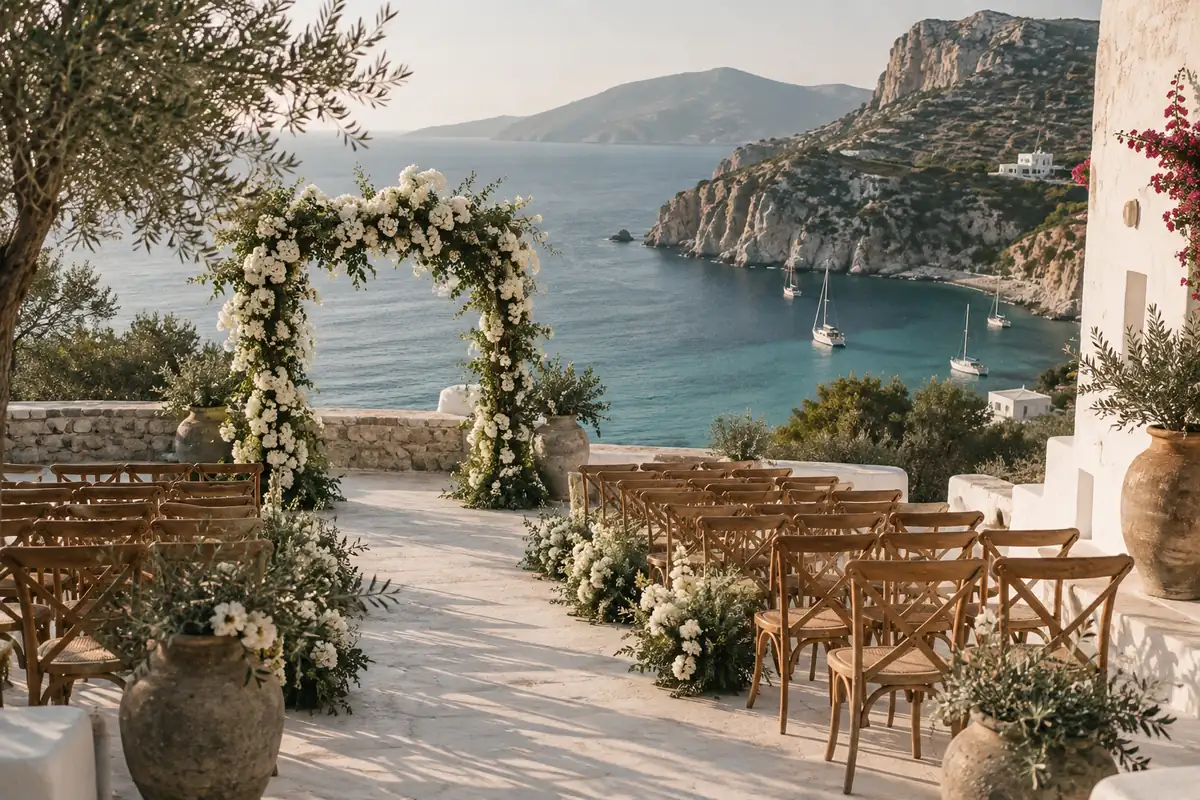
A destination wedding is really two events planned as one: a wedding and a trip that your guests pay for. The couples who do it well think about both from the start. They choose a place their families can reach, they sort out the paperwork early, and they accept, gracefully, that not everyone they love will be able to come.
It is a sizable slice of American weddings. The Knot’s 2026 Real Weddings Study found that 17 percent of couples married in 2025 had a destination wedding, which The Knot defines as one held away from where the couple live or grew up. Those weddings cost more: an average of $41,700 for a destination wedding within the United States and $43,700 for one abroad, against $32,600 for a wedding at home. In The Knot’s previous study, Mexico accounted for 34 percent of international destination weddings, Europe for 26 percent and the Caribbean for 21 percent.
Choosing the place
Start with access. A direct flight from the airports most of your guests use matters more than almost anything else. Every connection adds cost, time and the chance of a missed wedding.
Check the season before you fall for a place. More on weather below, but a beach that is perfect in March can be sweltering, rainy or in the path of storms in September.
Think about what guests will do. People who travel for a wedding will make a trip of it. A town with restaurants, walks and things to see is kinder than a resort where the only thing to do is the wedding.
Know the rules before you choose the venue. Some countries make legal marriage by visitors straightforward; others require documents that take months to assemble. That can decide the whole question.
The archive’s destination weddings: are they for you? is a useful first conversation.
Legal or symbolic: the paperwork that matters
The validity of a marriage abroad depends on the law of the country where it takes place, not on the United States. The State Department’s Foreign Affairs Manual says so directly, and adds that American diplomats and consular officers cannot perform marriages. In general, a marriage that is legally performed and valid abroad is valid in the United States too, but you will need the foreign record, usually with an apostille and a certified translation, whenever you use it at home.
What local law asks for varies widely. Three examples, from official sources:
Mexico. According to the U.S. Embassy and Consulates in Mexico, only a civil marriage performed by the Registro Civil is legally valid; a religious ceremony alone has no legal effect. The embassy’s guidance for the districts it covers lists an apostilled birth certificate translated into Spanish, a prenuptial medical examination from a local hospital taken no more than 15 days before the wedding (U.S. tests are not accepted), and four adult witnesses. Requirements differ from state to state, so confirm them with the civil registry where you will marry.
Italy. The U.S. Embassy in Rome explains that Americans need a sworn declaration, the dichiarazione giurata, made before a U.S. consular officer and then legalized at the local prefettura, along with an atto notorio, before declaring their intention to marry at the town hall. Civil ceremonies take place in town-hall venues. Italy recognizes civil unions for same-sex couples, but not marriage.
Jamaica. Jamaica’s Ministry of Justice requires visitors to be on the island at least 24 hours before the ceremony, to present passports and birth certificates (and a final divorce decree, if either has been married before), and to pay a stamp duty of J$4,000. The ministry describes the license as authorizing the marriage of “a man and woman.”
This is why many couples now marry legally at home, at the courthouse or with a small ceremony and a friend as officiant, a few days or weeks before they travel. The ceremony abroad is then symbolic: the vows are just as real to everyone there, but there are no translations, no residency days and no medical tests, and the marriage is recognized everywhere from the start. It is the only simple route for same-sex couples in many destinations. Nobody needs to announce which ceremony was the legal one.
A destination wedding is really two events planned as one: a wedding, and a trip that your guests pay for.
What it costs your guests
Be clear-eyed about this, because your guests will be. The Knot’s Guest Study, which surveyed 1,000 American adults in October 2024, found that guests who flew to a destination wedding spent $1,680 on average, and guests who drove spent $840, compared with $270 for a wedding in their own town.
Convention is that the guests pay their own travel and lodging, and the couple pay for the wedding itself and, usually, a welcome drink or dinner. You can soften the cost in other ways:
- Choose a place with a range of hotels, not only one expensive resort.
- Keep the events to one long weekend, and publish the schedule early so people can book the cheapest flights.
- Say plainly that their presence is the gift. Our guide to how much to spend on a wedding gift covers the question from the guest’s side.
- Expect more regrets, and accept them warmly. A smaller wedding is part of the bargain.
How far ahead to tell people
Save-the-dates: eight to twelve months ahead. Guests need time to ask for leave, save and find reasonable fares. A year is not too early for an international wedding.
Invitations: about three months ahead, with an RSVP date that falls before your hotel cutoff. The archive explains when to send invitations.
Passports: say it early and often. The State Department currently quotes four to six weeks for routine processing and two to three weeks expedited, not counting mailing time in each direction. Many countries also want several months of validity remaining. Put a reminder on your wedding website; see wedding websites and digital invitations.
Room blocks, and the clause to read
A hotel room block holds a set of rooms for your guests at an agreed rate until a cutoff date. There are two broad kinds. A courtesy block releases unbooked rooms at the cutoff at no charge to you. A contracted block usually includes an attrition clause: if your guests book fewer than an agreed share of the rooms, you pay the difference. All-inclusive resorts often tie wedding packages to a minimum number of room nights.
Before you sign, ask for a courtesy block or the lowest attrition percentage the hotel will accept, a cutoff date after your RSVP date, and in writing any complimentary rooms, upgrades or event credits tied to the number of rooms booked.
Weather and hurricane season
According to the National Hurricane Center, the Atlantic hurricane season, which covers the Caribbean, the Gulf and Mexico’s Caribbean coast, runs from June 1 to November 30, with most activity between mid-August and mid-October and a statistical peak around September 10. The eastern Pacific season, which affects Los Cabos and Puerto Vallarta, runs from May 15 to November 30. The archive’s Caribbean getaways: when to go goes island by island.
Weddings happen in storm season without incident all the time, and prices are lower. If you choose it, buy wedding insurance that covers weather, suggest travel insurance to your guests, and make sure your contracts say what happens if a storm closes the venue or the airport. Everywhere else, have a real rain plan: a covered space you would be happy to use, not a tent you would be embarrassed by.
Planners, and who they work for
The Knot found that 74 percent of couples who held an international destination wedding in 2024 hired a planner, against 32 percent of couples who married in their hometown. It is money well spent at a distance. A resort’s on-site coordinator can be excellent, but they work for the resort. An independent local planner works for you: they know which vendors show up on time, which permits are needed and what the town hall expects.
Ask any planner how many weddings they have done at your venue, which paperwork they handle, how they communicate across time zones, and what their plan is for bad weather.
After the wedding
If you married abroad, get several certified copies of the marriage record, with apostilles and translations, before you leave; you will need them to change your name at home. Book any honeymoon travel in the names on your passports. Our guide to planning the honeymoon has the rest, including the case for staying on after the guests fly home.
Written and edited by the Today’s Weddings editors. How we research and check what we publish is set out in our editorial standards. Spotted something wrong? Tell us.