The Order of the Ceremony
Who walks in, in what order, where everyone stands, and what happens between the processional and the kiss.
The shape of it
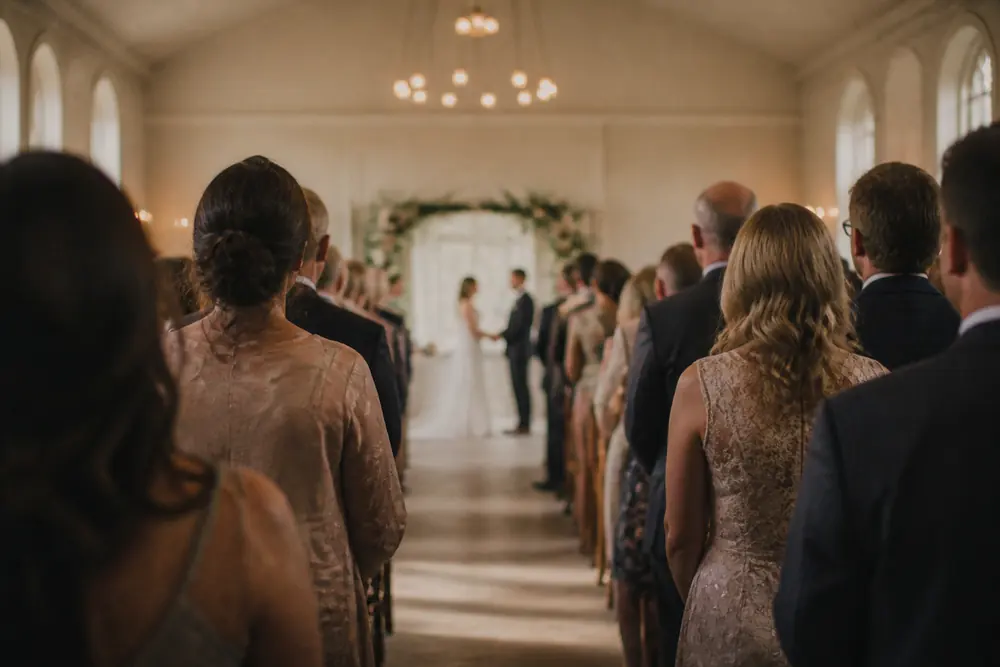
Nearly every wedding ceremony, religious or not, runs the same seven beats. The content changes completely; the structure barely moves.
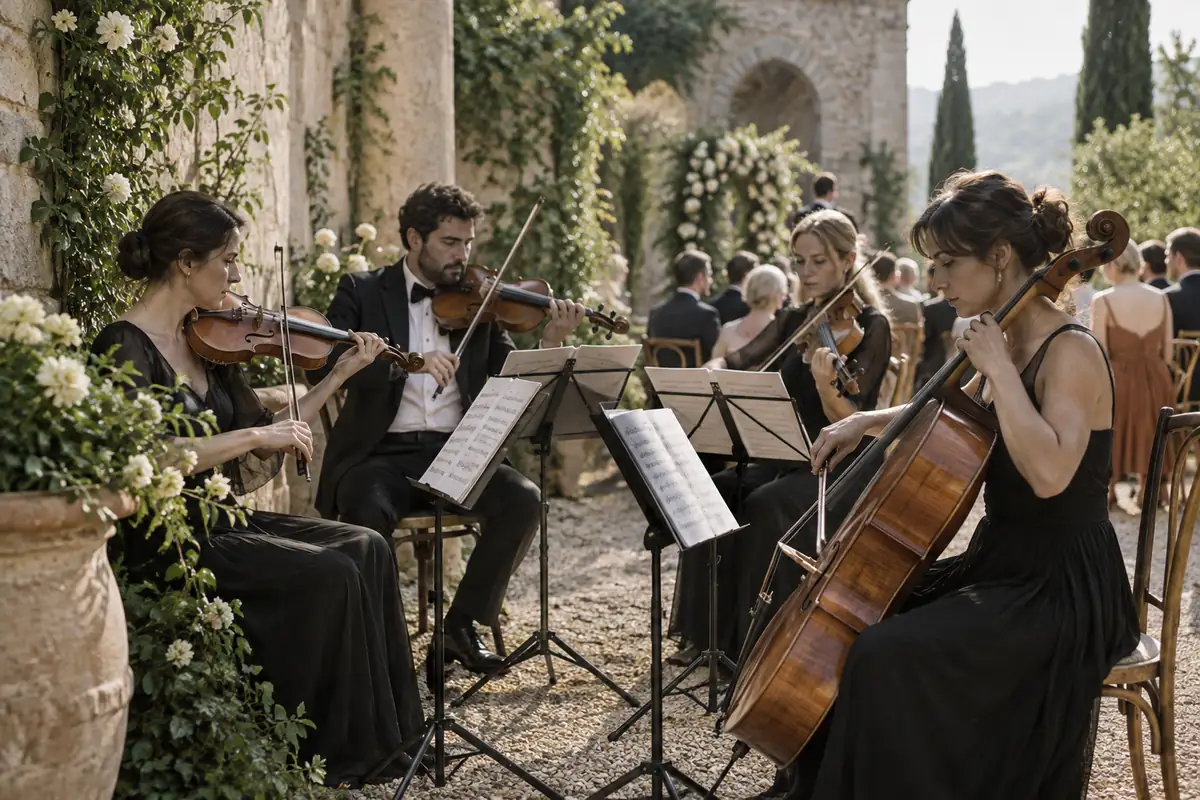
- Prelude — guests arrive and are seated, music playing.
- Processional — the wedding party and the bride enter.
- Welcome — the officiant greets everyone and says why they are there.
- Readings — one to three, often with music between.
- Vows and rings — the legal and emotional center.
- Pronouncement and kiss.
- Recessional — everyone leaves, in reverse.
A ceremony with no readings and a short address runs about fifteen minutes. Add two readings, a unity ritual and a hymn and you are at forty. Most people overestimate how long a ceremony should be and underestimate how long the processional takes.
The processional, in order
The conventional order, from the front backwards:
- Officiant takes position, usually from the side rather than the aisle.
- Groom, with the best man, either entering from the side or walking the aisle with his parents.
- Grandparents and parents of both families, seated in the front rows.
- Groomsmen, paired or single file.
- Bridesmaids, in ascending order of closeness to the bride.
- Maid or matron of honor.
- Ring bearer and flower girl.
- The bride, escorted.
None of this is fixed. Both parents escorting the bride is now at least as common as a father alone; wedding parties mixed by friendship rather than gender are ordinary; plenty of couples walk in together, which quietly solves several family problems at once. What matters is that everyone knows their cue, and that the rehearsal is where they learn it, not the morning of.
A rule worth knowing: the aisle takes longer than you think. Allow roughly twenty seconds per person or pair, which for a party of ten means your processional music needs to run three or four minutes. See the ceremony music library for pieces that loop gracefully when the timing drifts.
Where everyone stands
Traditionally the bride's side is on the left facing the front and the groom's on the right, with attendants fanning outward from the couple in the same order they entered. Two practical notes that matter more than the convention: leave a clear sight line from the front row to the couple's faces, and make sure the attendants are not standing directly behind the couple where they will appear in every photograph. Your photographer will have an opinion on this and is worth listening to.
Readings
Two or three is the usual number, placed after the welcome and before the vows. The convention is one secular and one religious, or one about love and one about marriage — which are not the same subject, and a ceremony that includes both feels noticeably more complete.
The archive here is deep on this. The poetry collection runs from Shakespeare's sonnets to twentieth-century verse; the religious readings cover the standard scriptural passages; and the other readings hold the blessings, prayers and prose — the Apache and Cherokee blessings, the Eskimo love song — that suit a ceremony with no denomination.
Ask your readers two weeks ahead, send them the text, and ask them to read it aloud once standing up. A passage that is beautiful on the page can be unspeakable at a lectern.
Vows
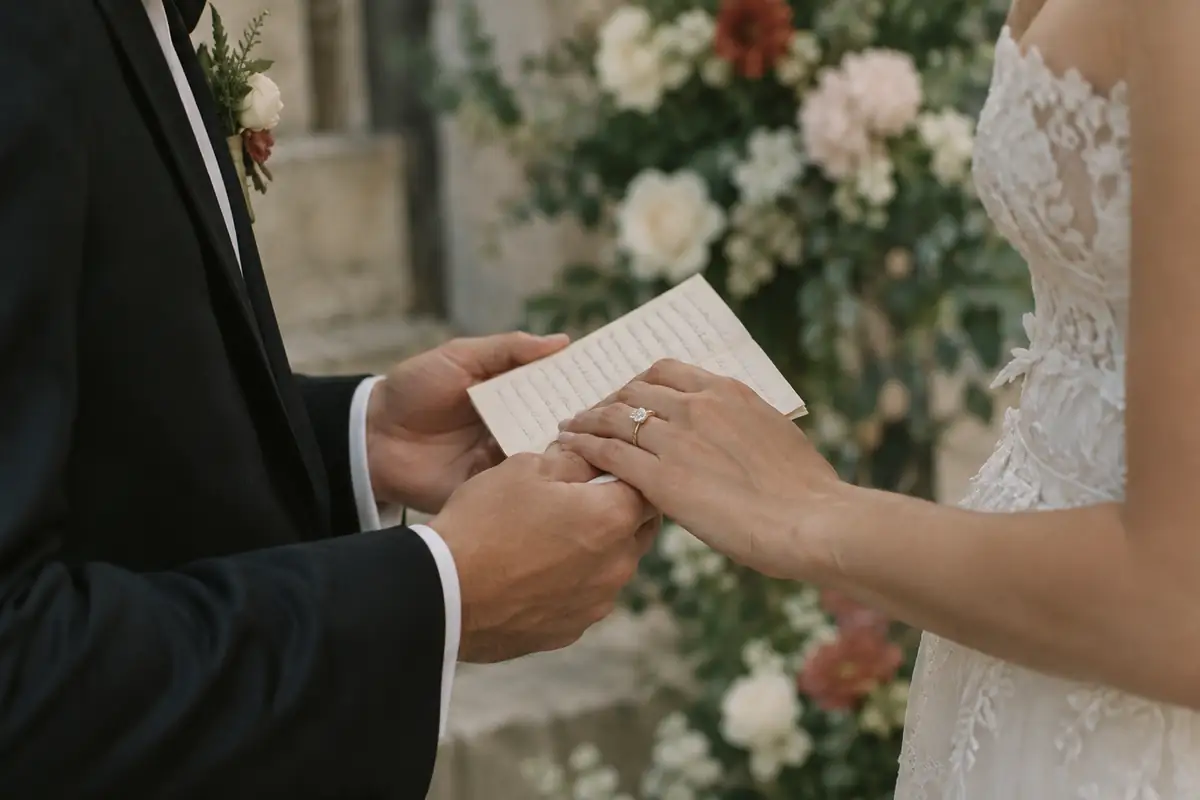
You have three options and they mix freely: the traditional words, which carry their own weight and require nothing of you on the day; repeat-after-me, where the officiant feeds you each line; or your own. If you are writing your own, the guide to writing wedding vows is the place to start — and agree a length with each other in advance, because the mismatch between a ninety-second vow and a six-minute one is painful to witness.
Rituals in the middle
Unity candles, sand, handfasting, wine, the breaking of a glass, jumping the broom, the seven blessings — these sit between the rings and the pronouncement. They are optional and they are the easiest thing to cut if the ceremony is running long. One is plenty. Two starts to feel like a program.
The paperwork
The marriage license is the part that makes it legal, and its rules are entirely local: waiting periods, expiry dates, how many witnesses must sign, whether the officiant must be registered in that specific jurisdiction. Check with the issuing office in the county where you are marrying, not the one where you live, and check early enough that a waiting period cannot ambush you. Whoever is marrying you — see the officiants directory — will know the local rules and should be asked at the first conversation, not the last.
The recessional
Reverse order, faster music, and a decision to make beforehand: are guests dismissed row by row, or do you go straight into receiving? A receiving line of a hundred guests takes the better part of an hour and it comes directly out of your reception. Many couples now skip it and work the room during dinner instead — see the reception timeline for where that hour goes if you do not spend it here.
Written and edited by the Today’s Weddings editors. How we research and check what we publish is set out in our editorial standards. Spotted something wrong? Tell us.