Ordering the Wedding Cake
How big, how much, what it is made of, and the questions to ask a baker before you put down a deposit.
Size it by servings, not by tiers
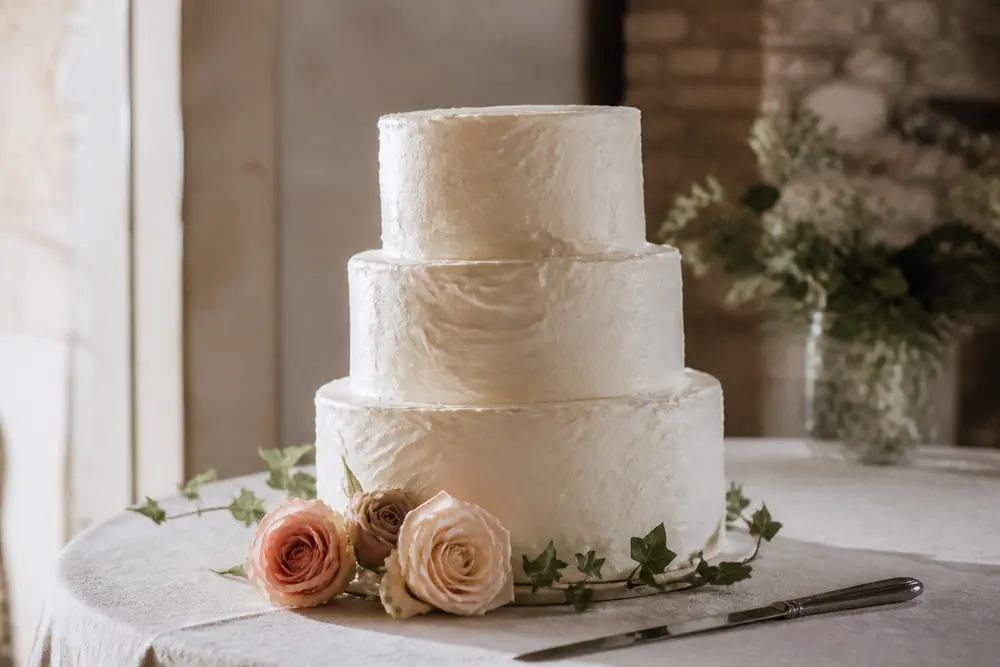
Bakers count in servings, and a "serving" of wedding cake is a narrow finger roughly one inch by two — considerably smaller than a slice of birthday cake. This is why a cake that looks enormous feeds fewer people than you expect, and why the tier count is a poor guide to anything.
| Round tier | Servings | Typical stack | Feeds |
|---|---|---|---|
| 6 inch | ~12 | 6 + 8 | ~30 |
| 8 inch | ~24 | 6 + 8 + 10 | ~68 |
| 10 inch | ~38 | 6 + 8 + 10 + 12 | ~124 |
| 12 inch | ~56 | 8 + 10 + 12 + 14 | ~196 |
| 14 inch | ~78 |
Square tiers give roughly a third more servings than round ones of the same width, which is the cheapest way to feed more people without a bigger cake.
Two adjustments worth making. If you are serving another dessert, or the cake is cut late once people have drifted off, order for about 80 % of your guest count — uncut cake is the most reliably wasted money at a wedding. And if you want a top tier to freeze for the anniversary, add it on top of your count rather than eating into it.
The kitchen tier
If you want the look of a five-tier cake and the price of a three-tier one, ask about a kitchen cake: a plain sheet cake of the same flavor, cut out of sight and served alongside. Guests are served from both and nobody can tell. Some couples use dummy tiers — polystyrene under fondant — for the same reason, though these only work with fondant, not buttercream.
Frosting decides most of it
Buttercream tastes better to most people, is cheaper, and can be worked into swoops, ruffles and a smooth finish that still reads as handmade. It softens in heat — an outdoor August reception will test it — and it cannot hold crisp geometry.
Fondant gives the flawless porcelain surface, holds sharp edges and survives warmth. It costs more, it takes more labor, and a considerable number of guests peel it off and leave it on the plate. A common compromise is fondant on the outside with a layer of buttercream beneath, which gets you the finish and something worth eating underneath.
Naked and semi-naked cakes — barely frosted, sides showing — are cheaper in decoration but less forgiving: there is nowhere to hide an uneven crumb, and they dry out faster, so they want to be cut sooner.
Flavor, and the one rule
Do not order a cake you have not tasted. A tasting is standard, often billed separately and credited against the order if you book. Beyond that: two flavors across the tiers is plenty, three is showing off, and one is a perfectly respectable answer. Dense cakes structure better in tall stacks than very light sponges, which is why so many wedding cakes are on the rich side — it is engineering as much as taste.
Look at what other couples actually chose: the cake gallery has real cakes from real weddings with the flavors and construction described by the couples themselves — three-tier tiramisu with buttercream and fresh roses, and so on. It is a more honest reference than a bakery's portfolio, which shows only the showpieces.
Flowers on the cake
Fresh flowers are the cheapest way to make a simple cake look expensive, and the easiest way to poison your guests if handled carelessly. Several popular wedding blooms are toxic, and even the safe ones are usually grown with pesticides not intended for food. Ask your florist for food-safe stems, insist they are barrier-wrapped rather than pushed into the cake, and agree explicitly whether the florist or the baker is placing them. This is the most common gap between two vendors at a wedding, and it is discovered at four in the afternoon.
Sugar flowers cost far more — they are sculpture, priced by the hour — but they last forever and photograph beautifully. If you want one showpiece element, this is a good place to put it.
What to ask the baker
- What does the price include — delivery, setup, the stand, the cutting?
- Is the stand a rental, and who returns it?
- How far ahead is it baked and how is it stored?
- Does it need refrigeration at the venue, and does the venue have space?
- How will it travel, and who is liable if it arrives damaged?
- What time will it be delivered, and who is there to receive it?
- Is there a cutting fee? Venues frequently charge per slice to cut and serve a cake they did not make — this can quietly rival the cake's own price.
Ask about the cutting fee before you order, not after. It is the single most common unpleasant surprise in this category.
Booking
Three to six months out is comfortable; popular bakers in peak season go earlier. Bring photographs of what you like, the colors, and a picture of the room — a cake is designed against its setting. The bakeries directory lists specialists by region, and cake toppers covers the thing on top, which is the one part you keep.
For where the cutting sits in the evening, see the reception timeline — the timing is a bigger decision than it looks, because cutting the cake is the traditional signal that guests may leave.
Written and edited by the Today’s Weddings editors. How we research and check what we publish is set out in our editorial standards. Spotted something wrong? Tell us.