The Reception, Hour by Hour
What happens when, why the order matters more than the clock, and the three moments that decide whether the room stays.

Why the order matters more than the times
A reception is a sequence of energy changes. Guests arrive keyed up from the ceremony, settle while they eat, and then either get up to dance or start looking at their phones. Everything in the running order is really about managing that single transition — and the mistake almost everyone makes is putting too much program between dinner ending and dancing beginning.
The times below assume a five-hour reception beginning straight after a late afternoon ceremony. Shift them wholesale for an earlier or later start; the intervals are what matter.
A five-hour running order
| Time | What is happening | Why |
|---|---|---|
| 0:00–1:00 | Cocktail hour | Guests arrive, you are photographed. One hour, not more — a long cocktail hour empties the bar budget and the room's energy at once. |
| 1:00 | Guests seated, couple announced | The first moment the whole room is pointed at you. |
| 1:10 | First dance | Straight in, while everyone is standing and watching anyway. |
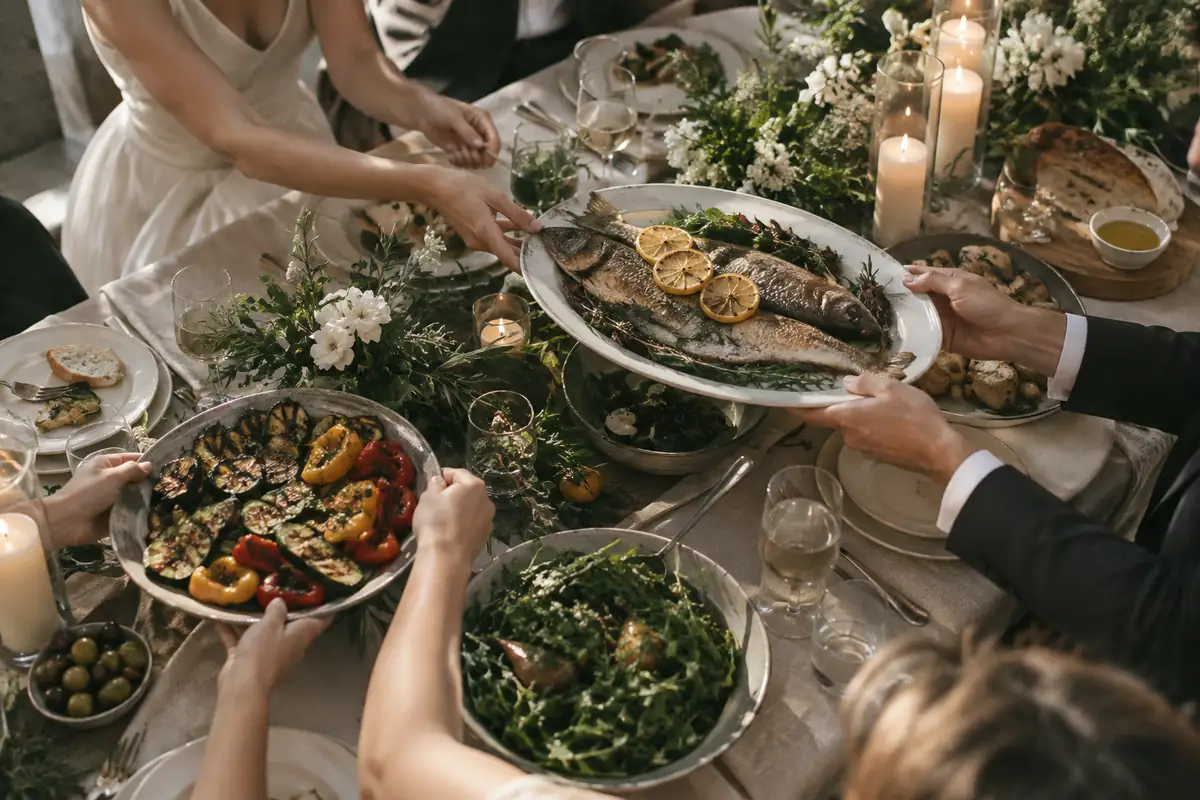
| 1:20 | Welcome and first course | A host welcome, kept short. |
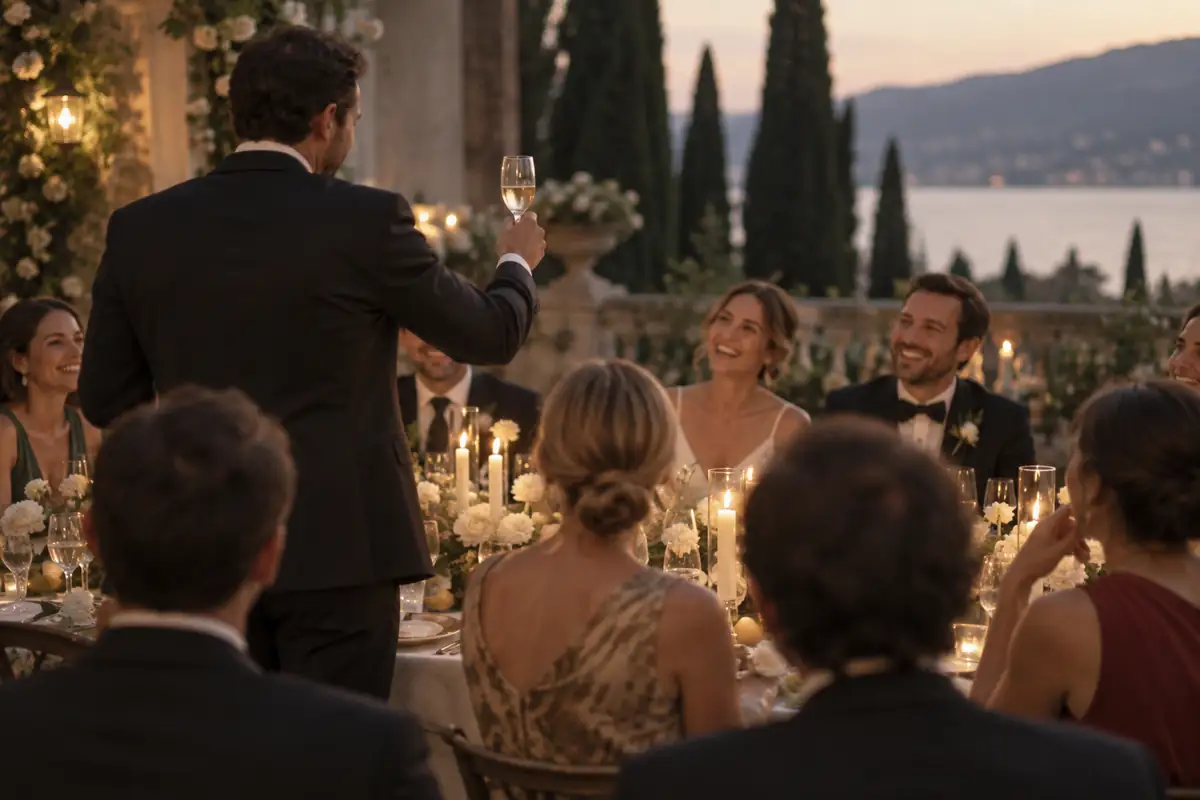
| 1:50 | Toasts: best man, maid of honor | Between courses, so nobody speaks over clattering plates. |
| 2:20 | Main course | |
| 2:50 | Parent dances | The bridge from sitting to standing. |
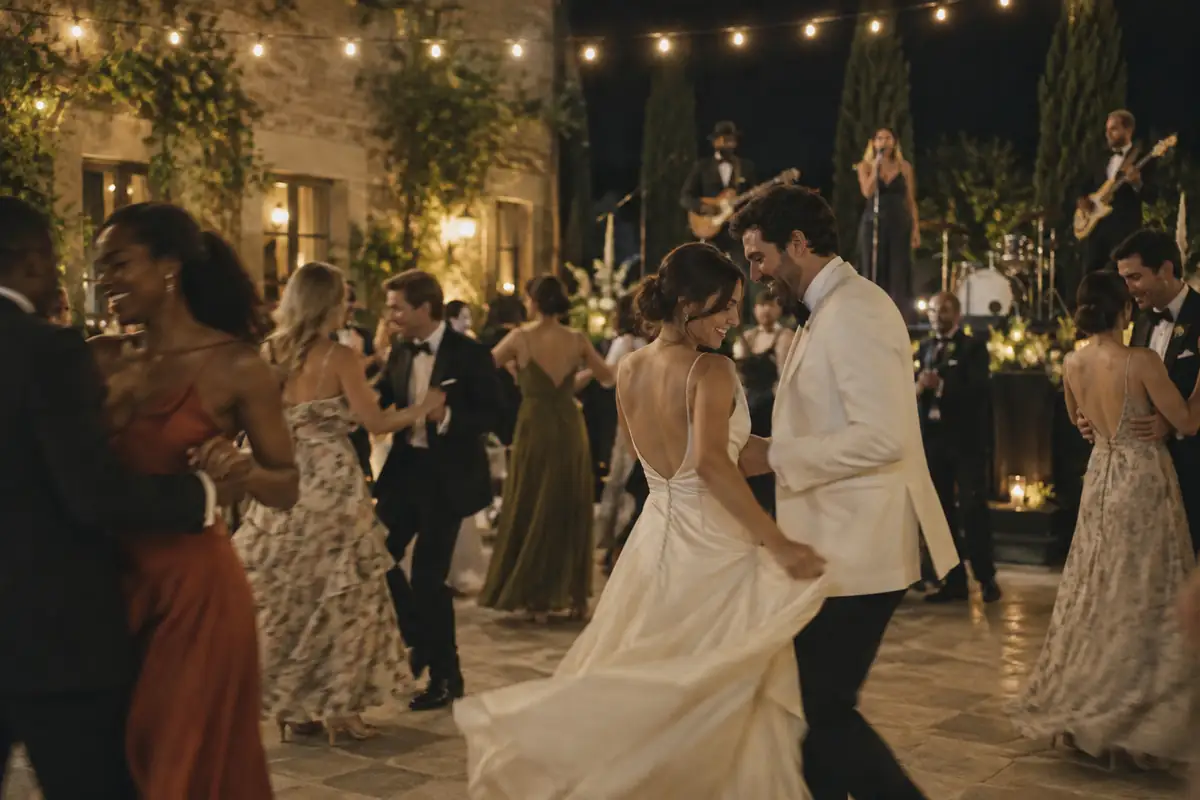
| 3:00 | Dancing opens | The band or DJ's real job starts here. |
| 3:40 | Cake cutting | Deliberately mid-dancing: it pulls people back for a moment and dessert circulates without stopping the music. |
| 4:00 | Bouquet and garter, if you are doing them | Optional, and increasingly skipped. |
| 4:45 | Last dance | |
| 5:00 | Send-off |
The first dance, and why it goes early
Putting the first dance immediately after the announcement — rather than after dinner — is the single best structural change most couples can make. The room is already standing and looking at you, so you are not summoning attention back from a hundred private conversations. It also gets the most nerve-racking two minutes of the night over with before you have had time to dread it.
Choosing the song is its own problem, and the archive has the deepest list on the site: first dance selections collects hundreds of them. The practical advice: play your candidate all the way through while standing up, because most songs have a section in the middle that is much harder to dance to than the opening, and three and a half minutes is a long time in front of people. Cutting the track to two minutes is completely normal and no guest has ever noticed.
Toasts
Three is the ceiling. Best man, maid of honor, and one host — usually a parent. Every additional speaker is another five minutes of the room sitting still, and the fourth toast is where dinner service starts backing up.
Tell each speaker their limit in minutes, out loud, well in advance. "Keep it short" means nothing; "three minutes" means three minutes. Ask them not to read from a phone. And schedule toasts between courses rather than during them — the acoustics of a room where forty people are cutting into chicken are genuinely hostile to a microphone.
The cake
Cutting the cake mid-dancing rather than right after dinner keeps the floor warm. It is also the traditional signal that guests may leave, so putting it late is, in effect, asking people to stay. If you want an early night, cut it earlier.
For what to order and how to size it, see the wedding cake guide; for what other couples actually had, the cake gallery has real cakes from real weddings, described by the people who cut them.
Music, and the one thing that decides the night
Whether the room dances is decided almost entirely by whoever is running the music and how much latitude you give them. A rigid do-play list of songs you love will empty a floor faster than anything else at the wedding. Give your band or DJ a short do-not-play list, a sense of the room, and then let them read it.
The reception music library is a starting point rather than a running order, and how to hire a DJ covers what to ask before you book. If you want live music, the bands listings are organized by region.
Things to decide in advance that nobody warns you about
- Who makes announcements, and whether they have your phonetic pronunciations. Names are mangled at roughly one wedding in three.
- When vendors eat. Photographers and bands have meal clauses; feed them while you are eating, not while you are dancing, or you will lose your photographer for the cake.
- Who holds the envelopes and who takes the gifts home.
- Who returns the rentals and by when. Late fees are real.
- What happens to the flowers. Arrangements are usually abandoned. Decide in advance who takes them.
- The end. Sparkler exits need someone to hand them out and a venue that permits them. Confetti is banned at more places than you would think.
A last practical note: keep an emergency kit at the reception, not just where you got ready. Most of what it is needed for happens after dinner.
Written and edited by the Today’s Weddings editors. How we research and check what we publish is set out in our editorial standards. Spotted something wrong? Tell us.