The Guest List and the Seating Plan
How to cut a list without starting a feud, when to send what, and the method that makes seating take an evening instead of two weeks.
The guest list is the budget
Every other decision is elastic. The guest count is not — it multiplies against catering, bar, rentals, cake, stationery, favors and the size of room you need. Before arguing about anything else, settle on a ceiling, because the list will expand to fill whatever space it is given.
A method that survives the families
The A/B/C approach works because it converts an argument about people into an argument about tiers, which is much less personal:
- A list — the wedding is wrong without them.
- B list — you would be glad they came.
- C list — obligation, distance, or a name someone else added.
Invite A and as much of B as the ceiling allows. As declines come in, move people up. Send B-list invitations at least five weeks before the day so the timing never reads as an afterthought — which means your first wave has to go out early enough to leave that room.
Agree the split with both families up front — a third, a third, a third is the usual starting point — and give each side a number rather than a veto. "You have forty" is a conversation. "Who is this person?" is a fight.
The three rules that prevent most of the trouble
Be consistent, and say the rule out loud. Almost every guest list grievance is really about inconsistency. If cousins are invited on one side they are invited on the other. If children are not invited, no children are invited — not even the ones staying at the hotel.
Plus-ones by category, not by judgment. Pick a rule — everyone who is married, engaged or living with a partner; or everyone in the wedding party; or everyone traveling more than a certain distance — and apply it without exception. Deciding case by case is how you end up defending a decision you cannot articulate.
Name the invitation precisely. Who is invited is communicated by the names on the envelope and nothing else. "The Smith Family" means the children are invited; "Mr and Mrs Smith" means they are not. Most people do not know this, so a line on your website saying "we are having an adults-only celebration" saves a great deal of awkwardness later. Addressing inner envelopes covers how the two envelopes do this work between them, and the invitation wording guide covers the situations where the family structure makes it complicated.
When to send what
| When | What |
|---|---|
| 6–8 months out | Save-the-dates — only to people you are certain of inviting. A save-the-date cannot be taken back. |
| 8–10 weeks out | Invitations. Twelve weeks for a destination wedding. |
| 3–4 weeks out | RSVP deadline — set it two weeks before the caterer's final count, because the last dozen replies always have to be chased by telephone. |
How and when to deliver invitations goes into the detail, and how to RSVP is worth reading from the other side — it is what your guests are guessing at.
Seating: do it in one evening, on the floor
Seating plans stall because people try to do them in a spreadsheet, in order, in one pass. The method that actually works is physical and iterative.
- Wait until the RSVP deadline has passed. Seating a maybe is wasted work.
- Get the venue's floor plan with table shapes and sizes. Round tables of eight to ten seat conversation better than long ones; a table of twelve splits into two conversations and someone is always stranded.
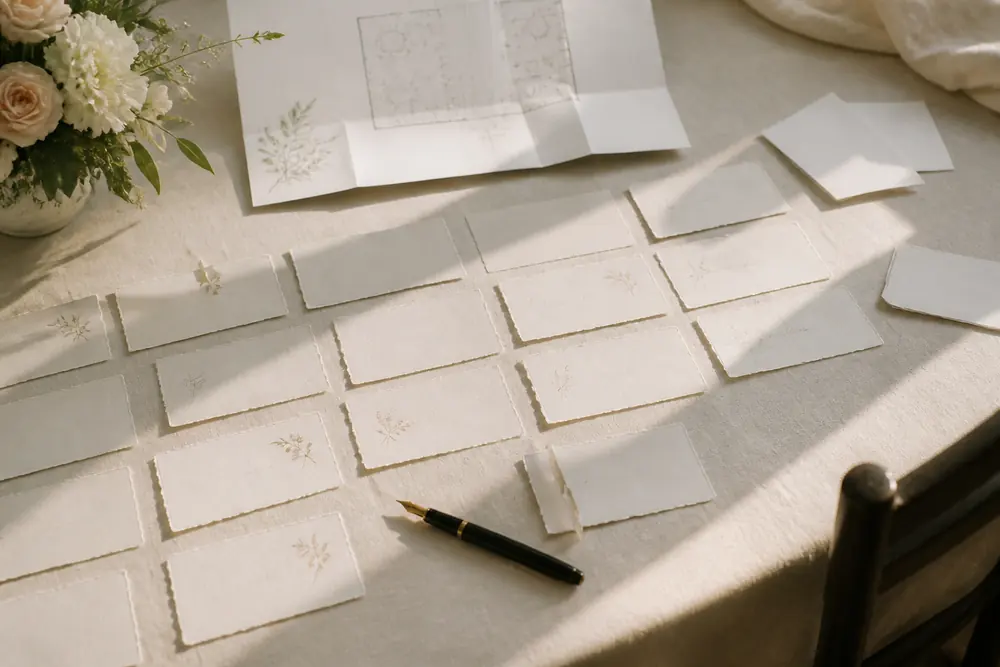
- Write one name per sticky note or index card. Sort into obvious clusters first — college, work, mother's side — and only then place clusters onto tables.
- Seat the difficult people first, not last. Divorced parents, the feuding aunts, the ex nobody mentioned. Everyone else is flexible; these are the constraints, and solving them last is why the whole thing collapses at midnight.
- Give every table at least one confident, sociable anchor — someone who will start a conversation among strangers.
- Put older guests away from the speakers and near the exit. Put the youngest and loudest near the dance floor.
Head table or sweetheart table
A head table seats the wedding party with you, which is convivial and strands their partners elsewhere. A sweetheart table seats the two of you alone, which photographs beautifully, gives you the only ten minutes you will get together all evening, and lets the wedding party sit with their own people. A third option — seating both sets of parents with you — is generous and worth considering if the families get on.
Escort cards and place cards are not the same thing
An escort card sends a guest to a table. A place card sits on the table and assigns the seat. You need escort cards (or a seating chart) for any wedding over about fifty; you need place cards as well if you have a plated meal with pre-ordered choices, because the server needs to know who ordered the fish. Getting this wrong is the most common cause of a stalled dinner service.
For where dinner sits in the evening, see the reception timeline.
Written and edited by the Today’s Weddings editors. How we research and check what we publish is set out in our editorial standards. Spotted something wrong? Tell us.