Choosing Your Wedding Party
How many, whom, how to ask them — and how to make sure the people you love most still like you by the end of it.
It is tempting to think of the wedding party as a list of the people you love most, ranked. That is how friendships get strained. The wedding party is closer to a small committee with a single brief — look after the couple, look after the guests — and the people you choose should be the ones who will do that well, who want to, and who can afford to.
What you are asking them to do
It helps to be clear, because your friends will want to know before they say yes. Traditionally, and still broadly true:
The maid or matron of honor is the bride’s deputy. She helps with the dress, often organizes the shower and the bachelorette, holds the bouquet during the vows, straightens the train, signs the marriage license as a witness, and gives a toast. On the day she is the person the bride can hand anything to.
The best man does the same for the groom: organizes the bachelor party, keeps the rings, gets the groom to the ceremony on time and sober, signs as a witness, gives the most anticipated toast of the evening, and often handles the envelopes for the officiant and vendors.
Bridesmaids and groomsmen support both of those roles: helping with the pre-wedding events, being present and useful on the morning, walking in the processional, and — the part that matters most and is least discussed — looking after the guests. The groomsman who notices the elderly aunt with nobody to talk to at cocktail hour is doing the real job.
The archive has a fuller list in attendants’ duties.
How many
There is no correct number, and the two sides don’t need to match. Four to six on each side suits most weddings of a hundred or so guests. Very large parties look wonderful in photographs and are hard to coordinate; a wedding of forty with twelve attendants starts to feel like the wedding party outnumbers the guests.
A useful test: could you give each of them something meaningful to do? If the answer is no, you have too many.
Whom to choose
Choose people you will still know in ten years. Not everyone you are close to now, and certainly not everyone whose wedding you were in. You are not obliged to return the favor; a warm explanation and a different role — a reading, the guest book, a toast at the rehearsal dinner — honors the friendship without the cost.
Think about cost before you ask. Being in a wedding party is expensive: the clothes, travel, a hotel room, the pre-wedding events, a gift. For a friend who is short of money, being asked can feel like a bill. You can reduce the burden — let them choose their own dress within a color, pay for the hair and makeup, skip the destination bachelorette — but only if you’ve thought about it before you ask.
Siblings are the diplomatic default and often the right answer, but not always. If a sibling would be miserable in the role, there are other ways to include them.
Gender is no longer a rule. A bride’s closest friend who happens to be a man can stand on her side; a groom’s sister can stand on his. Call them whatever you like — or just “the wedding party” — and dress them to match their side.
The groomsman who notices the elderly aunt with nobody to talk to at cocktail hour is doing the real job.
How to ask
In person or on a call, not in a group message. Say what you are asking, roughly when the events are, and roughly what it will cost. Then give them a genuine way out: Take a day to think about it — I’ll understand completely if the timing doesn’t work. The friend who says no honestly is doing you a far bigger favor than the one who says yes and resents it for a year.
Elaborate proposal boxes are charming and entirely optional. What people remember is being asked warmly and plainly.
Dressing them
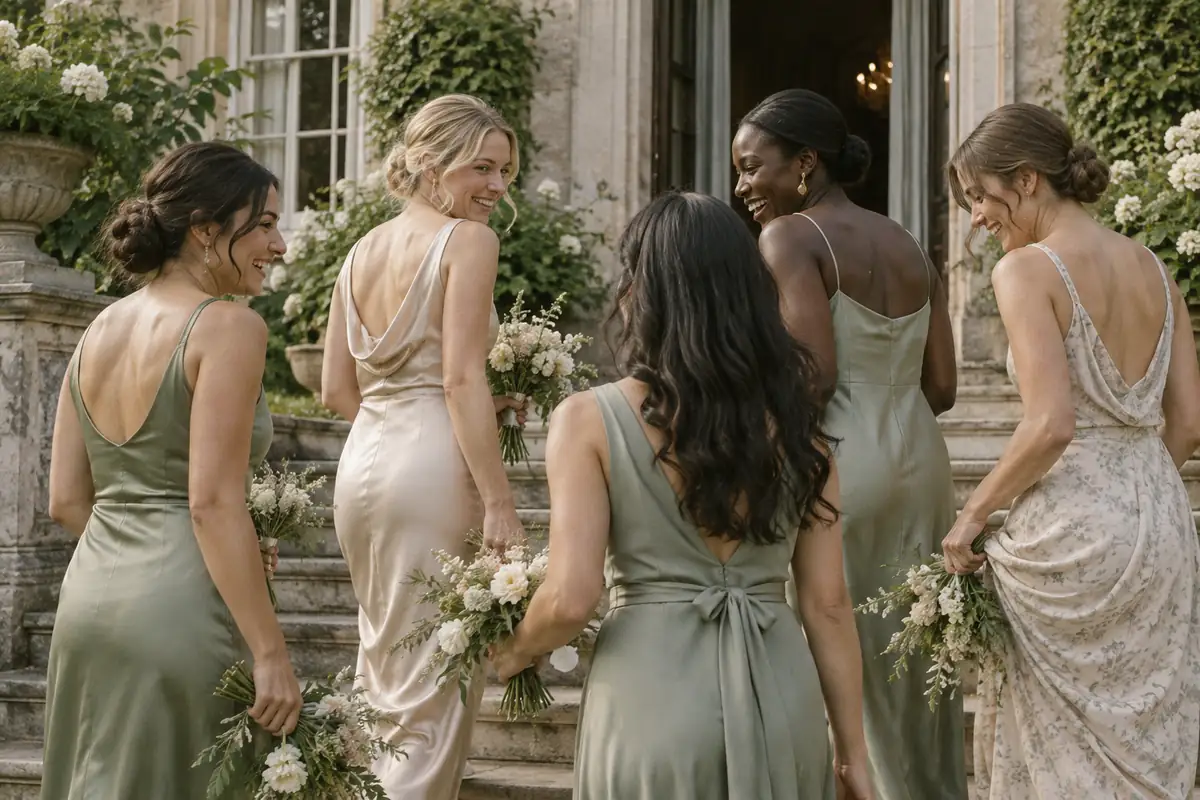
The single most useful decision is to name a price ceiling out loud before anyone shops. After that, give them as much latitude as your nerves will allow. Same color and same length, with different necklines and fabrics, flatters a group of different bodies far better than one dress repeated eight times — and it photographs beautifully. Wedding dress codes, decoded covers the wedding party along with the guests.
When it goes wrong
Occasionally someone can’t do it after all — a pregnancy, a job, a family crisis, a falling-out. Let them step back gracefully and don’t replace them in a hurry; an uneven wedding party looks entirely normal. If the problem is behavior rather than circumstance, talk privately and early. Most difficulties at weddings come from things nobody said out loud in the spring.
Thanking them
Give each attendant a real gift — something they will use, rather than another monogrammed item — and give it at the rehearsal dinner, when they can actually open it. Registry and gift etiquette has ideas. And on the day, find a moment to thank them one by one. They will remember that longer than the gift.
Written and edited by the Today’s Weddings editors. How we research and check what we publish is set out in our editorial standards. Spotted something wrong? Tell us.