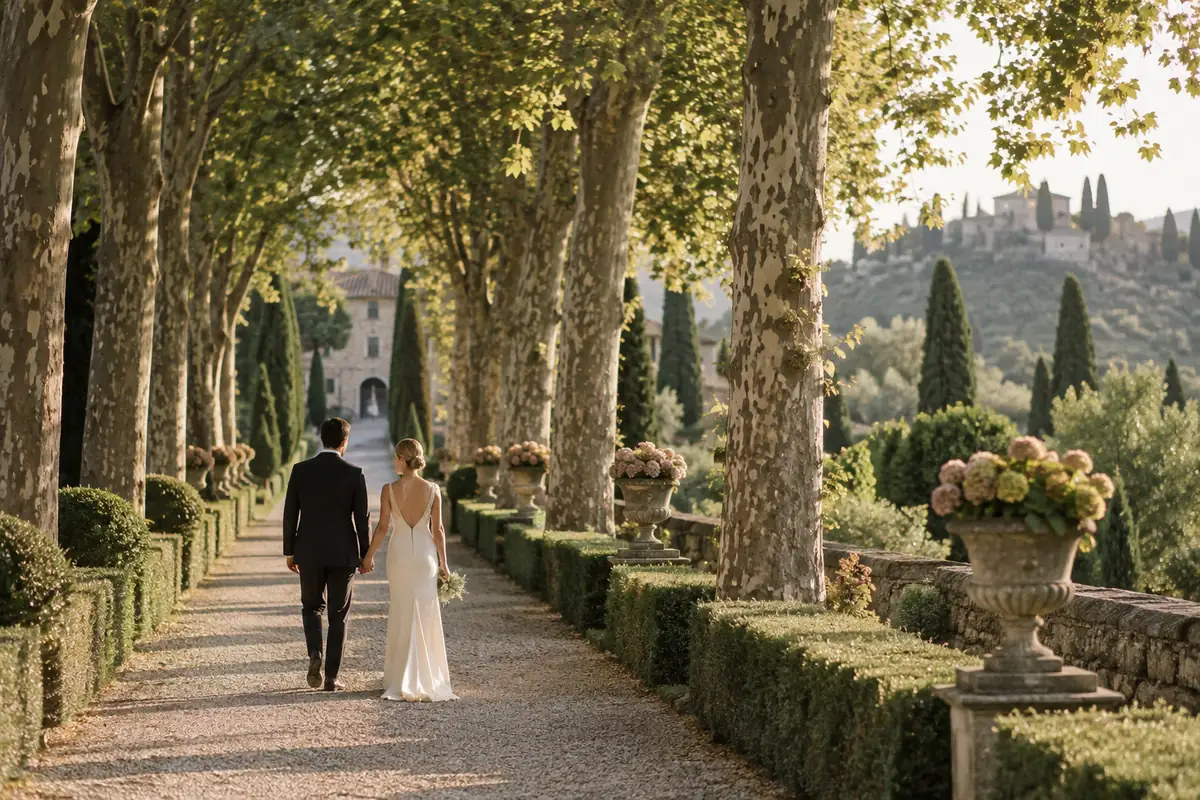
Choosing the Date: What Each Season Gives You
The month you marry decides what you pay, what’s in bloom, what the light does and who can come. How to choose with your eyes open.
The date is usually the first thing people ask about, and it is worth deciding carefully, because it quietly sets dozens of other things: the price of the venue, which flowers are cheap, what the light is like at six o’clock, whether the guests can travel, and whether you’ll be sweltering or shivering in the photographs.
The seasons
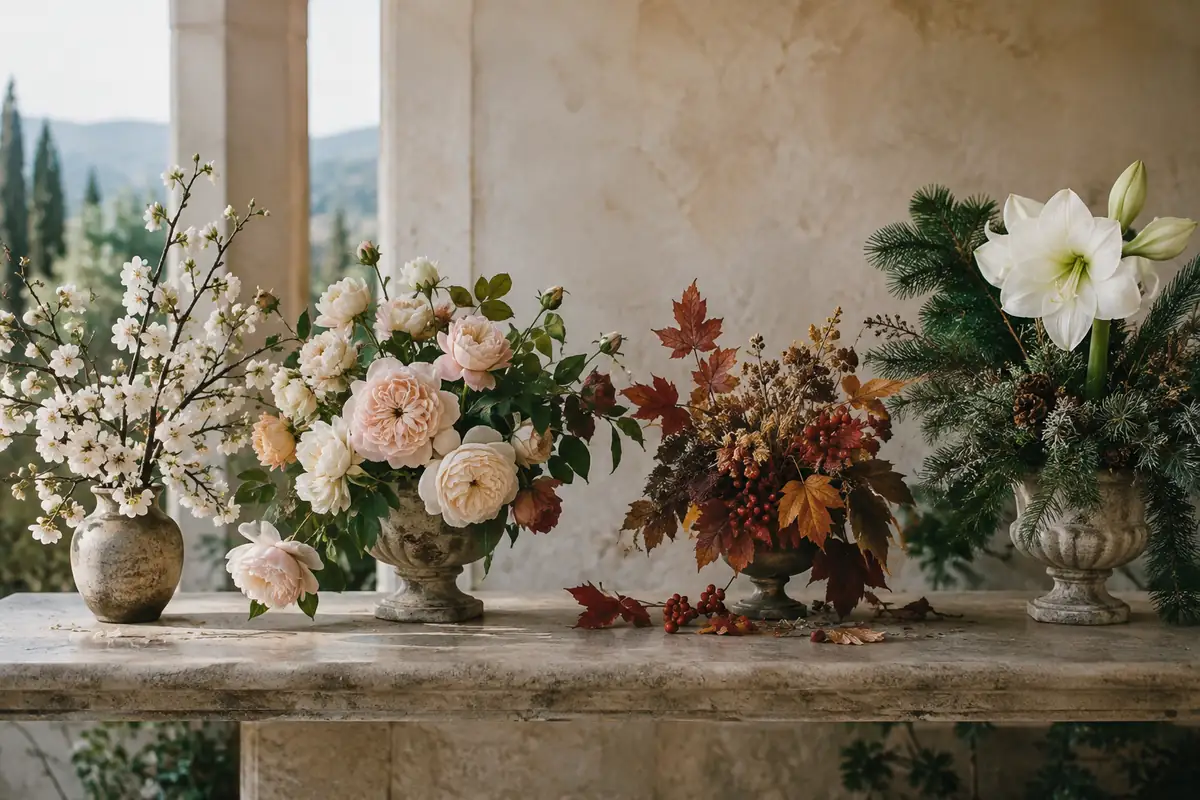
Spring brings the most romantic flowers of the year — peonies, lilac, ranunculus, sweet peas, blossom — and weather that can’t be trusted. In most temperate places, late spring is high season, and venues price accordingly. Early spring is quieter and cheaper; have a plan for rain.
Summer has the longest days and the most reliable weather, which makes it the natural season for outdoor ceremonies and late-running parties. It is also when guests have other plans: holidays, other weddings, family trips. Heat is the enemy of flowers, cakes and suits — see flowers by season for what survives an August afternoon.
Autumn is, for many couples, the best of all worlds: the light is golden, the heat has gone, and the produce and flowers — dahlias, berries, foliage — are at their richest. Early autumn is now as popular as late spring in many places, so book early.
Winter is the bargain season, apart from the holidays themselves. Venues have dates to fill and are often open to negotiation. Candlelight, velvet, evergreens and dark early evenings make for a wonderful atmosphere, and a wedding near New Year gives guests something to celebrate twice. The costs come back in snow, travel disruption and the need for everything to happen indoors.
The day of the week moves the price more than the month does. A Friday in October can cost far less than a Saturday — for exactly the same room.
The day of the week
Saturday is the most expensive day of the week everywhere, and the most requested. Friday evenings and Sundays can be significantly cheaper at the same venue, and weekdays cheaper still. The trade-off is guests’ time: a Friday afternoon ceremony means people leaving work early, and a Sunday means a long drive home on a Sunday night. For a small wedding of close family, a weekday can be perfect.
Before you commit, check the date against
- Public and religious holidays. A long weekend helps guests travel and raises hotel prices. Some religions restrict weddings in certain seasons — Lent, the period between Passover and Shavuot, some weeks in the Hindu calendar — so check with your officiant.
- School terms, if many of your guests have children or are teachers.
- Local events. A marathon, a college graduation or a major festival in the same town will fill every hotel room within miles.
- Your key guests. Before you book, quietly ask the four or five people you cannot imagine the day without whether they are free.
- The sunset. Look it up for your date and location. Golden hour — the half hour before sunset — is the best light for portraits, and it arrives at wildly different times in June and December.
Anniversaries and meaningful dates
Many couples choose a date that already means something: when they met, a grandparents’ anniversary, a birthday. Just check that it doesn’t fall on a date that means something else to your families. And remember that you will celebrate it every year: a wedding on Valentine’s Day, or on Christmas Eve, is romantic once and complicated thereafter.
How far ahead
The most popular venues in the most popular months book twelve to eighteen months in advance. If you want a particular place in October, start looking in the spring of the year before. If you’re flexible about the date, the reverse is also true: ask a venue you love which dates it still has, and you may find a Friday in November at a price you didn’t think possible.
For everything that follows once the date is set, see How to Plan a Wedding, From Yes to Honeymoon and the wedding budget.
Written and edited by the Today’s Weddings editors. How we research and check what we publish is set out in our editorial standards. Spotted something wrong? Tell us.