The Groom’s Suit: Color, Cut and Season
Navy or charcoal, tuxedo or lounge suit, bought or tailored — how to choose what the groom wears, and what to tell the groomsmen.
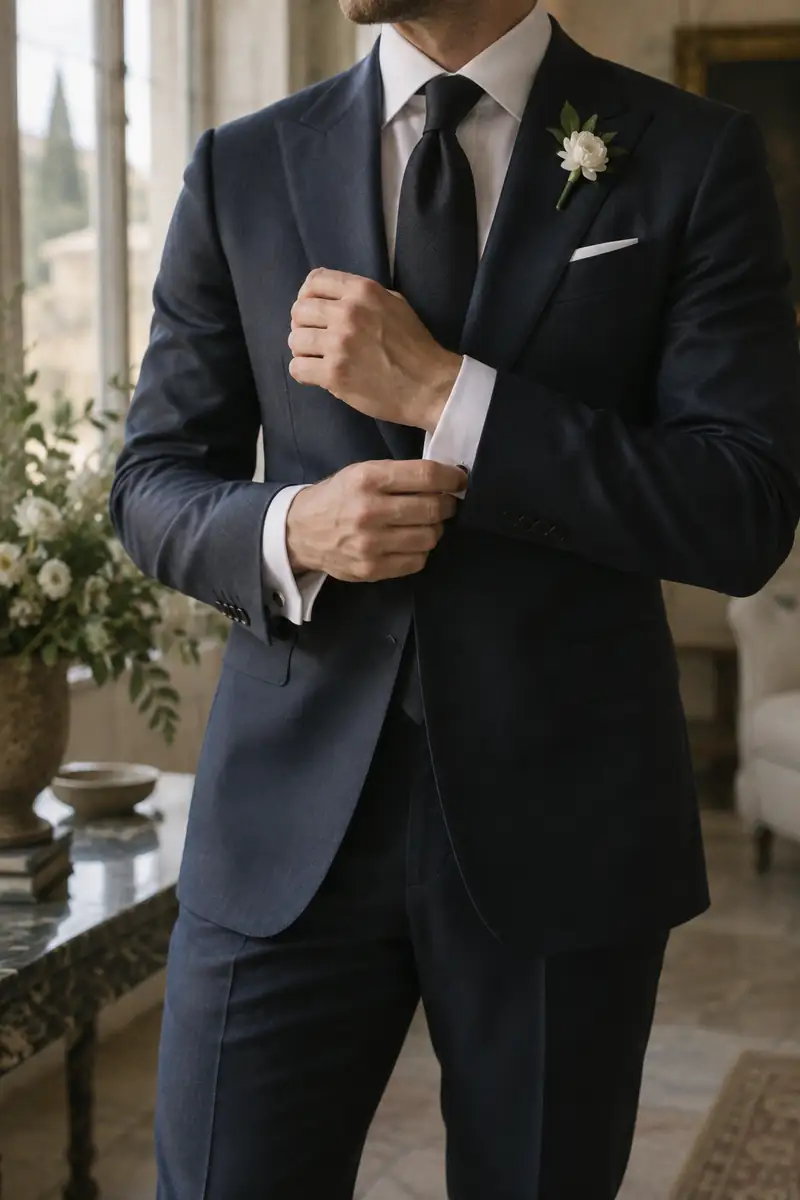
The groom’s clothes get a fraction of the attention the dress does, which is a pity, because they are the other half of every photograph. The good news is that the choices are fewer and the rules are clearer. Get the formality right, choose a color that suits the season and the man, and spend on fit rather than on labels.
Start with the formality of the day
The single most common mistake is dressing the groom for the wrong wedding. The clothes should follow the event, not the other way round.
| The wedding | The groom wears |
|---|---|
| Black tie, evening | A dinner jacket (tuxedo) in black or midnight blue, with a bow tie |
| Formal, day or evening | A dark suit — navy or charcoal — with a silk tie; a morning coat for a traditional daytime service |
| Cocktail or semi-formal | A well-cut suit in navy, gray or a mid-blue |
| Garden, summer or beach | A lighter suit in stone, sand, pale gray or linen; the tie is optional |
| Winter, country | Heavier cloth — flannel, tweed or a velvet jacket for the evening |
If the invitation carries a dress code, the groom should be at the top of it, never below it. Wedding dress codes, decoded explains what each phrase asks for.
Color, and why navy wins so often
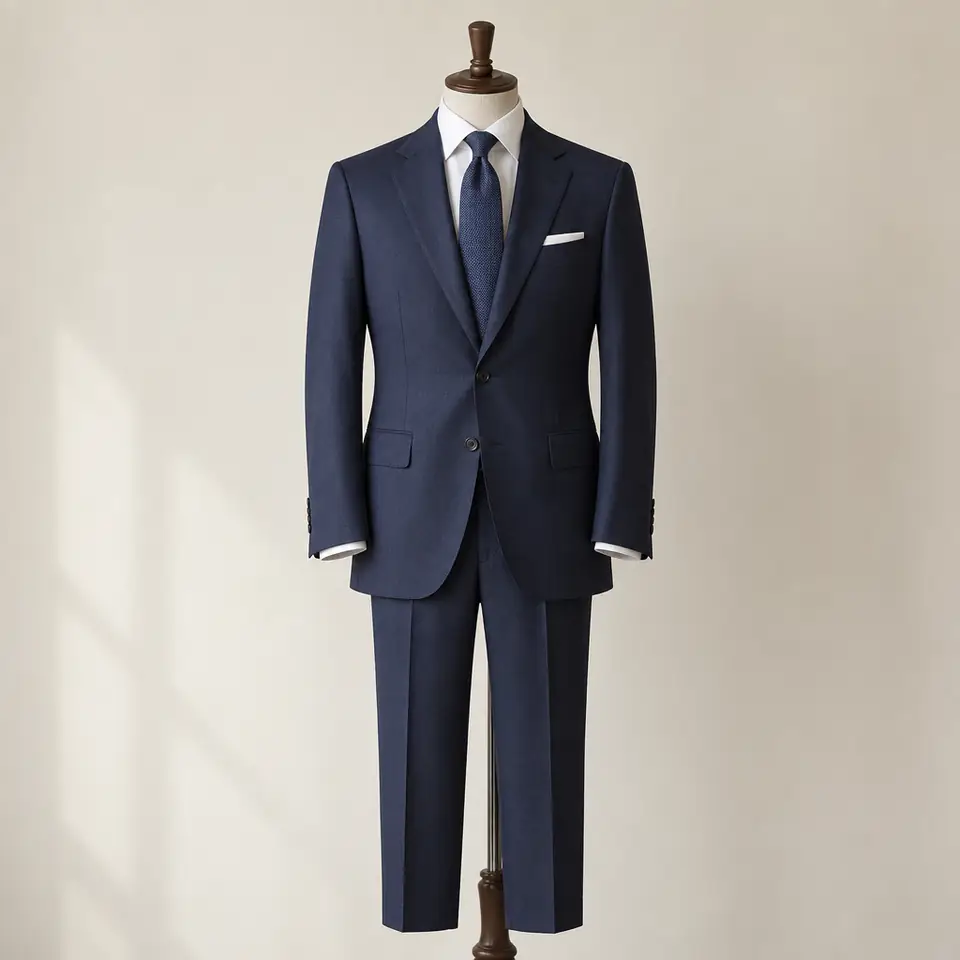
Navy is the most forgiving color a man can wear. It suits nearly every complexion, looks right from morning to night, photographs with depth rather than as a black hole, and can be worn again to every other wedding he attends for the next ten years.
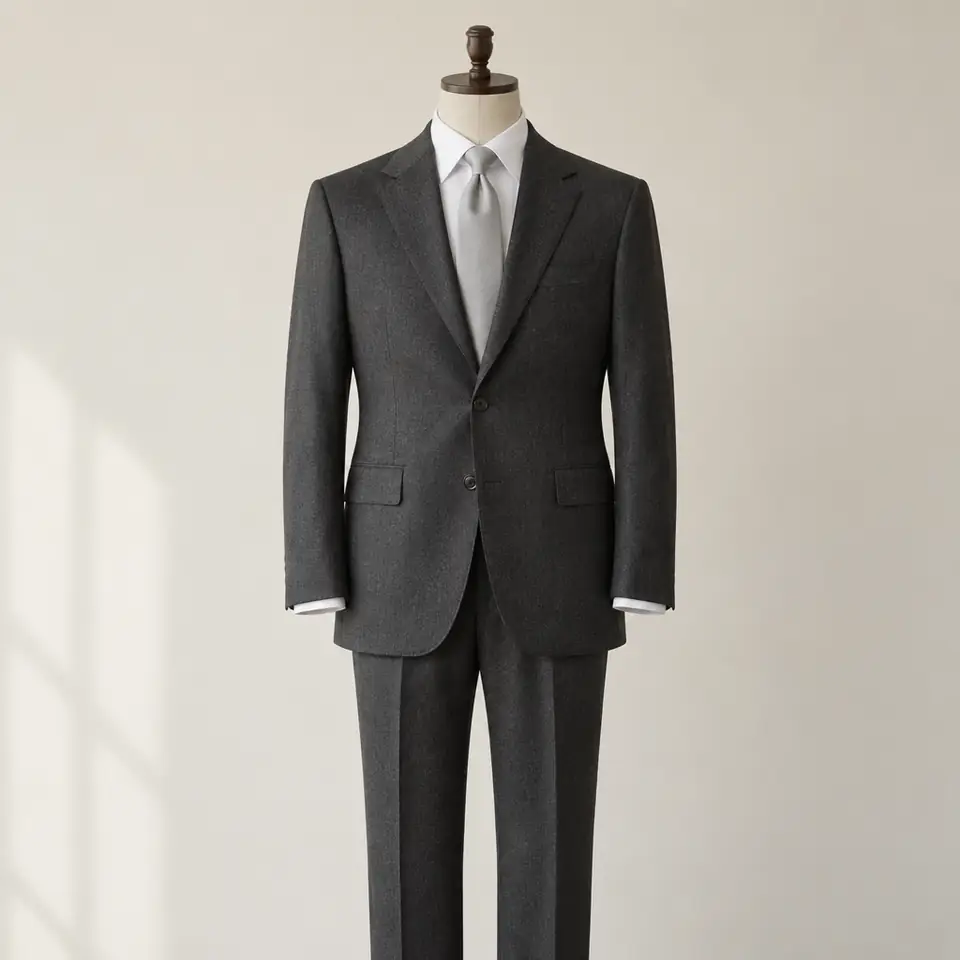
Charcoal is its sober cousin — excellent for winter, for formal church services, and for men with very fair or very dark coloring who find navy makes them look washed out.
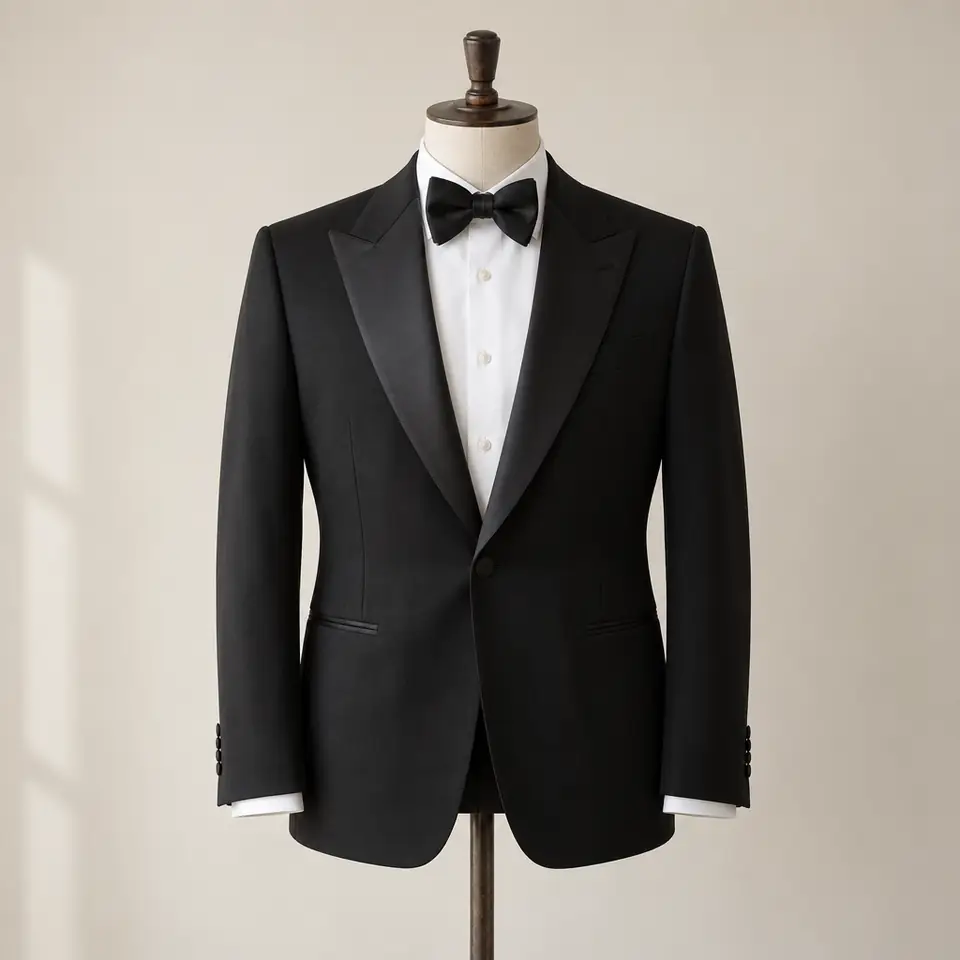
Black is for the evening. A black lounge suit worn at a daytime wedding tends to look like a funeral in the photographs; a black dinner jacket after six looks exactly right.
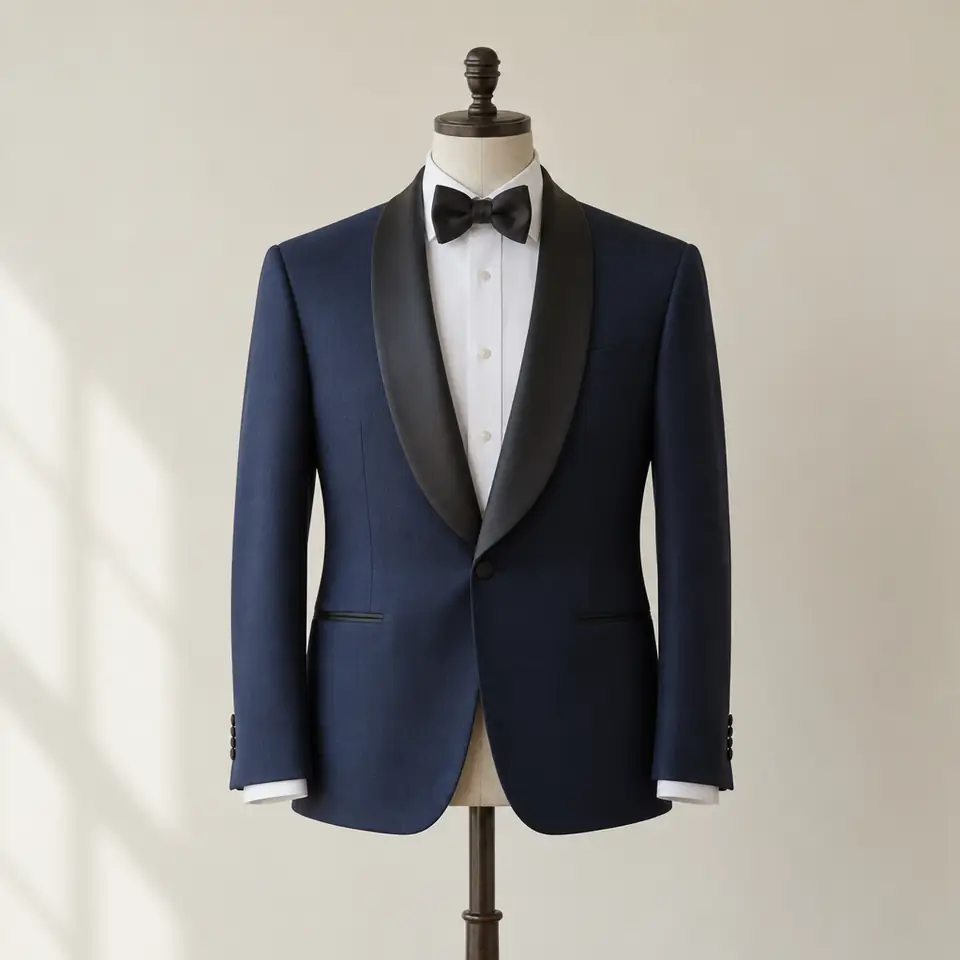
Midnight blue is the connoisseur’s dinner jacket: under artificial light it reads as a richer black than black itself. It is the choice that other men notice.
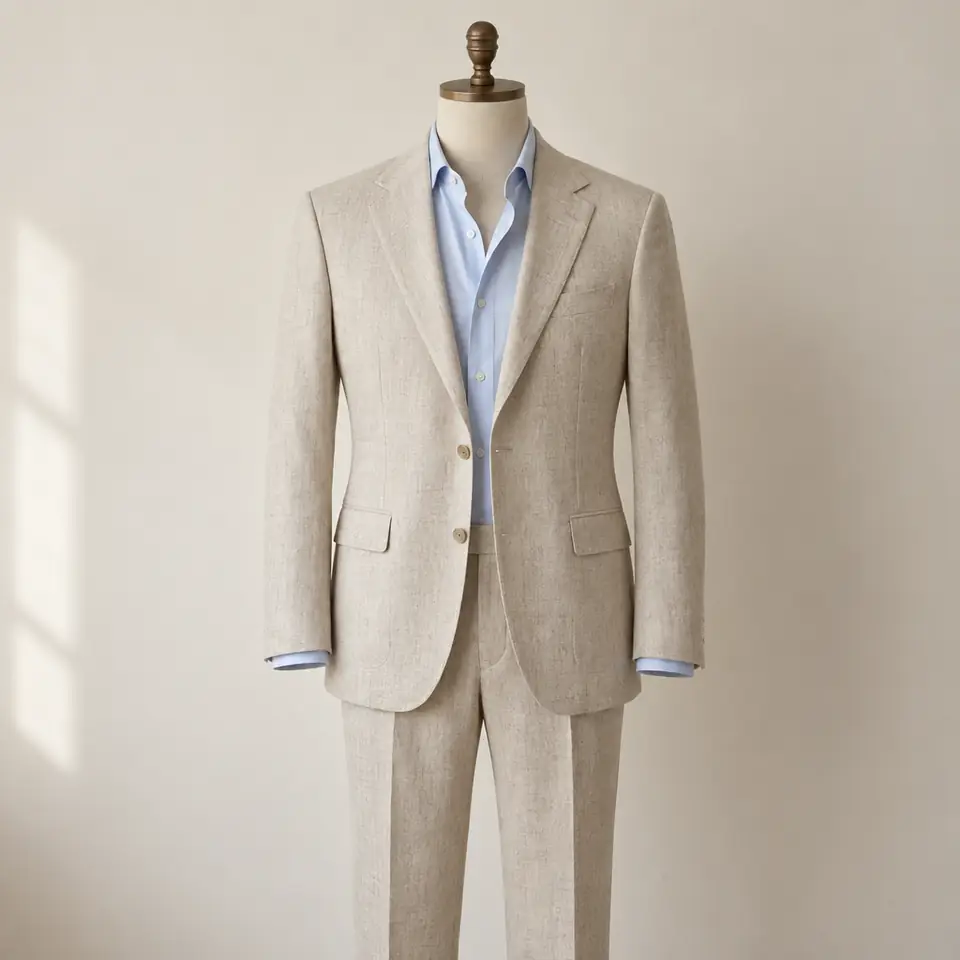
Light colors — stone, sand, pale gray, tan — belong to summer and daylight. They look wonderful outdoors and underdressed after dark. Linen creases the moment you sit down; that is the point of it, but warn the photographer.
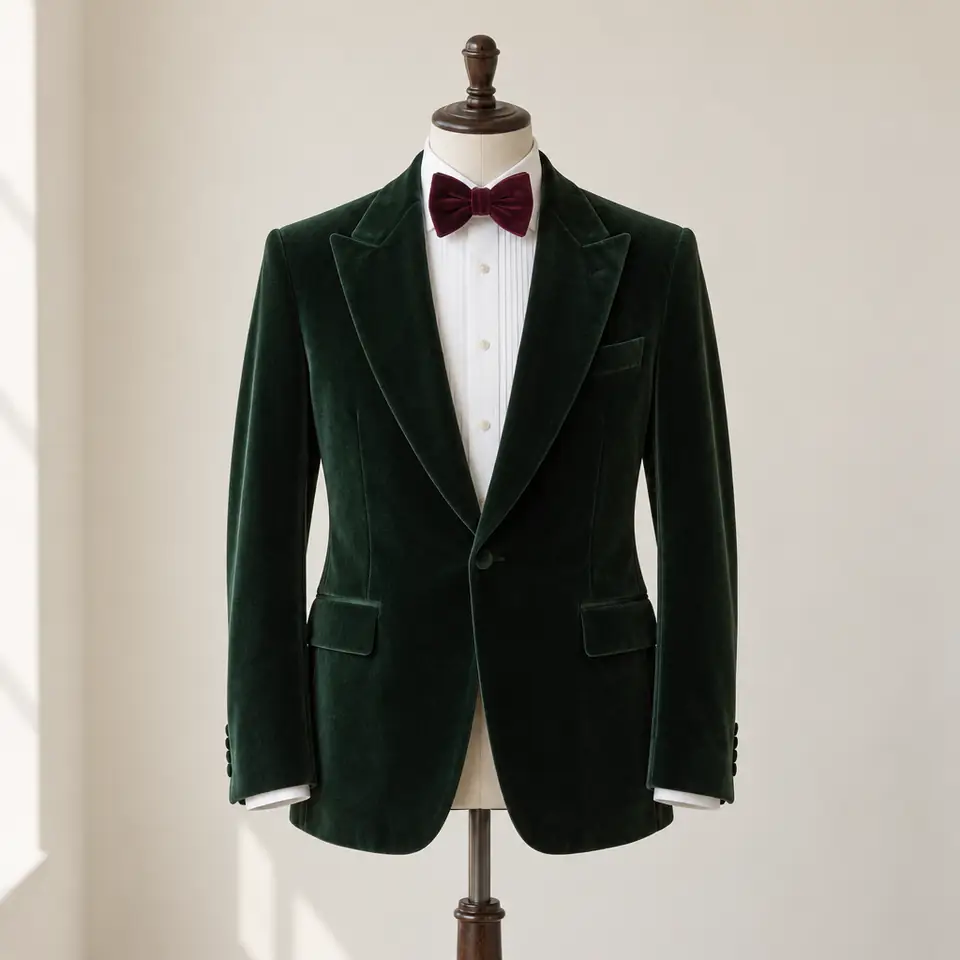
Green, burgundy, a bold check — perfectly possible, especially for the groom alone rather than the whole party, but make it a decision rather than an accident. A strong color in the suit means everything else should be quiet.
Relating it to the dress
The suit doesn’t need to match the dress, but it should belong to the same wedding. A bride in heavy satin and a cathedral veil suggests a groom in something dark and formal; a bride in a slip dress on a cliff suggests something lighter and looser. If the dress is ivory rather than white, avoid a stark white shirt beside it — a soft white or pale ivory shirt will stop the dress looking yellow in the photographs.
Buy, rent or tailor
Renting makes sense for a formal dinner jacket he won’t wear again, and for large wedding parties who need to match exactly. The fit is the risk: order early, try on the delivery at least a week before, and budget for a local tailor to adjust the sleeves and trousers.
Buying off the rack and having it tailored is the best value for most men. A good tailor can take a sound mid-priced suit and make it look twice its price — shortening the sleeves to show a quarter-inch of shirt cuff, taking in the waist, hemming the trousers to break just once on the shoe.
Made to measure — where a maker adjusts an existing pattern to his measurements — is the step up, and usually takes six to eight weeks with two fittings.
Whatever the route, the thing that separates a good suit from a bad one in photographs is fit at the shoulder. Everything else can be altered; the shoulder can’t.
Everything else can be altered. The shoulder can’t — which is why fit there matters more than the label.
Standing out from the groomsmen
The groom should look like the groom, but not like he came to a different wedding. One clear point of difference is enough: a different tie or bow tie, a waistcoat when the groomsmen have none, a boutonniere of a different flower, a lapel that is peaked where theirs are notched. Tell the groomsmen early exactly what to wear — color, cut, shoes, socks — because six men interpreting “dark suit” will produce six different weddings.
The details
- Shoes: black oxfords with anything dark and formal; brown or tan with lighter suits in daylight. Polished, and broken in beforehand.
- Socks: match the trousers, not the shoes. Long enough that no skin shows when he sits.
- The boutonniere sits on the left lapel, over the heart, pinned from behind. Ask the florist to make one spare.
- Pocket square: plain white linen is never wrong. It should not match the tie.
- A watch is fine. A phone in the jacket pocket is visible in every photograph; give it to the best man.
And the final fitting should happen in the shoes he will wear on the day, with a shirt that has been washed at least once. Collars shrink.
Written and edited by the Today’s Weddings editors. How we research and check what we publish is set out in our editorial standards. Spotted something wrong? Tell us.