Prince Albert II and Charlene Wittstock’s Wedding, 2011
Fifty-five years after his parents’ wedding, Grace Kelly’s son married an Olympic swimmer in the courtyard of the Prince’s Palace, with Armani for the ceremony, Chanel for the civil marriage and Bocelli among the singers.
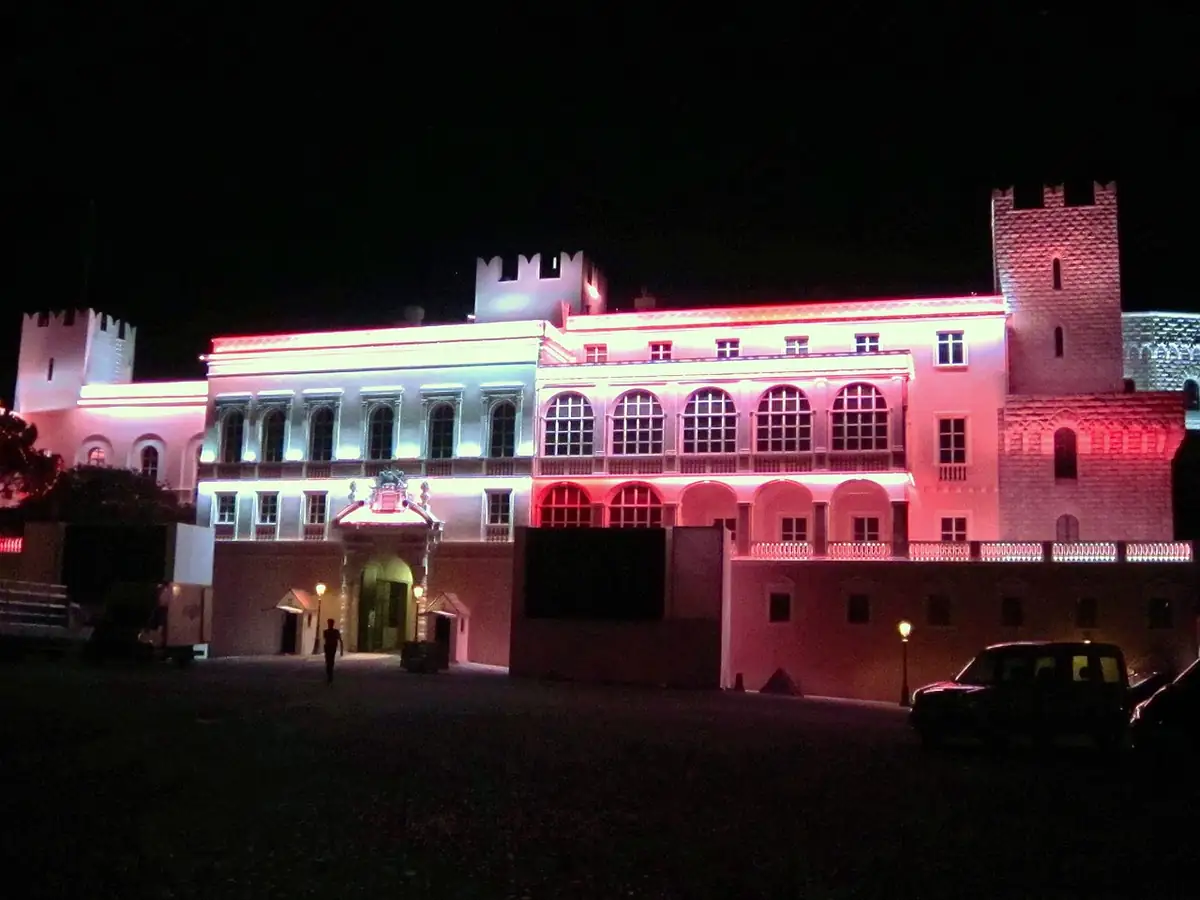
Monaco had waited more than half a century for another wedding like it. On July 2, 2011, Prince Albert II, the son of Grace Kelly and Prince Rainier, married Charlene Wittstock, a former Olympic swimmer, not in the cathedral where his parents had married but in the main courtyard of the Prince’s Palace, opened to the square beyond so that the principality could share it. The bride’s gown was by Giorgio Armani; Andrea Bocelli and Renée Fleming sang; and afterward, like her mother-in-law before her, she took her bouquet to Monaco’s patron saint.
| At a glance | |
|---|---|
| Date | Civil ceremony July 1, 2011; religious ceremony July 2, 2011 |
| Place (ceremony) | Throne Room of the Prince’s Palace (civil); main courtyard of the Prince’s Palace (religious) |
| Reception | Dinner on the terraces of the Opéra de Monte-Carlo |
| The dress (designer) | Giorgio Armani; Chanel for the civil ceremony |
| Guests | Up to 3,500 seated for the religious ceremony, including those watching on screens outside the palace gates |
| Officiant | Archbishop Bernard Barsi (religious); Philippe Narmino (civil) |
The couple
Charlene Wittstock was born in Bulawayo, Zimbabwe, and moved to South Africa at eleven. She swam for South Africa at the 2000 Olympic Games in Sydney, and met Prince Albert that year at the Mare Nostrum swimming meet in Monaco. She retired from competitive swimming in 2007. Their engagement was announced on June 23, 2010. Before the wedding she converted from Protestantism to Catholicism, although Monaco’s constitution did not require it.
On December 10, 2014, the couple’s twins were born: Princess Gabriella and Hereditary Prince Jacques, the heir to the throne.
The ceremony
The celebrations began before the wedding itself. The Eagles played a concert on June 30, and Jean-Michel Jarre gave a concert at Port Hercules for a crowd estimated at 100,000.
The civil marriage took place on July 1 in the Throne Room of the palace, conducted by Philippe Narmino, president of the Council of State. The religious ceremony followed the next day in the palace courtyard, with the gates open and screens in the square outside, so that up to 3,500 people could be seated. Archbishop Bernard Barsi of Monaco officiated. The Monte-Carlo Philharmonic Orchestra and the Opéra choir performed under Lawrence Foster, with Andrea Bocelli, Renée Fleming, Juan Diego Flórez and the South African soprano Pumeza Matshikiza among the soloists.
After the service the couple drove in a specially converted Lexus hybrid landaulet to the chapel of Sainte-Dévote, where the Princess offered her bridal bouquet to the saint, in keeping with Monégasque tradition. Princess Grace had done the same in 1956.
The dress
For the civil ceremony, the bride chose Chanel: a blue silk jacket with ankle-length trousers, a modern alternative to a second dress.
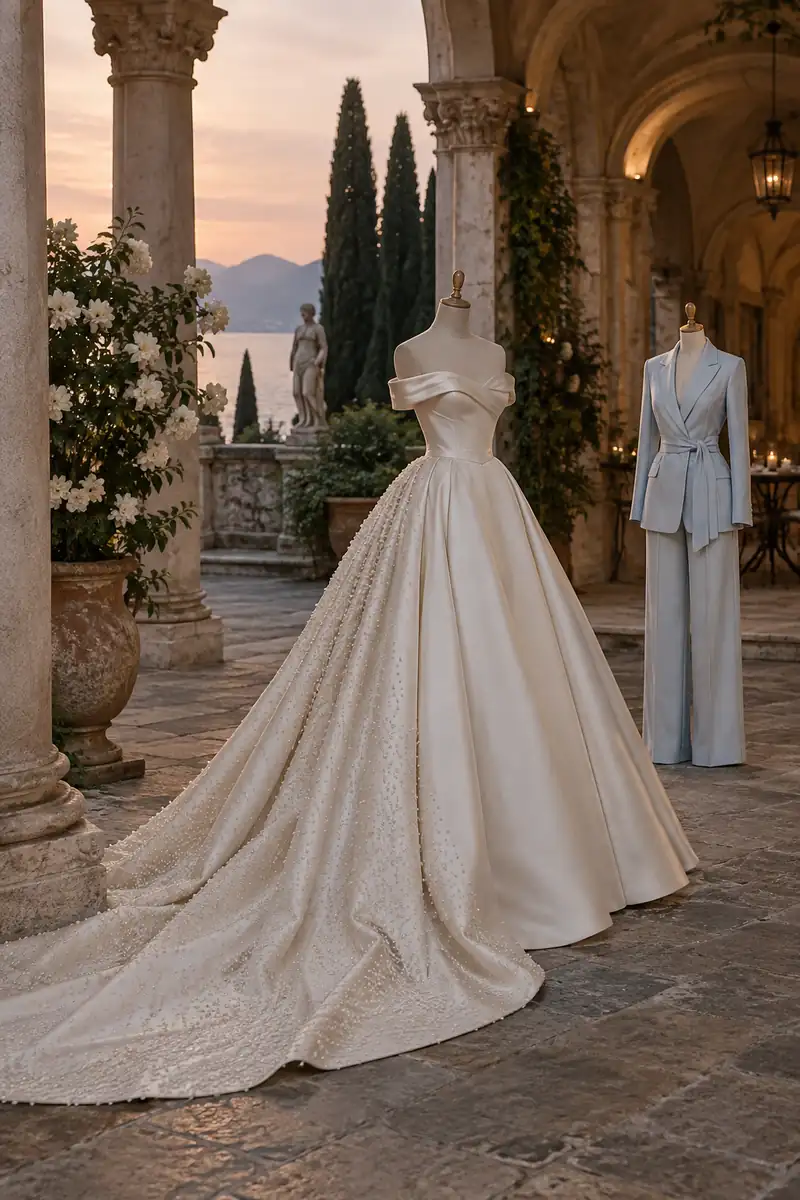
For the religious ceremony she wore a gown designed by Giorgio Armani, the Italian designer who died in September 2025, with diamond earrings by the jeweler Tabbah. For how it compares with other royal gowns, see our guides to royal wedding dresses and celebrity wedding dresses.
The reception
In the evening, dinner was served on the terraces of the Opéra de Monte-Carlo, with a buffet overseen by the chef Alain Ducasse. Fireworks followed, and then the opening of the Opéra Ball. Among the guests were members of the International Olympic Committee, a reminder that the couple had met through sport: the Prince, an IOC member since 1985, had competed in bobsleigh at five Winter Olympic Games. The couple began their honeymoon in Durban, South Africa, where the Prince was attending a meeting of the International Olympic Committee, and continued to Mozambique.
Why it mattered
It was the first wedding of a reigning Prince of Monaco since 1956, and it echoed Grace Kelly’s: two ceremonies, a public celebration, and the bouquet laid at Sainte-Dévote. It also showed how a small state can make a royal wedding into a festival for its residents, with public concerts and an open courtyard, rather than a spectacle watched from behind barriers. For the other great royal weddings of the century, see The Great Royal Weddings.
Borrow the idea
Dress differently for the civil ceremony. If you must marry legally before a religious service, a tailored suit or trouser outfit makes the first ceremony feel distinct. Our guide to dress codes can help your guests too.
Open the doors. If your venue has a courtyard or garden, consider letting neighbors or the wider community see the procession, or streaming the ceremony for those who cannot travel.
Offer the bouquet. Leaving your flowers at a chapel, a shrine or a grave that matters to your family is a lovely way to end the ceremony.
Honor a second home. Choose one musician, reading or dish from each partner’s country, as the program here did with a South African soloist. Our guide to wedding traditions around the world has ideas.
Written and edited by the Today’s Weddings editors. How we research and check what we publish is set out in our editorial standards. Spotted something wrong? Tell us.